
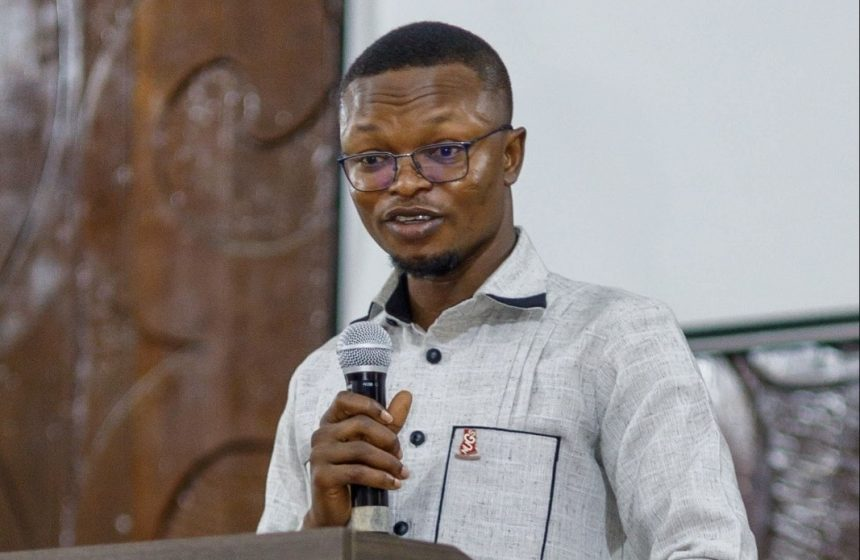
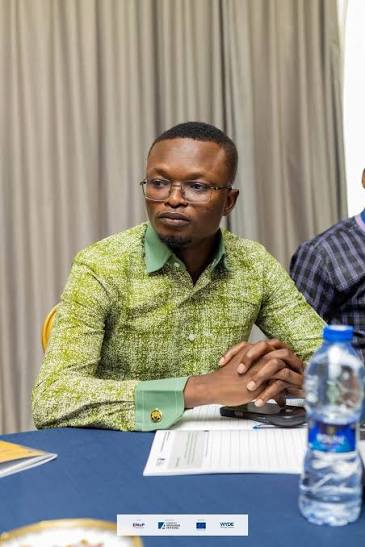
The President of the National Union of Ghana Students, Rashid Ibrahim, at the Muslim Leaders and Catholic Dialogue in Accra, has called for a nationwide restriction on social media access for children under the age of 15, arguing that it is one of the steps needed to address rising indiscipline in schools and promote stronger moral development among young people.
The Dialogue was held under the theme ”Addressing the Challenges of Rising Indiscipline in Our Schools” The Role of Faith Based Organisations” Mr. Ibrahim said the unregulated use of digital platforms is exposing children to content and behaviours that undermine the values parents and schools are trying to instil.
The NUGS President, who is also a legal practitioner, suggested that Ghana could study models already in place in countries like Australia, France, and Indonesia, where governments have introduced age-based limits on social media use.
According to him, restricting early access would give parents and teachers more control in shaping the attitudes and conduct of children before they are exposed to the wider influences of the internet.
He explained that while technology has its benefits, the current situation allows minors to encounter material that is not age appropriate, and this is gradually reflecting in how some students behave in school. Limiting access, he argued, that his suggestion would create space for more guided learning and character formation during the formative years.
Supervision Gaps and the Case for Enforcement
Mr. Ibrahim further linked the growing cases of misconduct in schools to gaps in supervision at home and weak oversight in educational institutions. He noted that when children are not properly monitored, they are more likely to imitate negative behaviour they see online and in their surroundings. He also emphasized that discipline must be reinforced by consequences.
“Students need to understand that breaking school rules will lead to appropriate sanctions, and that this applies even to minors.”
Mr. Rashid Ibrahim
Without consistent enforcement, he warned, efforts to instil order will continue to face setbacks.
Collective Approach from Religious and Civic Leaders
The dialogue brought together religious leaders, educationists, and civic officials who all agreed that addressing indiscipline requires a collective approach involving families, schools, and faith-based groups. The Commission Secretary of the National Commission for Civic Education, Lucille Hewlett Annan, urged parents to place the upbringing of their children at the centre of their decisions.
She observed that raising a child is not only about providing basic needs, but also about investing time, emotional support, and financial resources. She pointed out that children thrive when parents are actively involved in their lives.
Also, Dr. Haruna Zagoon-Sayeed, Senior Lecturer and Lead Convener of the Department of Religious Studies at the University of Ghana, also called for more government backing for faith-based organizations to play a bigger role in moral education.
He raised concerns about the current staffing levels in schools, noting that many institutions with thousands of students rely on just one chaplain or religious coordinator to handle spiritual and ethical guidance. He questioned how effective moral instruction can be under such conditions, and argued that students are less likely to misbehave when they are surrounded by positive role models and consistent teachings.
For him, the environment children grow up in heavily influences their choices, and schools must be equipped to provide the right example.
Rebalancing Academics and Character Development
Also contributing to the discussion, Associate Professor and Very Rev. Father Cosmos Ebo Sabah called for teachers to be given more authority to maintain discipline in schools. He argued that over the years, the education system has placed too much focus on academic performance and examinations, while paying less attention to the moral development of learners.
According to him, when schools prioritize grades over character, students grow up with the impression that success is only measured by test scores. He believes a rebalancing is needed so that discipline, respect, and responsibility are treated with the same seriousness as academic achievement.
Very Rev. Fr. Sabah added that educators should be empowered to enforce rules without fear of backlash, and that school authorities must back them when they take steps to correct misconduct. He said discipline is not about punishment alone, but about teaching students the difference between right and wrong and helping them make better choices.

Calls for Policy Action and Community Involvement
The speakers at the dialogue generally agreed that indiscipline in schools cannot be solved by one institution alone. They urged government, parents, religious groups, and civil society to work together to create an environment that supports both learning and character building.
“If Ghana is serious about producing responsible citizens, then policies must reflect the realities of the digital age.”
Rev. Father Cosmos Ebo Sabah
Age restrictions, he suggested, could be enforced in collaboration with telecommunication companies and social media platforms to ensure compliance.
The NCCE representative, Ms. Annan reminded parents that children mirror what they see. She urged adults to lead by example, because academics alone will not be enough if children do not see those values practiced at home.
She added that communities also have a role to play in reinforcing good behaviour and speaking up when they see children going astray.
The NUGS President concluded, that moral education should not be treated as an after-thought. He said it must be woven into the school curriculum and supported by trained personnel. With adequate funding and political will, he believes faith-based groups can help deliver programs that reach students at every level. As the dialogue ended, the consensus was clear that rising indiscipline is a symptom of deeper issues around parenting, policy, and values.
READ MORE: NHIA Ramps Up Provider Payments as Claims Hit GH¢1.46 Billion