Fidelity Bank Ghana has unveiled a bold call for stronger systems, better stakeholder collaboration and targeted institutional support to unlock Ghana’s enormous trade and enterprise potential, warning that fragmented processes and weak data systems continue to hold traders and entrepreneurs back.
The bank made the call at the Breaking Barriers to Trade conference, where its senior executives highlighted the urgent need to modernise trade systems while creating more opportunities for women and young entrepreneurs to build sustainable businesses.
According to Fidelity Bank, Ghana’s ability to expand trade and create jobs will depend not only on access to finance, but also on whether businesses can operate within efficient systems that reduce bureaucracy, improve market access and encourage innovation.
Fidelity Bank Identifies Major Trade Bottlenecks
Aaron Ameyaw, Director of Banking Operations at Fidelity Bank Ghana, identified poor data quality and fragmented customs systems as some of the major challenges undermining trade growth in Ghana and across the region.
Speaking during a session on “Reimagining Trade, Influence and Institutional Legacy,” Mr Ameyaw stressed that technology alone cannot solve the structural problems confronting the trading sector.
He pointed specifically to the growing importance of artificial intelligence, arguing that AI systems can only deliver meaningful results when they are powered by accurate and reliable data.
“In Ghana, data is a problem. These AI machine learners thrive on data. And so if your data is not correct, you have big issues,” he said.
His comments highlight the growing pressure on Ghanaian institutions to improve data collection and management as businesses increasingly turn to digital technologies to improve productivity and decision-making.
Customs Harmonisation Becomes Critical
Mr Ameyaw also called for greater harmonisation of customs regimes across neighbouring countries, particularly as Ghanaian traders increasingly engage with markets across West Africa.
He noted that traders, especially women importing goods from countries such as Togo and Nigeria, continue to face excessive bureaucracy that slows transactions, increases operating costs and limits their ability to compete.
The call for harmonised systems comes at a time when Ghana is seeking to strengthen its position as a regional trade and logistics hub.
For businesses operating across borders, differences in customs procedures and regulatory requirements can create significant delays and additional costs.
Fidelity Bank believes greater cooperation among institutions and countries could help remove these obstacles and make cross-border trade more efficient.
Technology Already Delivering Results
Fidelity Bank also pointed to the potential of technology to transform Ghana’s trade ecosystem.
Mr Ameyaw welcomed the introduction of the Publican AI System in early 2026 to complement the Integrated Customs Management System at Ghana’s ports.
According to him, the system has already contributed to revenue growth of more than US$300 million, demonstrating the potential impact of technology when combined with effective institutional partnerships.
He argued that Ghana must focus on getting the fundamentals right before attempting to fully exploit advanced technologies. “The good outweighs the bad when it comes to AI,” he said.
“It is important that we get the fundamentals right. Once we get it right, it creates opportunities. And for us at Fidelity, we are always doing that.”
Aaron Ameyaw
Fidelity Bank has itself embraced digital transformation, including the use of robotic process automation for reconciliation processes.
The bank says the technology has improved operational efficiency while freeing employees to concentrate on higher-value activities.
Women Entrepreneurs Remain Key to Growth
Beyond trade systems, Fidelity Bank used the conference to spotlight the challenges facing women-led businesses.
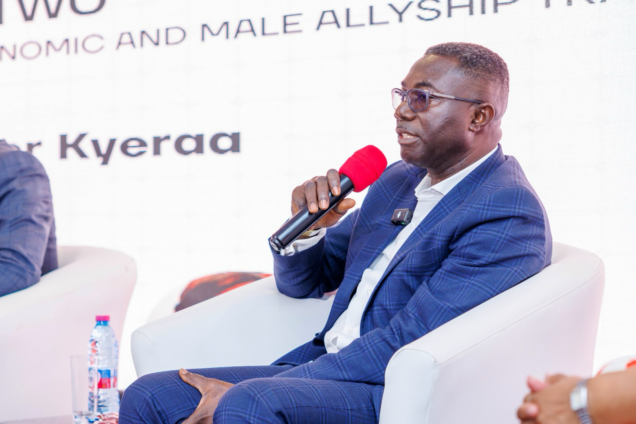
Alex Agyei-Amponsah, Director of SME Banking, said women own between 38% and 46% of businesses in the region, highlighting their critical contribution to economic activity.
However, he argued that the biggest challenge is not a lack of ambition among women entrepreneurs.
“It is not a desire to not grow their business. They actually desire to grow. But the difficulty has been: how can I manage this to the level that I can still take care of the family and still meet other obligations?”
Alex Agyei-Amponsah
To address these challenges, Fidelity Bank has introduced the Fidelity Young Entrepreneurs Fund, targeting young people aged 18 to 40 and women up to age 45.
The initiative is designed to support entrepreneurs from the idea stage through incubation and ultimately into funded, market-ready businesses.
Financing Meets Business Development
The programme offers concessionary financing alongside support aimed at helping entrepreneurs meet regulatory and compliance requirements.
This approach is significant because access to funding alone does not guarantee business growth.
Many small businesses struggle to access formal markets because they lack the necessary documentation, regulatory approvals, systems and structures required to secure major contracts.
Fidelity Bank’s intervention seeks to bridge that gap by combining finance with practical business development support.
Mr Agyei-Amponsah also highlighted group lending as another tool for expanding access to opportunities.
He cited the example of a woman belonging to the Federation of Associations of Ghana Exporters who was able to participate in a yam export contract to Canada through group financing.
“That is how gradually we are doing it. Once this facility is approved and the yam is exported, the next time around that woman’s business will be able to secure a contract by herself.”
Alex Agyei-Amponsah
A New Push for Inclusive Trade
Fidelity Bank’s message at the conference was clear: Ghana’s trade ambitions require more than capital.
The bank believes efficient customs systems, accurate data, digital innovation, supportive institutions and accessible financing must work together to create an environment where businesses can thrive.
For women and young entrepreneurs in particular, removing structural barriers could unlock a significant source of employment, exports and economic growth.
As Ghana continues to pursue greater regional integration and private-sector development, Fidelity Bank’s call places renewed attention on the systems that determine how easily businesses can trade.
The bank’s interventions suggest that breaking barriers requires a combination of smarter technology, stronger institutions and financial products designed around the realities of entrepreneurs.
If these elements are successfully brought together, Ghanaian businesses could be better positioned to compete locally, across West Africa and in international markets.
READ ALSO: Zambia Suspends Vote Count Over Attacks on Election Officials