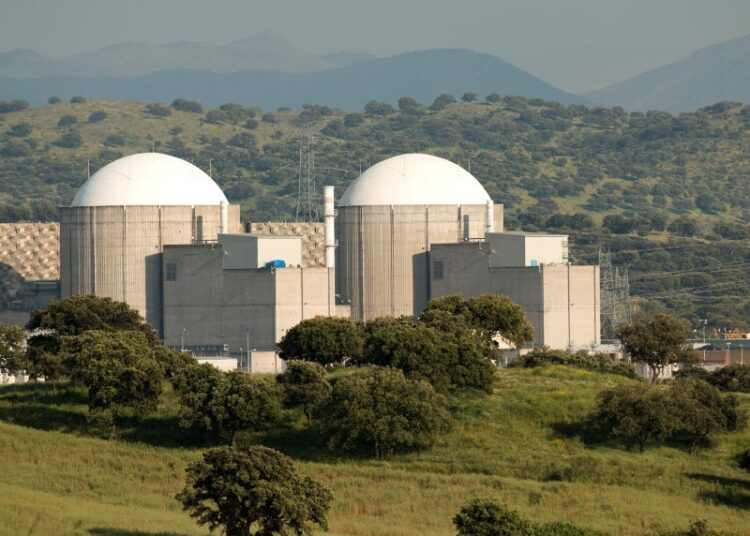
The Spanish government has approved a three-year extension to the operating life of the Almaraz nuclear power plant, allowing its two reactors in Extremadura to continue generating electricity until June 8, 2030.
The decision, published in the Official State Gazette through a ministerial order from the Ministry for Ecological Transition, grants a request made by the companies that own the facility last autumn. The extension represents a significant change to Spain’s previously agreed nuclear shutdown timetable. Under the 2019 agreement between the government and energy companies, Almaraz Unit 1 was due to close in November 2027, followed by Unit 2 in October 2028.
That agreement envisaged the gradual closure of Spain’s seven nuclear reactors, with the objective of ending nuclear generation in the country by 2035. The schedule called for the closure of Almaraz and Almaraz II, followed by the closure of Ascó I and Cofrentes in 2030, Ascó II in 2032, and Vandellós II and Trillo in 2035.
The timetable was agreed during a period when left-wing parties in government were pushing for an accelerated transition away from nuclear energy. However, the debate over the role of nuclear power has evolved considerably since then.The April 2025 blackout across the Iberian Peninsula renewed attention on the reliability and resilience of Spain’s electricity system. The incident intensified discussions about the contribution of nuclear plants to electricity supply and whether existing reactors should remain operational while alternative sources are expanded.
The latest decision postpones the closures and keeps one of Spain’s most important sources of nuclear electricity operating for longer. Almaraz has produced more electricity than any other nuclear power plant in Spain and currently accounts for about 7% of the country’s total electricity generation.
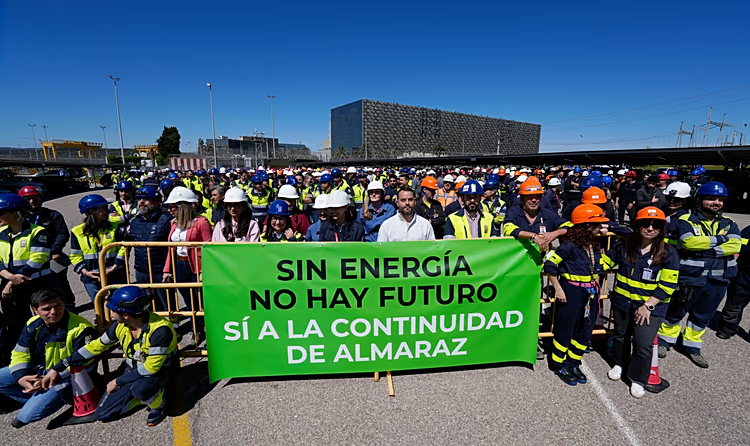
The request to extend Almaraz’s operating life subsequently gained support from local authorities, businesses, workers and community groups in Extremadura, who have argued that closing the plant would have significant economic consequences for the region.
Pressure to reconsider the closure timetable also came from the European Parliament. In February 2026, a delegation of 10 members of the European Parliament visited the Almaraz facility after receiving a citizens’ petition opposing its closure.
The delegation was led by Bogdan Rzońca, chair of the European Parliament’s Petitions Committee. He described the planned shutdown as an “ideological issue” for the Spanish government and highlighted opposition from more than 10,000 local residents.
The European Parliament’s Petitions Committee subsequently approved a report in May urging Madrid to reconsider the timetable. The report argued that the closure decision had been based on “purely political and ideological reasons, without sufficient technical basis” and warned of potential economic, social and energy consequences for Extremadura and Spain more broadly.
MEP Elena Nevado also argued that the government had not conducted a sufficiently comprehensive assessment of the consequences of shutting down Almaraz. She pointed to the plant’s importance to the regional economy, saying it supports about 4,000 direct and indirect jobs.
A key development came on July 16, when Spain’s Nuclear Safety Council issued a favourable assessment of Almaraz’s continued operation. The regulator concluded that the facility met the necessary nuclear safety requirements to continue operating until 2030.
The assessment removed a major technical obstacle to extending the plant’s life and provided the government with regulatory backing for the decision. The facility was also deemed to meet requirements relating to security of electricity supply and the government’s condition that the extension should not impose additional costs on consumers.
With the safety regulator’s assessment in place, the decision to extend Almaraz’s operation became largely a matter of government policy rather than technical feasibility. The government has now formally accepted the extension, allowing both reactors to remain available beyond their previously scheduled closure dates.
Extension Of Almaraz Nuclear Plant Life Welcomed
The decision has been welcomed by the citizens’ platform Yes to Almaraz, Yes to the Future, which was established in January 2025 to campaign against the plant’s closure. The organisation brings together more than 100 municipalities, business groups, chambers of commerce, workers, companies providing services to the plant and other local associations.
Fernando Sánchez, President of the platform and Mayor of Belvís de Monroy, welcomed the government’s decision, saying, “At last we can breathe again and see light at the end of the tunnel.” He said that the extension would restore confidence among families who had spent months uncertain about the plant’s future.
The extension does not, however, mark a complete reversal of Spain’s broader nuclear policy. The government’s decision applies specifically to Almaraz and postpones its closure rather than abandoning the country’s wider plan to reduce its reliance on nuclear energy.
For the communities surrounding Almaraz, however, the decision provides several additional years of certainty for a facility that remains a major employer and source of electricity.
READ ALSO: Europe Heatwave Intensifies Wildfire Battle