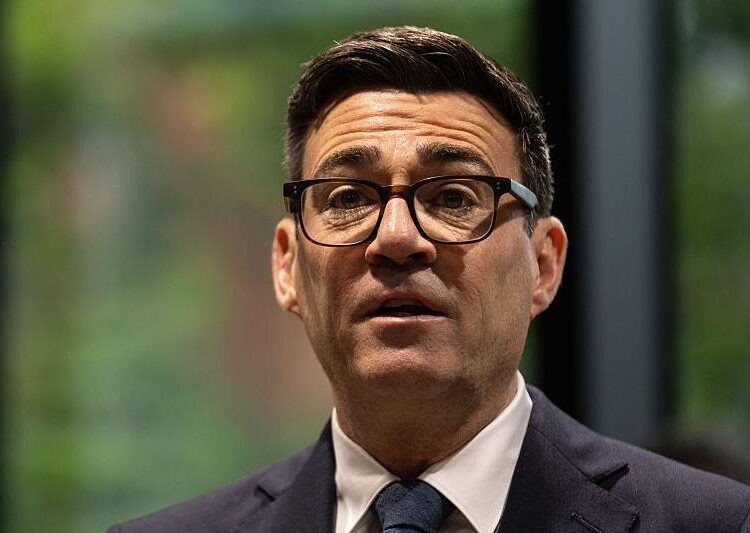
UK Prime Minister Andy Burnham has reaffirmed United Kingdom’s unwavering support for Ukraine after Russia warned that UK would face “consequences” over reports that British-built drones had been used in attacks deep inside Russian territory.
According to Andy Burnham, Britain would continue supplying Ukraine with the military assistance it needs to defend itself against Russia’s full-scale invasion, dismissing concerns that Moscow’s latest warning could force the UK to reconsider its position.
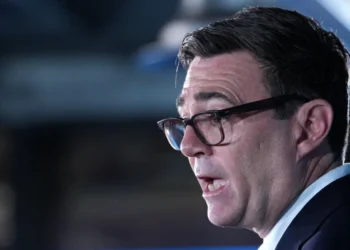
“This is the UK doing what it has long said it would do, which is to support Ukraine 100 per cent against this illegal war led by Vladimir Putin. We are providing support so that Ukraine can defend itself, and that’s been the British position all the way through this conflict by previous prime ministers.
Andy Burnham
He added, “it remains the case with me. We are not fair weather friends. We will be there in Ukraine’s hour of need, and that won’t change.”
According to reports, Ukrainian forces have increasingly used long-range drones to strike military and industrial targets well beyond the front line, marking a significant expansion of Kyiv’s strategy as the war enters another prolonged phase.
Moscow responded by accusing UK of providing support for attacks against Russia and warning that Britain’s growing involvement would carry consequences.
“The reports confirm that London is deliberately opting for an escalation of the Ukraine crisis,” the Russian embassy stated, accusing Britain of “seeking to contain Russia and inflict maximum damage on it by proxy.”
“London’s actions will inevitably carry consequences for which it will have to answer. The deeper its involvement in the conflict and the greater its support for Kyiv’s terrorist machinery, the higher the price it will pay.”
Russian Embassy
British officials, however, have shown little indication that the threats will alter the government’s military and political commitment to Kyiv.
According to Work and Pensions Minister Lilian Greenwood, Britain would continue to stand “shoulder to shoulder with Ukraine,” insisting that Russia should have no doubt about London’s determination to support its ally.
“The Russians should be clear that our resolve remains completely steadfast in backing our friends in Ukraine and providing them with the equipment that they need.”
Lilian Greenwood
A Ministry of Defence spokesperson similarly indicated that Britain remained committed to supplying Ukraine with the equipment required to defend itself.
“Britain stands shoulder to shoulder with Ukraine and we are committed to providing the equipment Ukraine needs to defend itself against Putin’s illegal invasion. Russia should be in no doubt about the resolve of this government to stand against Russian aggression, in Ukraine and against the UK and our allies.”
Ministry of Defence Spokesperson
The confrontation comes as Ukraine has intensified its campaign of long-range attacks against targets inside Russia. Kyiv has increasingly deployed drone swarms and long-range missiles against military industries, energy facilities and other infrastructure that it believes contributes to Moscow’s war effort.
The strategy is intended not only to disrupt Russia’s military capabilities but also to impose economic costs and demonstrate to the Russian public that the consequences of the war can reach far beyond the battlefield in Ukraine.
Ukraine’s Deep Strikes Raise Fears of Wider Confrontation
Ukraine’s growing ability to conduct deep strikes has added a new dimension to the conflict, forcing Russia to defend a much larger geographical area while raising questions about how far Western support for Kyiv can go without triggering a direct confrontation between NATO and Moscow.
Data from ACLED, an independent conflict monitor, indicates that Ukraine launched three times as many long-range strikes in July as it did in January. The increased frequency has placed additional pressure on Russia’s air defence network and forced Moscow to distribute defensive capabilities across a wider area.
Russia’s Defence Ministry revealed that it had intercepted 598 Ukrainian drones across 19 Russian regions, as well as over the Black and Azov seas and the annexed Ukrainian peninsula of Crimea.
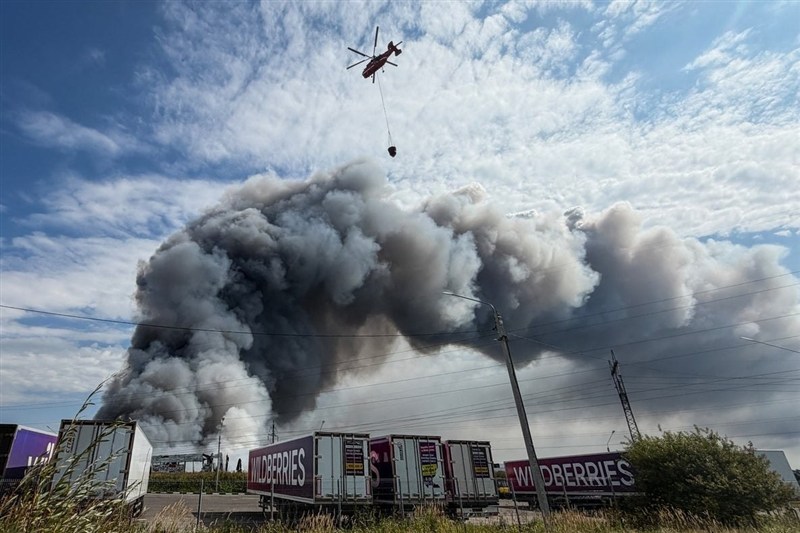
The attacks have also increasingly targeted economic infrastructure. Ukraine has struck major facilities belonging to Wildberries, Russia’s largest online retailer, with fires destroying large quantities of merchandise and highlighting the extent to which the war is beginning to affect Russian economic activity away from the traditional front lines.
The Russian warning has therefore raised a broader question: what would happen if Moscow attempted to retaliate directly against Britain or another NATO member?
Andrey Fedorov, a former Russian Deputy Foreign Minister, argued that uncertainty within the alliance could influence Moscow’s calculations.
“Taking into consideration current instability within Nato, current problems within Nato, it’s quite possible that Nato will do nothing. It will make a statement, or will use Article Four, but not Article Five. It’s linked first of all to Donald Trump, who is still the keeper of the keys in Nato.”
Andrey Fedorov
Moreover, former Defence Secretary Grant Shapps argued that divisions within the alliance should not be mistaken for a lack of military capability or willingness to respond to an attack on a member state.
“Nato undoubtedly has genuine problems, not least the political divisions within the West, but Putin would be a fool to mistake disagreement for weakness in a moment of true crisis.”
Grant Shapps
He pointed to the combined military spending of Britain, France, Germany and Poland, arguing that the European powers alone possess substantial resources compared with Russia.
“For all Putin’s rhetoric and bluster, his behaviour tells us something important: he still fears what Nato can do when it is stirred into action. His strategy has always been to divide, intimidate and test the Alliance without triggering its overwhelming collective strength. He should be extremely careful not to miscalculate.”
Grant Shapps
Former Foreign Secretary Sir Malcolm Rifkind similarly warned that Britain’s nuclear status could make any direct Russian attack particularly dangerous for Moscow.
He indicated that UK “is a nuclear weapon state which would make a Russian missile or drone attack a much higher risk for Putin than a non-nuclear weapon target state.”
Rifkind stated he believed NATO would respond to an attack on Britain, arguing that even if the alliance’s response did not automatically mean a declaration of war, member states would be required to determine a collective course of action.
The former National Security Adviser, Lord Ricketts, also urged Britain not to be intimidated by Moscow’s rhetoric.
READ ALSO: Flick Sets High Bar, Says Barcelona are Prepared To Challenge on All Fronts