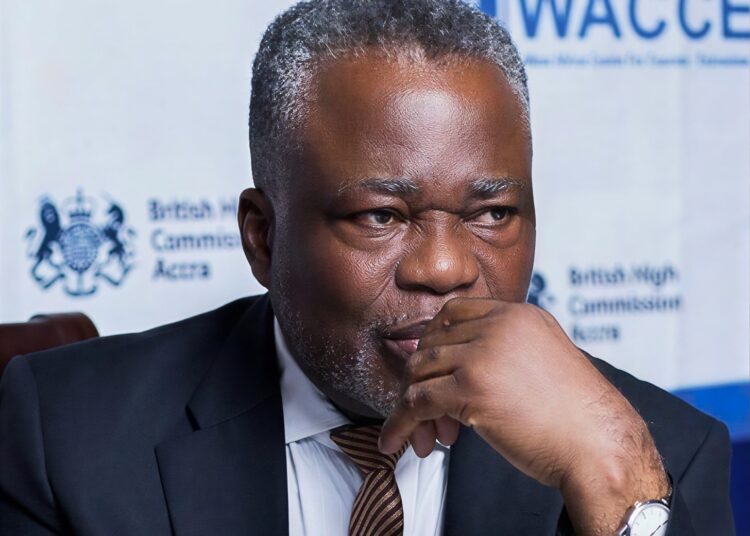
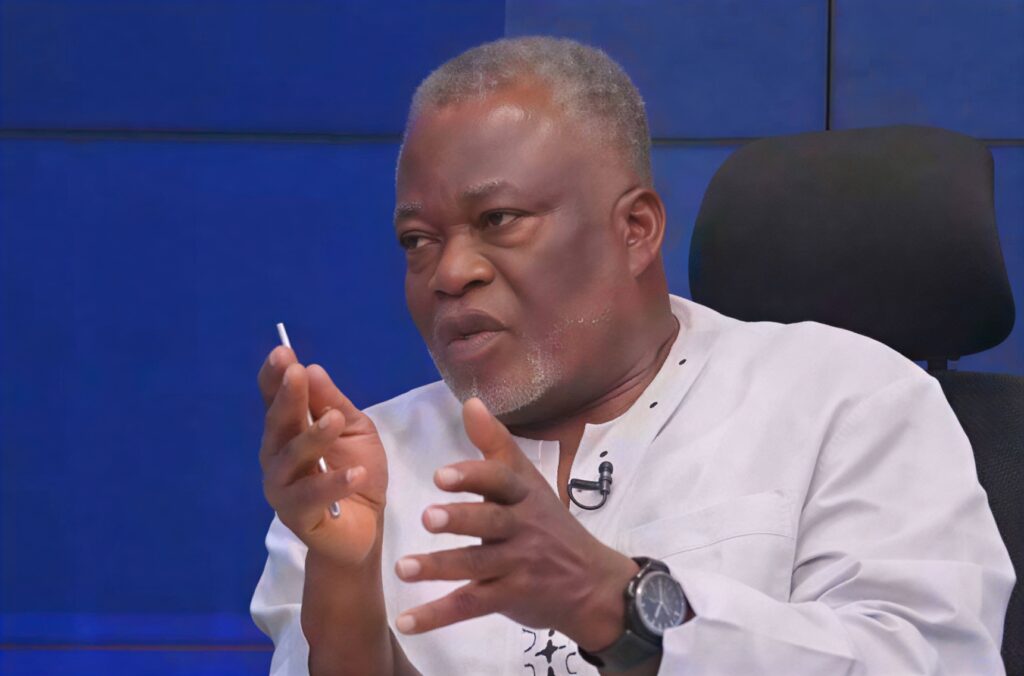
Security analyst Colonel Festus Aboagye (Rtd) has argued that Ghana’s struggle with political vigilantism stems from weak enforcement of existing laws, rather than the absence of legislation to deal with electoral violence.
Speaking at the National Policy Dialogue, Colonel Aboagye contended that successive governments have failed to apply the law consistently against individuals who engage in political violence.
The Security Analyst explained that Ghana has enacted legislation intended to prevent vigilantism, yet its effectiveness depends on state institutions being willing to enforce the provisions. According to him, passing a law without following through with prosecutions creates an environment where politicians can disregard legal consequences.
Colonel Aboagye further referenced observations made by the Executive Director of Election Watch and the Member of Parliament for Madina, Francis Xavier Sosu, during the discussion. He noted that the enactment of legislation could become a symbolic exercise if authorities are unwilling to pursue people who violated the law.
“The problem is not that we don’t have laws. The problem rather is that we don’t want to work with the laws.”
Colonel Festus Aboagye (Rtd)
Analysing the situation, the retired military officer pointed to cases arising from Ghana’s political disturbances between 2020 and 2024. He recalled that the Interior Minister, Muntaka Mohammed-Mubarak indicated that some individuals linked to incidents affecting the country’s stability are being pursued, with some cases already before the courts.
The security expert questioned the length of time taken to bring some alleged perpetrators before justice, particularly cases dating back several years. He also referred to recommendations associated with the Emile Short Commission and argued that unresolved cases weaken public confidence in the country’s response to political violence.
Referencing the experience of victims, Colonel Aboagye cited a case involving a man who was reportedly shot in the presence of his children and sustained injuries that could affect his ability to work. Such incidents demonstrate the consequences that can emerge when political violence is allowed to go without effective legal accountability.
The discussion therefore shifted from the existence of legislation to the conduct of institutions responsible for implementing it. From his perspective, stronger enforcement would require political authorities and state agencies to treat offences consistently, regardless of the political identity of those involved.
The retired officer also questioned whether the current legal framework has become less useful because authorities continue to rely heavily on provisions in the Criminal Code and other existing laws. He suggested that the practical value of a specific anti-vigilantism law would depend on whether it is actively invoked when political violence occurred.
Political Rivalry Fuels Selective Justice, Security Analyst Warns
The Security Analyst also argued that political calculations have weakened the prosecution of politically motivated violence, creating a cycle in which parties appear reluctant to pursue offenders when doing so could affect their own interests. He linked the pattern to the alternating political fortunes of the National Democratic Congress and the New Patriotic Party.
From his perspective, the two parties have dominated government under the Fourth Republic and their members have, at different periods, faced allegations connected to political violence. The situation creates an incentive for political leaders to consider how present actions could affect their supporters when political power changes hands.
“And apart from everything anybody here says today, the reason why the laws are not working is not technical, it is political.”
Colonel Festus Aboagye (Rtd)
Colonel Aboagye described the relationship as resembling an informal understanding in which politicians may hesitate to pursue members of the opposing side because they could later face similar treatment. He argued that such an approach damages the principle of equal justice and leaves victims waiting for accountability.

Directing attention to past incidents, the former military officer referred to the case involving former Minister for Fisheries and Aquaculture Development, Hawa Koomson. He recalled allegations surrounding an incident in which she was accused of carrying and firing a firearm during a political confrontation in Accra.
The reference was used to illustrate his argument that politically sensitive cases can remain unresolved when the individuals involved have strong political connections. He then connected the example to the violence associated with the Ayawaso West Wuogon constituency, where political tensions produced another major episode during Ghana’s electoral history.
According to Colonel Aboagye, the handling of such cases raises questions about whether the country’s anti vigilantism legislation is being used effectively. He observed that authorities frequently rely on provisions under existing criminal laws when dealing with incidents that appear to fall within the scope of the specific legislation.
This situation, he suggested, has reduced the practical relevance of the anti vigilantism framework and left enforcement institutions working with laws that already existed before the specialised legislation was introduced. The police, he noted, continue to rely on the Criminal Code and other applicable offences when pursuing cases involving political violence.
Nevertheless, the Security Analyst indicated that the challenge could be addressed through stronger political commitment to accountability. He stressed that enforcement should follow the facts of each case and should not depend on which political party is associated with an accused person.
READ ALSO: BoG Freezes GH¢13.46bn From Banking System