
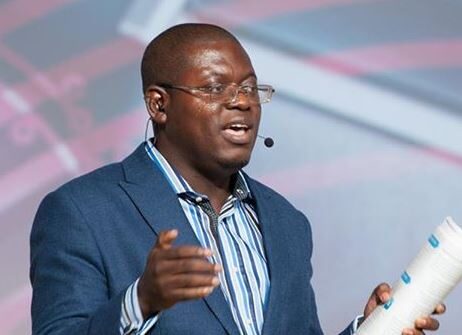
Bright Simons, Honorary Vice President of the IMANI Centre for Policy and Education, has argued that African democracies routinely reward politically popular goals while failing to sustain the harder policy work needed to achieve them, describing a framework he calls Katanomics that explains how this gap between politics and policy undermines accountability across the continent.
Speaking at SYPALA 2026 in Accra, Mr Simons drew a sharp distinction between politics, which he defined as society’s contest over what it wants, and policy, which determines how those wants are actually delivered, arguing that African governance systems have become highly responsive to the first and largely disconnected from the second.
Why Policy Loses Its Audience
Mr Simons illustrated the dynamic using flooding as an example.
A political demand to stop flooding is simple and commands broad public agreement, he said, but the moment it becomes a policy question, it fragments into roughly 20 separate technical disciplines, spanning municipal authority, customary land tenure, zoning, drainage engineering and environmental protection.

“Nobody can be an expert in five disciplines, much more 20 disciplines,” he said, arguing that this fragmentation causes audiences to shrink sharply as an issue moves from the political stage to the policy stage.
He said this produces what he calls a cataclysmic condition, in which political accountability, whether voters can remove a government they dislike, and policy accountability, whether citizens can actually judge if specific interventions are working, move in entirely different directions.
Ghana, he argued, exhibits high political accountability through competitive elections but very low policy accountability, a pattern he said also characterises Kenya and Nigeria among Africa’s more vibrant democracies.
Noise Without Signal
Mr Simons argued this dynamic leaves citizens unable to assess whether governments are actually succeeding at the goals they were elected to pursue.
Using unemployment as an example, he said a single political promise to create jobs splinters into education policy, curriculum reform, industrial strategy, and research and development, each understood by different specialists who rarely communicate with each other.
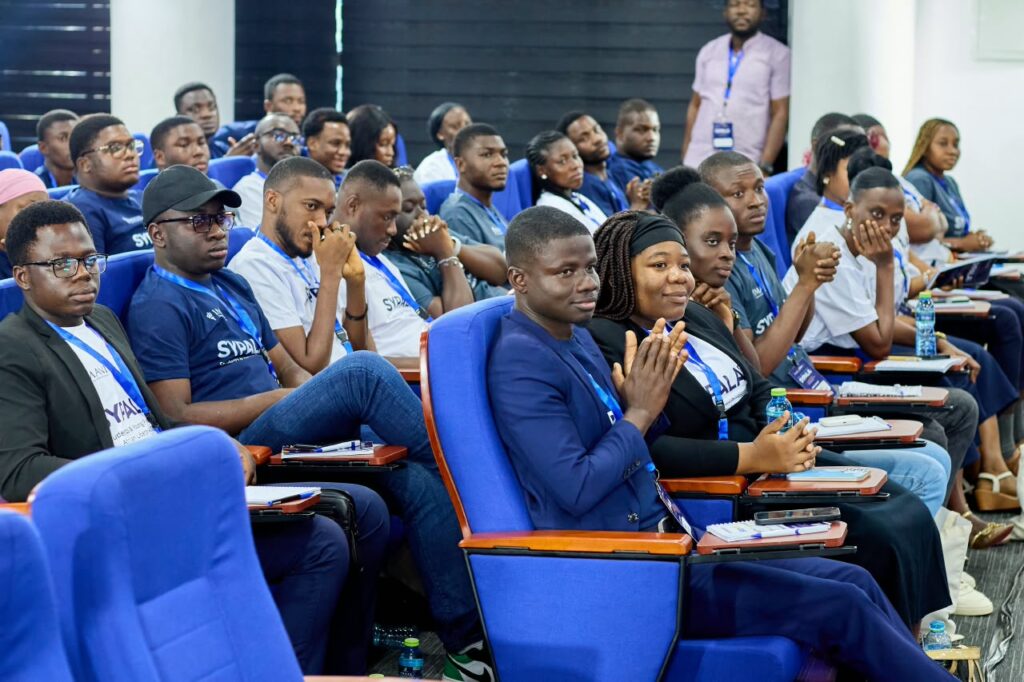
Without institutions capable of reassembling those fragments into a coherent public assessment, he said citizens are left unable to determine whether one government is actually outperforming another on job creation.
“There is a lot of noise, but it’s no signal,” he said, attributing part of the failure to weak think tanks and university research capacity across the region.
The Absence of National Learning
Bright Simons said the clearest consequence of this fragmentation is the absence of what he called national learning, the ability of a country to draw lessons from past policy failures and apply them the next time a similar idea resurfaces.
Without that institutional memory, he argued, every major policy debate in Ghana restarts from zero, repeating the same arguments without reference to what has already been tried and why it failed.
He said this pattern recurs across flooding, unemployment and traffic congestion alike, with public debate settling into complaint rather than structured evaluation.
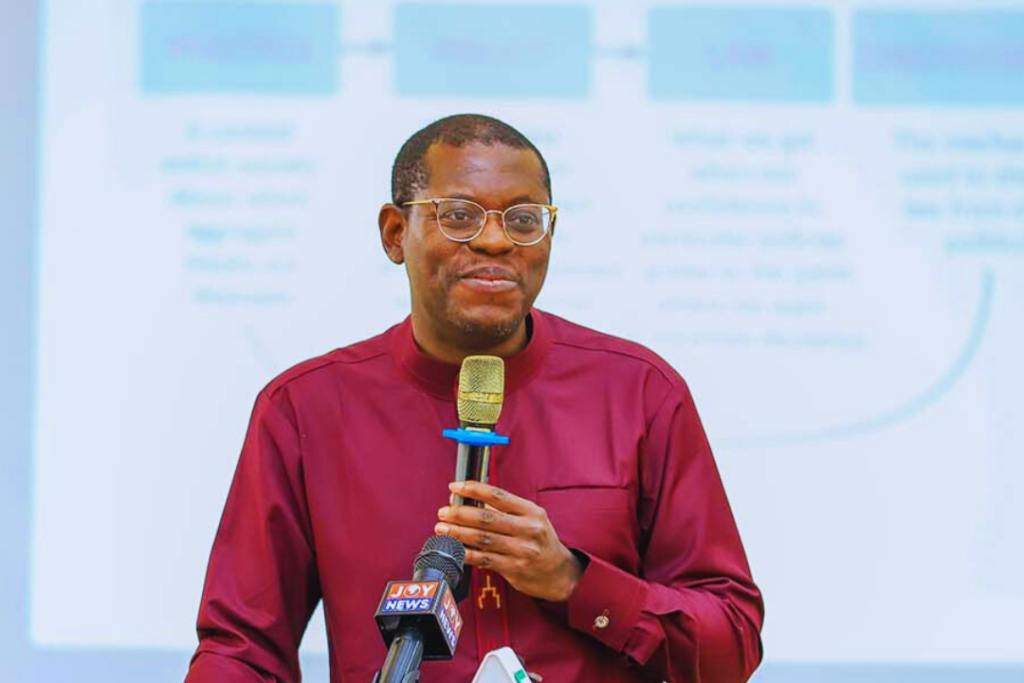
Mr Simons closed by framing the challenge directly to the young professionals and students in the room, asking them to consider how fragmented policy conversations might be reassembled into a coherent, publicly legible message without losing the analytical rigour that makes policy work valuable in the first place.
He argued that social media has intensified rather than solved the problem, giving everyone a platform to comment while doing nothing to reconnect fragmented technical debates into an actionable, trackable record of what governments have actually achieved.
READ ALSO: Ato Colman: Leaders Must Live Their Values Without Compromise