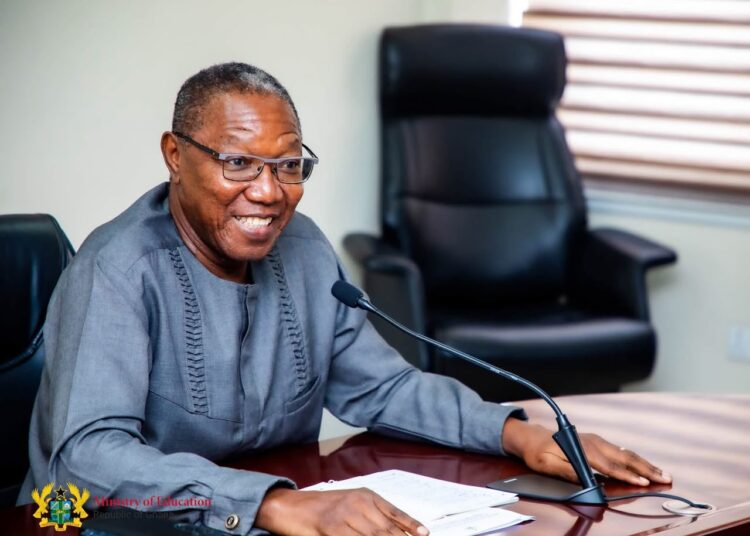
Deputy Minister of Education, Dr Clement Abas Apaak, has disclosed that 527,932 candidates have been successfully placed into Senior High Schools, representing approximately 87.3 percent of qualified candidates from this year’s Basic Education Certificate Examination (BECE), as government continues to work through the placement process for the 2026/2027 academic year.
Speaking during an engagement with the media, Dr Apaak provided a detailed breakdown of the placement figures, disclosing that of the candidates successfully placed, 276,521 are female while 251,411 are male, describing the outcome as significant progress reflecting government’s commitment to expanding access to secondary education for every Ghanaian child.
Addressing questions around why some candidates had not received automatic placement despite vacancies remaining in the system, Dr Apaak explained that analysis of candidates’ first-choice selections reveals a considerable concentration of demand toward highly subscribed Category A schools.
According to the data he presented, a total of 313,283 candidates selected Category A schools as their first choice, compared to 176,614 for Category B schools and 123,577 for Category C schools, with an additional 995 candidates being considered for placement in Senior High Technical schools.
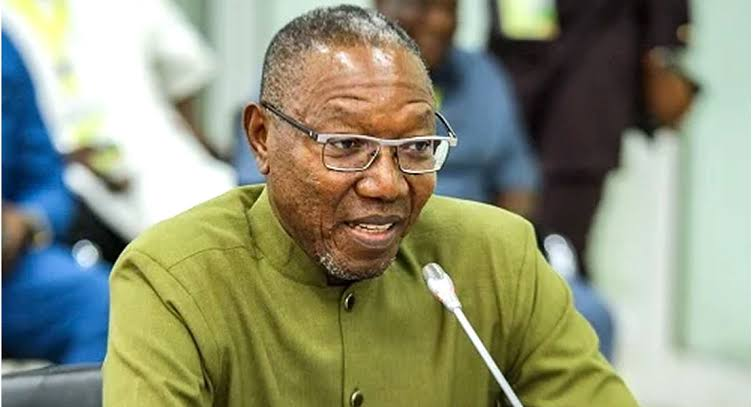
He noted that this meant more than half of all first-choice demand was concentrated on the most sought-after Category A institutions alone.
Vacancy Data Reveals Stark Disparity
Providing figures on available vacancies, Dr Apaak said the system recorded a total of 859,828 declared vacancies nationwide, comprising 76,417 vacancies in Category A schools, 250,366 in Category B schools, and 468,652 in Category C schools.
He described the resulting disparity as instructive, pointing out that while 313,283 candidates expressed Category A schools as their first choice, only 76,417 vacancies existed within that category.
“The issue therefore is not simply the availability of spaces in our secondary school education system, it is largely a mismatch between where vacancies exist and where candidates most strongly prefer to be placed,”
Dr Clement Abas Apaak
Pathway For Candidates Who Fell Short Of Requirements
Turning to candidates whose examination outcomes did not meet the requirements for automatic placement, Dr Apaak disclosed that 57,259 candidates fall within this category.
He said 30,372 did not sit for the examination at all, 35,382 obtained a score of nine in either English Language or Mathematics, while 18,505 obtained a score of nine in both subjects.
He said government has taken a deliberate decision to provide these candidates with an appropriate pathway to continue their education, confirming that those who scored a nine in either or both of the two core subjects would be permitted to access the self-placement system and select from schools and programmes with available vacancies.
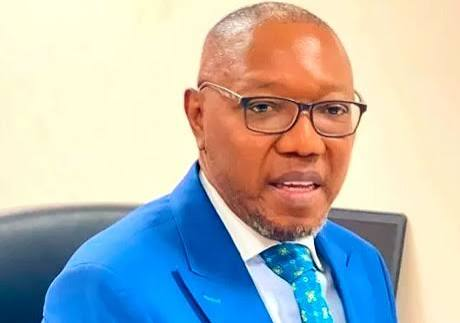
“We therefore encourage these candidates and their parents not to lose hope, they should take advantage of the self-placement opportunity to select from available options,”
Dr Clement Abas Apaak
Private Schools Offer Additional Placement Options
Dr Apaak further highlighted the role of private education in supporting this year’s placement exercise, disclosing that 85 private Senior High Schools are participating in the Free Senior High School programme for the 2025/2026 academic year.
He explained that the involvement of these institutions provides additional options for candidates undergoing self-placement, forming part of government’s broader strategy to expand access, make fuller use of existing educational infrastructure, and reduce pressure on highly subscribed public schools.
He encouraged candidates undertaking self-placement to consider these private institutions alongside available public Senior High Schools, Senior High Technical Schools and Technical and Vocational Education and Training (TVET) institutions, rather than limiting their options to the public school system alone.
Resolution Centres Set Up for Individual Cases
Acknowledging that an exercise of this scale is likely to generate individual cases requiring closer attention, Dr Apaak announced that the Ministry has established a Placement Resolution Centre in Accra, alongside regional-level resolution centres across the country.
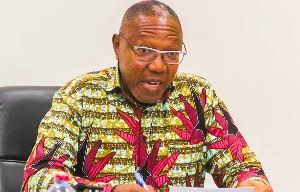
He explained that these centres are specifically intended to address greater discrepancies and disbursement challenges affecting individual schools or candidates as the placement process continues to unfold.
With the bulk of qualified candidates already placed and dedicated pathways now established for those who fell short of automatic placement, attention is likely to turn toward how effectively the self-placement system and resolution centres manage the remaining cases in the weeks ahead.
READ MORE: Ghana Doesn’t Have Health care Problem,But Execution Problem