Minister of Gender, Children and Social Protection, Honourable Agnes Naa Momo Lartey, has disclosed that the average LEAP grant per cycle has increased by 70 percent since 2024.
Speaking at the Givernment Accountability Series, the Krowor MP revealed that the average grant has risen from GH¢360 in 2024 to GH¢569.14 in 2026, alongside an expansion of the programme’s coverage ceiling.
Dr Lartey explained that the number of households eligible under the Livelihood Empowerment Against Poverty programme has increased from 350,000 to 450,000 households. She presented the figures as part of the government’s broader expansion of social protection interventions.

The Minister of Gender emphasised that the statistics represent individuals and families whose livelihoods are being supported through government programmes. She noted that the significance of the interventions should be measured through their impact on beneficiaries.
“Behind all of the figures are stories, individuals whose lives are being transformed one way or the other by the work that we do.”
Honourable Agnes Naa Momo Lartey
Furthermore, Honourable Lartey disclosed that 11.24 million Ghanaians have now been profiled in the National Household Registry. The database, she explained, provides an important foundation for identifying vulnerable households and directing social protection interventions to eligible beneficiaries.
The Minister also reported that 19,760 persons with disabilities benefited directly from the Disability Common Fund. In addition, more than 1,270 vulnerable persons had received social assistance covering areas such as resettlement, reintegration, psychosocial support, food and medical assistance.
According to Dr Lartey, the ministry’s citizen engagement system has also recorded significant activity. She disclosed that 520 grievances had been received through the Single Window Citizens Engagement Services, with 364 addressed so far.
This represents approximately 70 percent of the grievances received by the ministry. The Minister explained that the mechanism provides citizens with a direct avenue to seek assistance when social protection challenges arise.
Meanwhile, the Ghana School Feeding Programme continues to cover 4.53 million children on every school day. Honourable Lartey noted that this figure represents an increase from 4.03 million children in 2024 who benefited from meals under the programme.
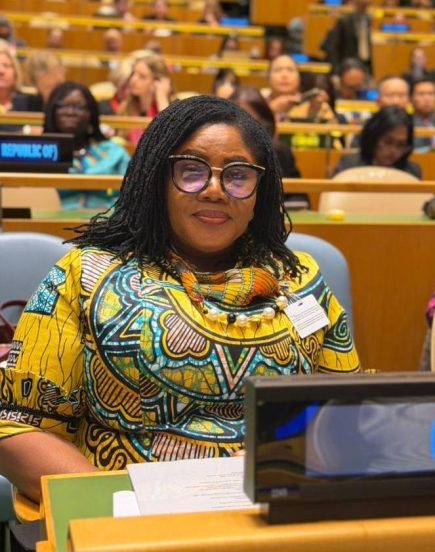
She explained that the expansion demonstrates the scale at which social protection interventions are reaching citizens. The Krowor MP also stressed that beneficiaries should remain at the centre of how such programmes are assessed.
The Minister urged citizens to use the ministry’s toll-free channels when they require assistance or need to report challenges. She provided 0800800800 and 0800900900 as the numbers available to the public from all networks.
Honourable Lartey indicated that the ministry would continue strengthening its programmes to ensure vulnerable citizens can access social protection support. She maintained that the figures provide a measure of the reach of interventions while the experiences of beneficiaries give meaning to the numbers.
New Social Protection Law Reshapes How Vulnerable Ghanaians Access Support
The Ministry of Gender, Children and Social Protection has introduced a new legal framework intended to strengthen the coordination and delivery of social protection services across Ghana.
Minister of Gender, Children and Social Protection, Honourable Agnes Naa Momo Lartey, highlighted the Social Protection Act, 2025, Act 1148, as a major institutional development.
The Krowor MP explained that Parliament passed the legislation in 2025, with the Social Protection Regulation, 2026, L.I. 2521, subsequently coming into force in June 2026. She noted that the framework establishes Ghana’s first dedicated legal foundation for social protection.
Dr Lartey outlined three key components of the new system. These include making the Ghana National Household Registry the official mechanism for targeting social protection programmes nationwide, establishing a dedicated Social Protection Fund and providing the legal basis for a shock-responsive strategy.
“Ghana now runs social protection on one law, one National Household Registry, and one dedicated fund, and that is the change that has happened.”
Honourable Agnes Naa Momo Lartey
The Minister explained that the National Household Registry is intended to reduce fragmented beneficiary identification across individual programmes. She added that the dedicated fund would support coordination, programme delivery and emergency relief.

Additionally, the new framework provides for the National Shock-Responsive Social Protection Strategy, together with standard operating procedures and an implementation plan. According to Honourable Lartey, this structure is designed to enable government to respond to floods and other emergencies through an established system.
Beyond the legislative changes, the ministry has been taking social protection discussions directly into communities. Dr Lartey disclosed that community dialogues have been organised in areas including Big Ada, Nima Zongo, Tema, Teshie, Osu, Chorkor, Bolgatanga East, Builsa North and other areas.
She explained that the engagements are designed to allow residents to understand their rights and the social protection services available to them. The sessions reportedly attract an average of 300 participants at each sitting.
The Minister added that the dialogues also provide practical services through collaboration with the National Health Insurance Authority. Eligible vulnerable residents can register for new NHIS coverage or renew existing coverage during the community engagements.
Furthermore, Honourable Lartey disclosed that the sessions address misconceptions surrounding LEAP and NHIS. The ministry also uses the platform to educate residents on gender-based violence, child abuse, substance abuse, human trafficking and human rights.
The Minister stressed that citizen participation remains important to the effectiveness of social protection policies. She explained that communities must understand the programmes and participate in discussions about the services available to them.
On grievance resolution, Dr Lartey encouraged citizens to use the ministry’s toll-free numbers whenever they encounter difficulties accessing support. She noted that the Single Window Citizens Engagement Services provides a channel through which complaints can be received and addressed.
READ ALSO: EU Proposes Canada As First Associate Member