Ghana is advancing plans to strengthen electricity transmission along the Eastern Corridor, with the proposed Salaga Transmission Project expected to improve the reliability and quality of power supply to Salaga and surrounding communities.
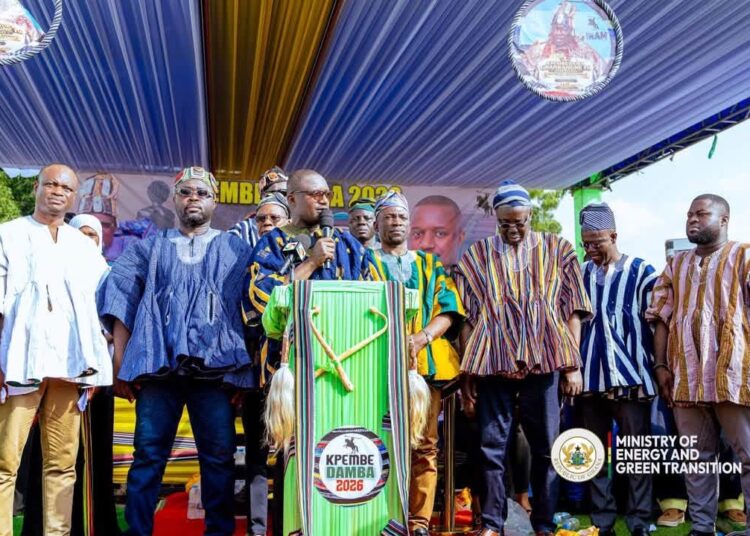
The project was highlighted during the Kpembe Damba Festival and the 10th anniversary celebration of the enskinment of Kpembewura Banbagne Ndefoso IV, where the government reaffirmed its commitment to delivering the transmission infrastructure as part of a wider effort to improve electricity access and system resilience.
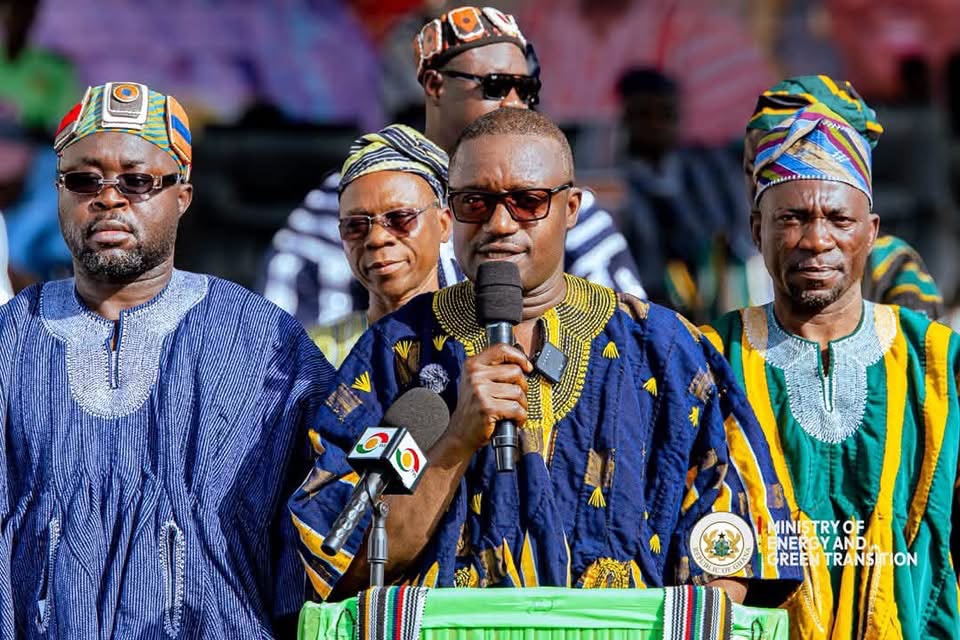
Representing President John Dramani Mahama at the event, the Minister for Energy and Green Transition, Dr John Abdulai Jinapor said the project would form part of the broader Eastern Corridor transmission development, linking infrastructure investment with the government’s wider development objectives for communities along the route.
Transmission Investment For A Growing Corridor
At the centre of the project is a proposed 330kV double-circuit transmission line running from the Adubiliyili area to Salaga, alongside the construction of a new transmission substation at Salaga.
The scale of the proposed line is significant because transmission infrastructure determines how effectively electricity generated elsewhere can reach areas experiencing growing demand.

For communities along the Eastern Corridor, improving the transmission network can help address constraints associated with voltage quality, network reliability and the ability to accommodate additional electricity demand.
The project is therefore not simply an investment in a new line and substation. Its broader importance lies in strengthening the network that supports economic activity across communities that have historically remained further from Ghana’s main electricity demand centres.
The government described the project as a strategic investment intended to improve the reliability and quality of electricity supplied to Salaga and communities along the corridor.
“The project includes a 330kV double-circuit transmission line from the Adubiliyili area to Salaga, together with a new transmission substation at Salaga.”
Minister for Energy and Green Transition, Dr John Abdulai Jinapor
The infrastructure could also provide additional capacity for future development if demand increases in the corridor.
Reliability Depends On Network Capacity
Ghana’s electricity security is often discussed in terms of generation capacity, fuel availability and the financial condition of the power sector. Transmission, however, is equally important.
Having sufficient generation does not automatically guarantee reliable electricity for consumers. Power must be transported through a network capable of handling the required volumes without creating congestion or exposing consumers to instability.

This makes transmission investment particularly relevant as Ghana continues to expand electricity demand from households, businesses and productive sectors.
A stronger network around Salaga could improve the system’s ability to move power into the area and create room for future connections.
The new substation would also provide a critical point for managing electricity flows and connecting the local network to the wider transmission system.
The project’s value, therefore, should be assessed not only by the number of communities it directly serves, but also by how it fits into the architecture of Ghana’s national electricity grid.
Eastern Corridor Development Implications
The reference to the Eastern Corridor is important because the project forms part of a wider transmission development strategy rather than standing as an isolated infrastructure intervention.
Infrastructure along the corridor can support economic development by improving the reliability of one of the basic inputs required by businesses, public institutions and households.

For industries and commercial operators, unreliable electricity can translate into higher operating costs when businesses have to depend on backup generation.
Better transmission reliability can reduce some of those pressures, although the actual economic impact will depend on the quality of distribution infrastructure and the availability of sufficient generation to feed the network.
The project could consequently become more valuable as other investments and economic activities develop around the corridor.
That also means planning will matter. Transmission infrastructure has a long operating life, so decisions made today need to account for future demand rather than simply addressing existing consumption.
Linking Energy Security With Local Development
The Salaga project also highlights the connection between national energy policy and local development.
Electricity infrastructure can influence where businesses invest, how public institutions operate and whether communities can support new productive activities.

Improved supply reliability can strengthen the operating environment for small businesses while supporting schools, health facilities and other public services.
For Salaga and neighbouring communities, the proposed infrastructure could therefore provide benefits beyond electricity consumption itself.
However, transmission investment alone cannot guarantee economic transformation. The benefits will depend on complementary investments in distribution networks, generation, industrial development and local economic activity.
A new high-voltage line can strengthen the backbone of the system, but consumers ultimately experience the quality of electricity through the distribution network that delivers power to their homes and businesses.
Project Delivery Will Determine Impact
The government’s renewed commitment places attention on the next stage: translating the project from a policy commitment into completed infrastructure.
Large transmission projects typically require substantial planning, financing, procurement, construction and coordination among multiple institutions.

Their eventual impact depends on whether those stages are executed effectively and within a timeframe that matches the needs of the communities they are intended to serve.
The proposed 330kV line and Salaga substation therefore represent an important infrastructure commitment, but their contribution to energy security will ultimately be measured by actual improvements in supply reliability and network performance.
That distinction is important for assessing energy infrastructure. Announcements can establish policy direction, but completed assets deliver the measurable benefits.
Building A More Resilient Electricity Network
The Salaga project fits into a broader energy-security challenge facing Ghana: ensuring that the electricity system becomes sufficiently resilient to accommodate changing demand and support economic development across regions.
A resilient power system requires more than generation. It requires transmission capacity, dependable distribution networks, appropriate system planning and sufficient financial resources to maintain infrastructure once it is constructed.
The proposed project addresses one part of that equation by expanding the high-voltage transmission network in the Eastern Corridor.
For communities along the route, the expectation is straightforward: stronger infrastructure should translate into more dependable electricity and a better foundation for development.
For Ghana’s wider power system, the project presents an opportunity to improve network capacity in an area where future demand could increase as economic activity expands.
“As we celebrate our heritage, we remain committed to delivering sustainable development and improving the lives of our people.”
Minister for Energy and Green Transition, Dr John Abdulai Jinapor
The challenge now is to ensure that commitment is matched by effective project execution.
If delivered as planned, the Salaga Transmission Project could strengthen an important section of Ghana’s electricity network while supporting the government’s broader objective of linking energy infrastructure with regional development.
Its significance ultimately lies not only in the 330kV line or the new substation, but in whether those assets can help create a more reliable, better-connected and more resilient electricity system for the communities and economic activities along the Eastern Corridor.
READ ALSO: BoG Reveals Banking Sector’s Strongest Shield Against Shocks