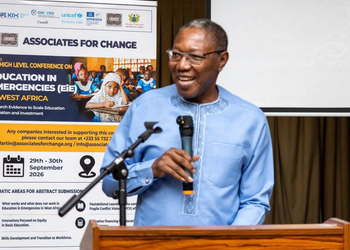
The Head of Public Relations at the Ghana Education Service (GES), Daniel Fenyi, has stated that concerns about the quality of food served to students under the School Feeding Programme have drastically reduced over the past two years, crediting reforms introduced by the current administration for the improvement.
Addressing recent incidents of student unrest linked to complaints about food quality, Mr Fenyi acknowledged such occurrences but maintained that they have become far less frequent since the new administration took office, pointing to specific changes in how the programme is financed and managed.
Mr Fenyi explained that the government’s initial plan under the current administration was to channel funds directly to school heads, empowering them to procure food items at the local market level to feed students directly.
He confirmed that this approach was indeed implemented at the outset of the administration’s tenure.
However, following further engagement and review, government adjusted the model to introduce a buffer stock system. Under this arrangement, non-perishable food items, including rice, beans and millet, are supplied directly to schools, while funds continue to be given to school heads specifically to procure perishable items needed to complement the stocked supplies.
“This combination is going fairly well with the schools and with the students.”
Daniel Fenyi

Combining Centralised Supply With Local Procurement
Mr Fenyi described the current hybrid model as a deliberate balance between centralised supply of long-lasting food items and localised procurement of perishables, an approach he said allows schools to maintain consistent access to staple foods while still exercising flexibility in sourcing fresher items from their immediate communities.
This combination, he explained, appears to address earlier challenges associated with relying solely on either direct cash transfers to school heads or centralised bulk supply, by drawing on the strengths of both approaches.
Mr Fenyi indicated that GES intends to continue monitoring and observing the effectiveness of these interventions over time, with a view to identifying areas that may require strengthening or further review as the programme continues to operate.
“The hybrid approach has significantly reduced food quality concerns, while giving schools flexibility to meet students’ needs.”
Daniel Fenyi

He stressed that the current arrangement should not be viewed as a final, unchangeable solution, but rather as an evolving model subject to ongoing assessment based on feedback from schools and the practical outcomes observed on the ground.
A Programme Under Scrutiny
Mr Fenyi’s comments come against the backdrop of broader public attention on the School Feeding Programme, which has recently faced separate allegations concerning inflated school enrolment figures used to determine funding allocations.
The National Association of Graduate Teachers (NAGRAT) had earlier called for an audit of enrolment data following concerns raised by the programme’s National Coordinator, Hajia Fati Forgor, about some head teachers allegedly inflating pupil numbers to secure higher allocations.
While Mr Fenyi’s remarks focused specifically on improvements in food quality and student satisfaction, the parallel concerns around enrolment figures suggest that the programme continues to face administrative challenges on multiple fronts, even as the funding and supply model appears to be yielding improved outcomes in terms of food quality.
Addressing Student Unrest
By directly addressing incidents of students expressing dissatisfaction over food through protests or unrest, Mr Fenyi’s comments reflect an effort by GES to contextualise such occurrences within a broader narrative of improvement, rather than dismissing them outright.
His acknowledgment that such complaints have reduced, rather than disappeared entirely, suggests a measured and transparent approach to discussing the programme’s ongoing challenges.

As GES continues to monitor the hybrid funding and supply model for the School Feeding Programme, attention is likely to remain on whether the reported improvements in food quality can be sustained nationwide, and whether parallel efforts to address enrolment data accuracy will further strengthen the integrity and effectiveness of the programme as a whole.
The coming months may reveal whether the current arrangement requires adjustment or whether it continues to deliver consistent results across the country’s diverse school communities.
READ MORE: Ghana Records 4,650 New Breast Cancer Cases Annually – Deputy Minister