World Athletics is strengthening its Kids’ Athletics programme as part of a global initiative aimed at using sport to improve children’s wellbeing, promote inclusion and support community development.
The athletics governing body is participating in the Global Sport for Good Initiative, a collaboration involving the International Olympic Committee (IOC), World Athletics, World Rugby, the International Basketball Federation (FIBA) and the Badminton World Federation.
Implemented since 2024, the initiative seeks to maximise the social benefits of sport while equipping international federations and their member organisations with the knowledge and tools to assess the impact of their programmes.
For World Athletics, the focus is on making grassroots participation more meaningful by ensuring that children benefit beyond simply taking part in sporting activities.
Kids’ Athletics, which targets children aged four to 14, is one of the world’s largest grassroots athletics development programmes.
Its latest participation campaign reached more than seven million children across 170 countries, providing a platform for promoting physical activity through fun, accessible and inclusive experiences.

World Athletics President Sebastian Coe believes the programme offers an opportunity to demonstrate how athletics can contribute to the development of young people and their communities.
“Kids’ Athletics gives us an opportunity to look beyond participation numbers and understand the difference athletics can make in the lives of young people and their communities.”
Sebastian Coe, President of World Athletics
Building a Stronger Grassroots Delivery Network
A key component of the initiative is strengthening the network of people responsible for delivering Kids’ Athletics in schools, clubs and communities.
World Athletics’ delivery structure includes 18 Master Trainers, more than 300 Member Federation Lead Educators and over 10,000 coaches and teachers. The organisation considers their knowledge and capabilities essential to ensuring that children receive quality experiences through the programme.
The initiative places particular emphasis on child-centred delivery, an approach that prioritises children’s needs, voices, experiences and wellbeing when designing and conducting athletics activities.
Through workforce development and education, coaches, teachers and other stakeholders are being supported to better understand children’s needs, identify community priorities and adapt their delivery to different circumstances.
World Athletics is also investing in practical tools to make grassroots coaching more accessible. In April, it released the Kids’ Athletics app, designed to simplify and improve the delivery of sessions by coaches and teachers.
The free application offers offline functionality, a built-in session planner and support for six languages. It also reduces reliance on printed materials, helping those delivering the programme organise activities more efficiently.
Further coach education content is being developed to respond to the changing needs of children, communities and the wider delivery network. “Through the Global Sport for Good Initiative, we are strengthening the people and systems that make this possible, from Member Federations and clubs to coaches and volunteers, while building our ability to understand, measure and communicate the impact of their work,” Coe added.
Measuring Sport’s Wider Social Benefits
Beyond expanding access to athletics, World Athletics wants to establish a stronger evidence base for the benefits of participation.
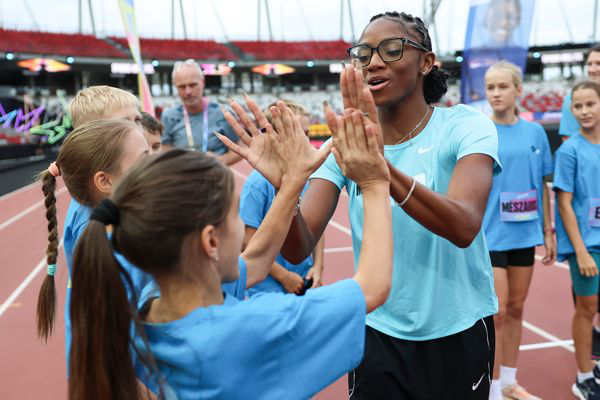
The initiative seeks to help children develop confidence, motivation to remain physically active, transferable life skills and a sense of belonging. These outcomes are intended to support healthier lifestyles and encourage lasting connections with athletics and sport.
Member Federations are also expected to benefit from improved capacity to measure and communicate the value of their programmes.
This could help them demonstrate athletics’ contribution to health, education, inclusion, wellbeing and community development to governments, partners and other stakeholders.
Impact measurement is expected to become increasingly integrated into Kids’ Athletics delivery at different levels, allowing World Athletics and its members to better understand what works and where improvements are needed.
“The power of sport as a force for driving community cohesion should not be underestimated. Sport brings people together and it is imperative that we continue to support all our stakeholders – those taking part in athletics, those delivering the sport and those measuring its impact. This initiative is the next step in that mission.”
Sebastian Coe, President of World AthleticsWorld Athletics will continue collaborating with the IOC, World Rugby, FIBA and the Badminton World Federation to share knowledge, improve practices and explore how sport can generate positive change.
The broader ambition is to make sport a more consistent part of everyday life while ensuring that participation delivers meaningful and lasting benefits for individuals and communities worldwide.
READ ALSO: UG Calls for African Research Commercialization to Drive Innovation