Ghana has strengthened its appeal as a preferred investment destination following the unveiling of investment opportunities worth US$152.1 million by the Ghana Investment Promotion Centre.
The disclosure was made at a landmark business forum hosted by GIPC for a 54-member Japanese business delegation, reinforcing Ghana’s commitment to attracting foreign direct investment.
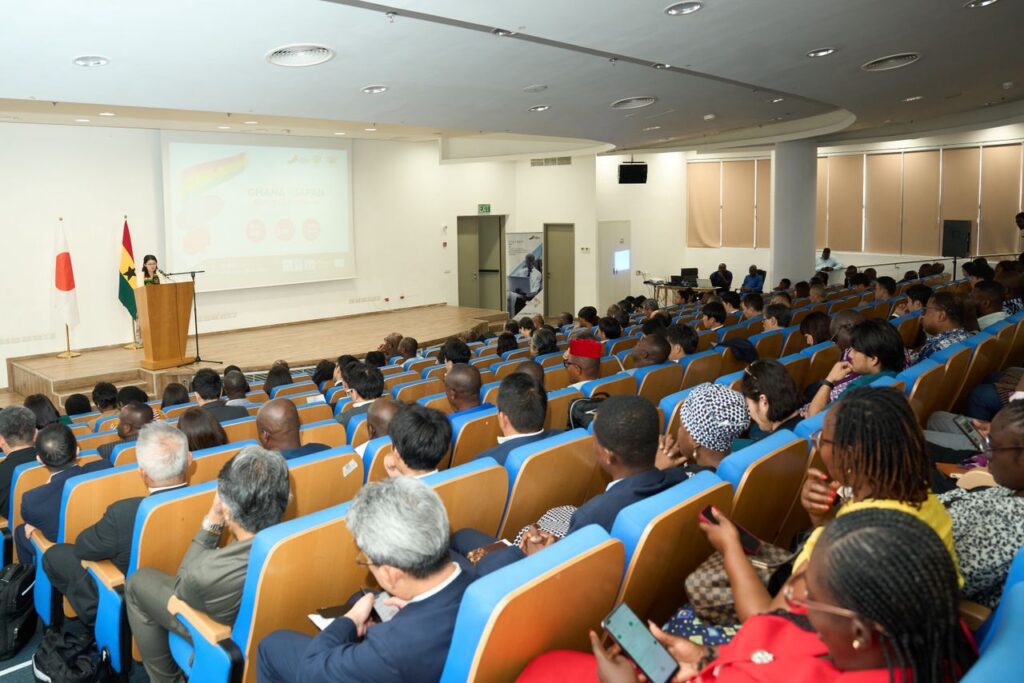
The forum followed President John Dramani Mahama’s official state visit to Japan in August 2025 and formed part of efforts to translate strengthened diplomatic ties into concrete economic outcomes. It provided Japanese companies with firsthand insights into Ghana’s business environment and the range of opportunities available across key sectors of the economy.
Japan Expresses Strong Interest in Ghana
Leading the Japanese delegation, the State Minister for Foreign Affairs, Atano Kunimitsu, highlighted opportunities for collaboration in manufacturing, technology and infrastructure. She explained that the Japanese government continues to encourage its companies to expand into Africa through joint public and private sector missions.
“We believe that Ghana is a country that Japanese companies participating in this mission should take an even greater interest in and consider the possibility of investment.”
Atano Kunimitsu
Her remarks reflected growing confidence in Ghana’s investment climate and its strategic position as a gateway to the wider African market under the African Continental Free Trade Area.
High-Level Representation Underscores Commitment
The forum drew high-level participation from both Ghanaian and Japanese institutions, signalling strong political and institutional backing for deeper economic cooperation. Among those present were the Japanese Ambassador to Ghana, His Excellency Hiroshi Yoshimoto, Ghana’s Deputy Ambassador to Japan, Ambassador Francis Doe, and the Deputy Minister for Trade, Agribusiness and Industry, Sampson Ahi.
Also in attendance were the Chief Executive Officer of GIPC, Simon Madjie; the Deputy CEO in charge of Operations at the Ghana Free Zones Authority, Lateef Apau Wiredu; the Chief of Staff of the AfCFTA Secretariat, Livramento Rui; and senior officials from the Ghana Export Promotion Authority and the 24-Hour Economy Secretariat.
Their presence highlighted a coordinated national approach aimed at improving investor confidence and ensuring effective facilitation for foreign businesses entering the Ghanaian market.
Government Identifies Priority Areas for Collaboration
In his keynote address, Deputy Minister Sampson Ahi outlined priority sectors in which Ghana is ready to partner with Japanese investors. These included industrial platforms and export-oriented manufacturing, manufacturing value chains and industrial inputs, as well as logistics, trade facilitation and standards.
He reaffirmed the government’s commitment to strengthening the business environment through targeted reforms. According to him, improving regulatory predictability and coordination remains critical to sustaining investor confidence.
“We will support predictable regulation, improve coordination for investor facilitation, and strengthen aftercare so that firms already operating in Ghana can expand with confidence. When issues arise, we want them raised early and resolved quickly because delays cost jobs and confidence.”
Sampson Ahi
GIPC Reports $152.1 Million in FDI Projects
In a presentation titled “Doing Business in Ghana”, GIPC Chief Executive Officer Simon Madjie revealed that the Centre had recorded a total of 26 projects with a combined value of US$152.1 million across multiple sectors.
He outlined several areas offering strong potential for foreign investors. These included the construction of the Takoradi–Tema Pipeline and the Takoradi–Ivory Coast Pipeline projects, the Petroleum Hub Development project, mooring systems, farm-in opportunities, onshore petroleum ventures, and gas infrastructure development. He also highlighted opportunities in plant upgrades and capacity expansions.
The presentation emphasized Ghana’s readiness to support large-scale industrial and energy investments through improved infrastructure, policy reforms and investor-focused facilitation.
Free Zones and Export Opportunities Explained
The Ghana Free Zones Authority used the platform to highlight the benefits of the Free Zones Scheme to potential investors. The Deputy CEO in charge of Operations explained that investors have the flexibility to operate either within designated special economic zones or as single factory enterprises.
Similarly, the Director of International Cooperation at the Ghana Export Promotion Authority outlined the Authority’s mandate and the export and import opportunities available to companies seeking to use Ghana as a base for regional and global trade.
The business forum demonstrated Ghana’s determination to convert high-level diplomatic engagements into tangible investment flows. By presenting clearly defined projects and reaffirming policy commitments, the engagement sent a strong signal to Japanese investors and the broader international business community.
As Ghana advances its industrialisation agenda and export-led growth strategy, partnerships with countries such as Japan are expected to play a pivotal role.
READ ALSO:Kennedy Agyapong on Course to Win NPP Primaries – Survey