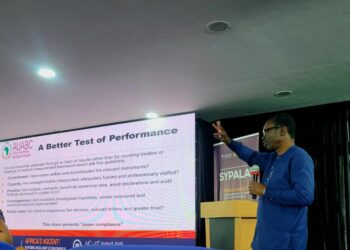

Policy think-tank IMANI Center for Policy and Education has called on government authorities to publicly identify and prosecute private sector actors involved in financial schemes that defraud the state.
In a policy brief examining corruption in Ghana, the organisation argued that meaningful progress in the fight against corruption will remain limited unless both public officials and businesses implicated in wrongdoing are held accountable.
According to the brief, Ghana’s anti corruption efforts must move beyond repeated exposure of financial irregularities to concrete legal action that includes arrests, prosecution and convictions.
“The businesses conspiring to defraud the state must be publicly named, sanctioned and blacklisted with their officers arrested, prosecuted and convicted”.
IMANI Center for Policy and Education
Concerns Over Slow Progress in Anti Corruption Drive
IMANI expressed concern that public expectations regarding the country’s anti-corruption campaign have not been fully met. The organisation pointed to the government’s anti-corruption initiative known as Operation Recover All Loot, which generated significant public optimism when it was introduced.

However, the think tank argued that the momentum surrounding the programme appears to be declining due to limited prosecutions and convictions. “The optimism Ghanaians had in ORAL is fading, if it has not faded already,” the brief said.
IMANI noted that instead of decisive prosecutions, some corruption cases have been resolved through plea bargains or delayed investigations. According to the organisation, such outcomes do not reflect the level of accountability that citizens expected.
The think tank also referenced findings from its Fiscal Recklessness Index reports, which documented significant financial irregularities across several government institutions.
According to the organisation, its 2022 and 2024 reports identified irregularities amounting to 13.9 billion Ghana cedis and 4.9 billion Ghana cedis respectively.
These irregularities were linked to several public institutions including the Ministry of Finance (Ghana), Ministry of Food and Agriculture (Ghana), Ministry of Roads and Highways (Ghana), and Ministry of Health (Ghana).
IMANI explained that the infractions were identified in areas such as procurement practices, tax administration, cash management and the handling of government stores.
Persistent Issues in Auditor Reports
The organisation said similar concerns have been repeatedly highlighted in reports issued by the Ghana Audit Service. These reports have frequently cited problems such as unsupported financial documentation, duplicate payments, recycled invoices and contract claims that were allegedly overstated.
Other irregularities mentioned include payments for work that was either incomplete or not carried out at all. IMANI argued that the persistence of these issues indicates systemic weaknesses in financial management and oversight across several public institutions.
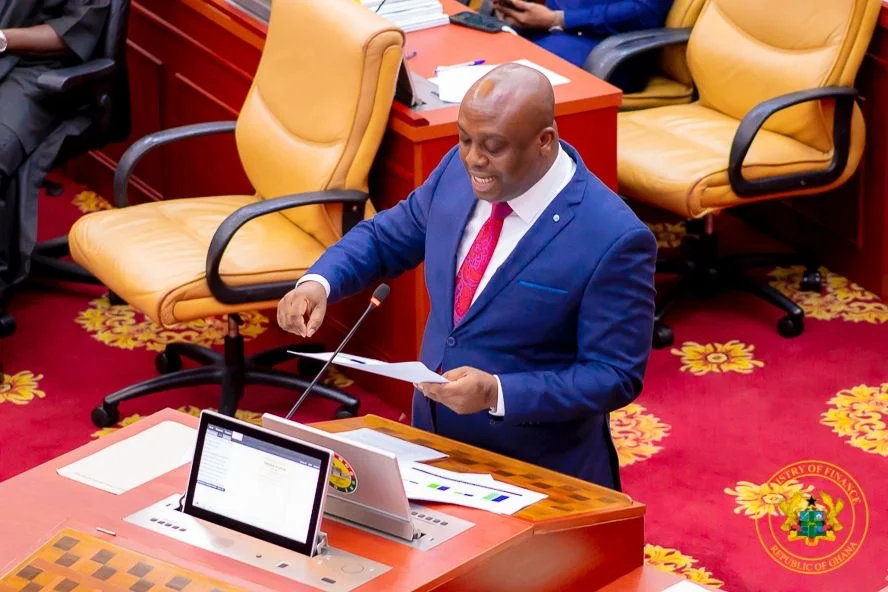
The think tank also criticised the approach taken in a recent parliamentary briefing by Deputy Finance Minister Thomas Nyarko Ampem. According to IMANI, the address highlighted financial irregularities within public agencies but did not identify private companies that may have participated in the transactions.
The brief cited examples involving commercial banks connected to financial dealings, suppliers linked to the procurement of maize under a programme referred to as the Dry Spell initiative, as well as companies involved in grain transportation and defence vehicle supply.
IMANI argued that leaving out the identities of such entities limits public understanding of the full scope of corruption schemes. It stressed that corruption often involves collaboration between public officials and private businesses, making it essential for investigations to target both parties.
Need for Transparency and Accountability
According to the organisation, corruption cases that are exposed but not followed by prosecutions risk becoming routine public discussions rather than catalysts for reform.
IMANI warned that repeated announcements of irregularities without naming the actors involved could weaken deterrence and undermine confidence in anti corruption institutions.
The organisation also cautioned that public attention may gradually shift away from such revelations if they fail to lead to tangible legal consequences. IMANI concluded that Ghana’s anti corruption strategy should focus on ensuring that those responsible for financial misconduct face the full force of the law.

The organisation argued that progress should not be measured only by improvements in corruption perception rankings but by visible legal outcomes such as arrests, prosecutions and convictions. It added that the justice system must apply the law equally to all offenders regardless of their social status or financial resources.
By publicly identifying and prosecuting businesses that collaborate in fraudulent schemes, the think tank believes Ghana can strengthen transparency, protect public resources and rebuild trust in governance.