Chief Executive Officer of the Ghana Chamber of Mines,Ing. Kenneth Ashigbey, has spearheaded a strategic advocacy for a redesigned fiscal regime that balances aggressive investment attraction with robust state revenue mobilization.
This call for a consultative “pull back” aims to assemble a high-level technical committee of experts to recalibrate the existing and newly passed royalty structures, specifically targeting a “sweet spot” that prevents capital flight while ensuring the sovereign state benefits from the current bullish gold market.
By advocating for a collaborative re-evaluation of how royalties are levied, the Chamber seeks to move away from rigid taxation toward a dynamic, sliding-scale model that can withstand the inherent volatility of global metal prices.
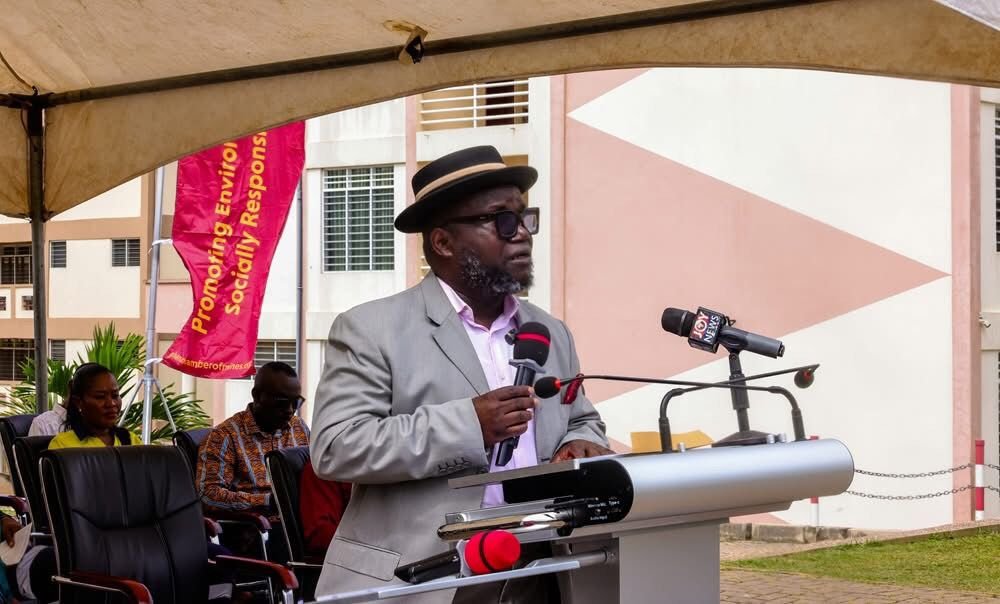
“So we find out that in, so our call that we’re making is that let’s pull back, let’s come together around the table again, bring all the experts that are involved, let’s all look at that. What is the best sliding scale so far as gold, metals, revenues are concerned? How do we do that in such a way that we are able to ensure that some Ghanaians who are beginning to start mining.”
Ing. Kenneth Ashigbey

This proposed engagement is rooted in the necessity of creating a predictable economic environment that encourages both the expansion of existing brownfield projects and the birth of new indigenous mining ventures.
A harmonized fiscal framework is viewed as the primary catalyst for extending the “life of mine” for several key operations, which in turn secures long-term employment for thousands of Ghanaians and sustains the local supply chain.
The Chamber’s stance emphasizes that while the government requires immediate liquidity to manage the national economy, an overly burdensome tax regime during price peaks could stifle the very reinvestment needed to guarantee “sustainable income” for the state over the next several decades.
The Architecture of a Balanced Sliding Scale
The crux of the Chamber’s proposal lies in the implementation of a sophisticated sliding-scale royalty system tailored to the realities of modern extraction costs.
Under the current gold price environment, there is a risk that “short-term effects” might lead to reactionary fiscal policies; instead, Ing. Kenneth Ashigbey suggests a framework where the government “maximizes revenues” when prices are high, but provides enough breathing room when the “price of gold is at a low point” to prevent mine closures.
This elasticity is critical for projects like the Obuasi Mine redevelopment, which operates on a complex 10-year developmental plan.
For massive capital-intensive projects, the “payback period for the investment” is the primary metric used by international financiers.
If the fiscal framework is too rigid, the risk premium rises, making it difficult for operators to “raise those capitals” necessary for deep-level mining or technological upgrades.
By refining the sliding scale, the industry can ensure that when the “great mines” of Ghana perform well, the windfall is shared equitably, providing the state with the fiscal space to fund national development without killing the “goose that lays the golden egg.”
Empowering Indigenous Players and Small-Scale Growth

A significant portion of the Chamber’s advocacy focuses on the democratization of the mining sector, specifically ensuring that “Ghanaians who are beginning to start mining” are not priced out of the market before they break ground.
Junior miners and indigenous firms often struggle with the high cost of entry and the difficulty of attracting foreign direct investment (FDI).
A collaborative fiscal framework would create a tiered approach that allows “smaller mines to also be able to grow,” transitioning them from artisanal or small-scale operations into mid-tier contributors to the formal economy.
When local entrepreneurs go out “looking for investment,” the stability of the royalty regime is their strongest selling point.
A volatile or unpredictable tax environment acts as a deterrent to the “big push” for indigenous participation.
By stabilizing these costs through expert-led dialogue, the Chamber believes it can foster a new generation of Ghanaian mining magnates who can contribute to “creating a lot of jobs” and deepening the local content footprint within the extractive value chain.
A Synergistic Outcome for the State and Industry
The proposed fiscal recalibration offers a win-win scenario that addresses the divergent needs of the public and private sectors.
For the Government of Ghana, the benefit is the shift toward “sustainable income” rather than erratic, one-off windfalls. By participating in this dialogue, the state gains access to technical data from the “great mines,” allowing for more accurate revenue forecasting and a reduction in tax disputes.
This transparency ensures that the “necessary revenue” is raised to support the national budget while maintaining Ghana’s reputation as a premier mining destination in Africa.
For the mining industry, the reward is the “expansion of the mines” and the ability to “extend their life of mine.”
This longevity is the bedrock of corporate social responsibility and environmental land reclamation efforts.
When companies have the fiscal certainty to plan 20 years into the future, they invest more heavily in local infrastructure and human capital.
As Ing. Kenneth Ashigbey notes, the goal is to ensure that “every engagement engenders a lot more investment,” creating a virtuous cycle where high productivity leads to high revenue, effectively transforming the extractive sector into a permanent pillar of Ghanaian prosperity.
READ ALSO: All Big Push Contracts Follow Procurement Law – Roads Minister