Ghana’s recent macroeconomic gains have sparked cautious optimism among policymakers and financial sector players.
However, leading voices in the banking and industrial sectors are warning that stability without deliberate action risks leaving the economy exposed to global shocks and failing to deliver meaningful improvements in jobs and productivity.
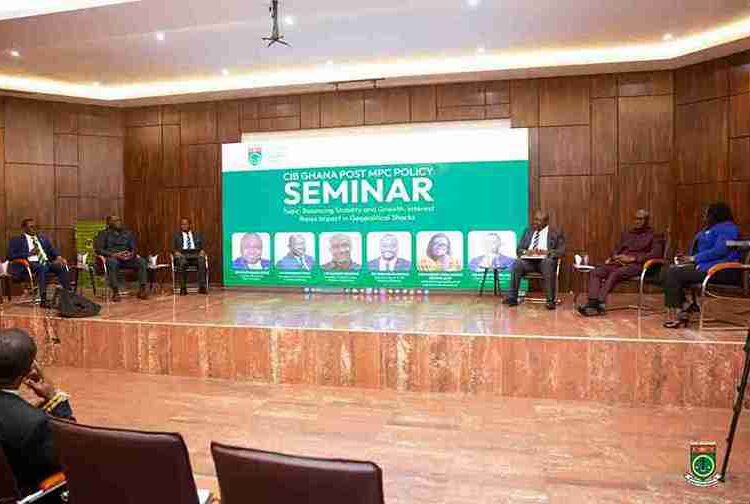
This was the central message at the Post-MPC Policy Seminar organized by Chartered Institute of Bankers Ghana, where stakeholders called for a shift from stabilization to inclusive and sustainable growth.
From Stability to Real Growth
The seminar, held under the theme ‘Balancing Stability and Growth: Interest Rates Impact in Geopolitical Shocks,’ brought together representatives from the Bank of Ghana, Ministry of Finance, industry associations, and financial institutions.
Participants acknowledged that Ghana has made significant strides in stabilizing key macroeconomic indicators. Inflation has declined sharply, the cedi has shown relative stability, and international reserves have improved. Yet, speakers stressed that these gains must translate into real economic outcomes.
“Our findings indicate that stability is being effectively transmitted into lending, but there is scope for further easing to support the real sector,” said Mr Robert Dzato, Chief Executive Officer of CIB Ghana.
His remarks were based on findings from a Pre-MPC survey conducted across the banking sector. The survey revealed that about 72 percent of respondents expressed high confidence in Ghana’s economic stability, while 89 percent anticipated improved lending appetite in the coming quarter.
Despite this optimism, concerns remain about high real interest rates and restrictive funding conditions, particularly within savings and loans institutions.

BoG Signals Policy Shift
A key highlight of the seminar was the policy direction outlined by the Governor of the Bank of Ghana, Dr Johnson Pandit Asiama, whose speech was delivered on his behalf.
The central bank signaled a transition from a focus on macroeconomic stabilization to promoting durable and inclusive growth in 2026. The recent reduction in the policy rate to 14 percent from 15.5 percent is expected to lower borrowing costs and expand access to credit, especially for small businesses and traders.
Dr Philip Abradu-Otoo, Director of Research at the central bank, emphasized the significance of the country’s macroeconomic turnaround.
He noted that “these gains provide a platform for inclusive growth” and stressed the importance of policy coordination and regulatory support to strengthen the banking sector as an engine of economic transformation.
Private Sector Seen as Job Engine
Speakers at the seminar consistently underscored the importance of private sector participation in translating stability into job creation.
Dr Theo Acheampong, Technical Advisor to the Minister of Finance, pointed out that Ghana must go beyond stabilization and focus on growth strategies that enhance productivity and create employment.
He highlighted structural weaknesses in the economy, particularly its vulnerability to external shocks, and called for long-term transformation in key sectors such as agriculture and manufacturing.
According to him, the private sector must lead job creation efforts, while government provides an enabling environment through supportive policies and infrastructure.
This sentiment was echoed by industry representatives who stressed the need for targeted interventions to support production and exports.
Call for Industrial Financing
A major concern raised during the discussions was the lack of long-term financing for industry. Mr Eric Defor, representing the Association of Ghana Industries, argued that commercial banks alone cannot meet the financing needs of manufacturers.
He called for the establishment of a dedicated industrialization fund to support long-term investments in the productive sectors of the economy.
Without such mechanisms, participants warned that Ghana risks remaining dependent on imports and vulnerable to global economic disruptions.
The call for a balanced approach to fiscal and monetary policy was also emphasized, with a focus on promoting sustainable growth and strengthening local industries.
Banking Sector Adapts to New Realities
The seminar also highlighted evolving practices within the banking sector aimed at improving loan performance and managing risks.
Harriet Osei-Mensah Owusu of Standard Chartered Bank noted that stricter underwriting standards and deeper client engagement are becoming essential in the current environment.
She emphasized the importance of trust and ethical conduct in sustaining strong relationships between banks and their clients.
At the same time, banks are exploring opportunities in digital assets and cryptocurrency, although they remain cautious in their risk management strategies.
Traders Raise Concerns Over Pricing and Technology
From the perspective of traders, macroeconomic stability has not yet translated into lower prices for goods and services.
Clement Boateng, President of the Ghana Union of Traders’ Associations, clarified that declining inflation does not automatically reduce prices but rather slows the rate at which they increase.
He also raised concerns about the implementation of an AI-based system at ports for calculating duties and taxes. According to him, the system has introduced challenges that require broader stakeholder engagement and review.
Participants agreed that coordinated fiscal and monetary policies, structural reforms, and targeted investments are essential to converting stability into sustained growth.
They emphasized that without deliberate efforts to support the real sector, create jobs, and boost productivity, the gains achieved so far could prove insufficient in the face of global uncertainties.
READ ALSO: TOR MD Laments Global Tension’s Impact on Operations