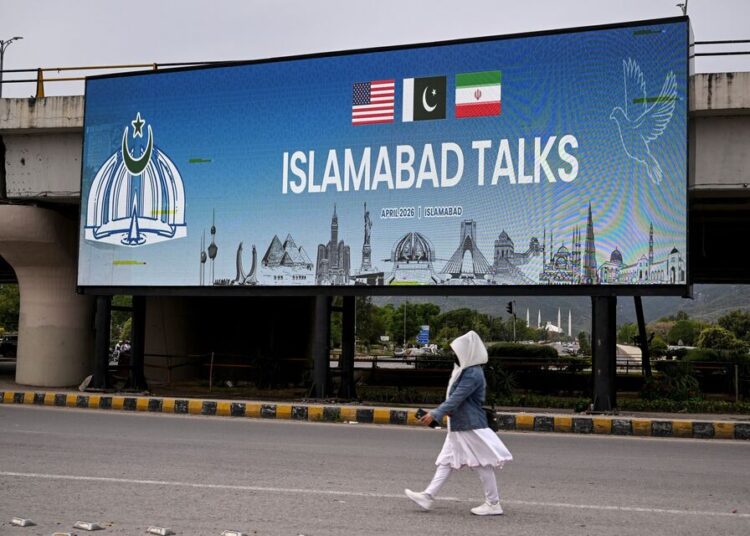
Discussions on US-Iran ceasefire are set to begin in Pakistan’s capital.
US Vice President JD Vance and Iranian parliamentary Speaker Mohammad Bagher Ghalibaf will lead the negotiations in Islamabad aimed at securing a permanent end to the war.
Pakistani Prime Minister Shehbaz Sharif described the talks between the US and Iran as “make or break,” emphasizing its significance. The government has declared a two-day holiday, and 10,000 security personnel have been deployed.
Iran’s delegation arrived in Pakistan’s Islamabad after midnight, with the US delegation arriving a little later. Vance arrived separately a while after.
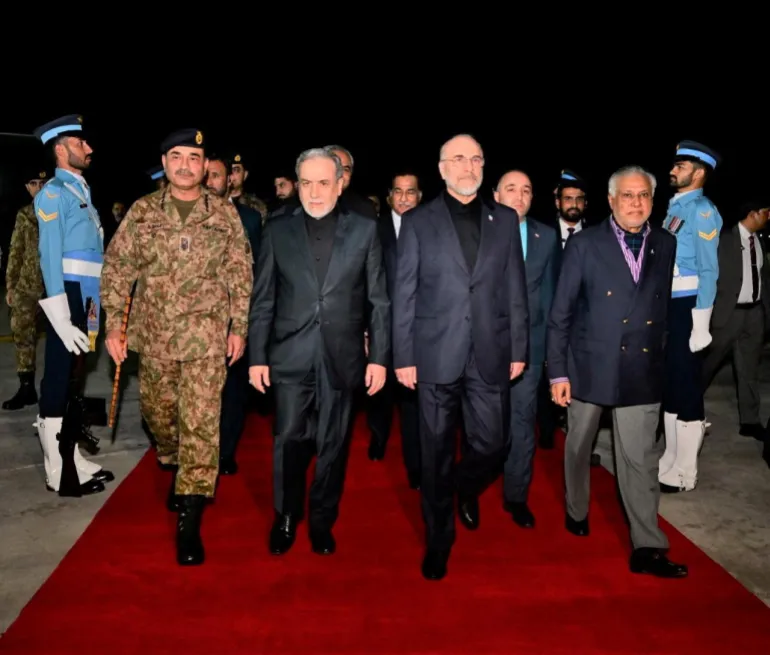
Lead US Negotiator, Vice President JD Vance said before departure for Pakistan that he expected “positive” results from the talks. Though he is leading the US delegation, Vance added that he had received “pretty clear guidelines” from President Donald Trump.

The US and Iran have offered conflicting messages on the agreed-upon terms for the negotiations, including the contents of a 10-point plan put forward by Tehran. This throws the upcoming talks into doubt.
One critical point of discord has been whether the ceasefire applies to Israel’s invasion and ongoing offensive in Lebanon.
The Trump administration has not yet released a clear picture of the initial framework it agreed to with Iran, though it has maintained that it is different from the 10-point plan published by Iran. Analysts have said that there are yawning gaps between the two sides over issues related to Iran’s future control of the Strait of Hormuz, frozen Iranian assets, the future of Iran’s nuclear programme and Israel’s invasion of Lebanon.
The US and Israel have argued that a ceasefire in Lebanon was not part of the deal, contradicting Iran and Pakistan.
On Friday, Iranian Parliament Speaker Mohammad Bagher Ghalibaf said the disconnect could derail negotiations before they begin.
“Two of the measures mutually agreed upon between the parties have yet to be implemented: a ceasefire in Lebanon and the release of Iran’s blocked assets prior to the commencement of negotiations. These two matters must be fulfilled before negotiations begin.”
Mohammad Bagher Ghalibaf
The Iranian military’s joint command, meanwhile, warned that it has its “fingers on the trigger” due to repeated “breaches of trust” by the US and Israel.
Trump Says Strait Of Hormuz To Reopen “Fairly Soon”
Meanwhile, US President Donald Trump said that the Strait of Hormuz will reopen “fairly soon” with or without Iran’s assistance, as Tehran’s effective blockade of the waterway continues to roil global energy supplies.
Despite the announcement of a two-week ceasefire between the US and Iran, shipping in the strait remains at an effective standstill, disrupting approximately one-fifth of global oil and natural gas flows.
According to S&P Global Market Intelligence, only two vessels passed through the strait on Friday, down from five the previous day. It noted that since the start of the ceasefire, just 22 ships with their automatic identification system turned on have exited the strait, compared with about 135 daily transits before the war.
According to Lloyd’s List Intelligence, more than 600 vessels, including 325 tankers, are still stranded in the Gulf due to the blockage of the strait.
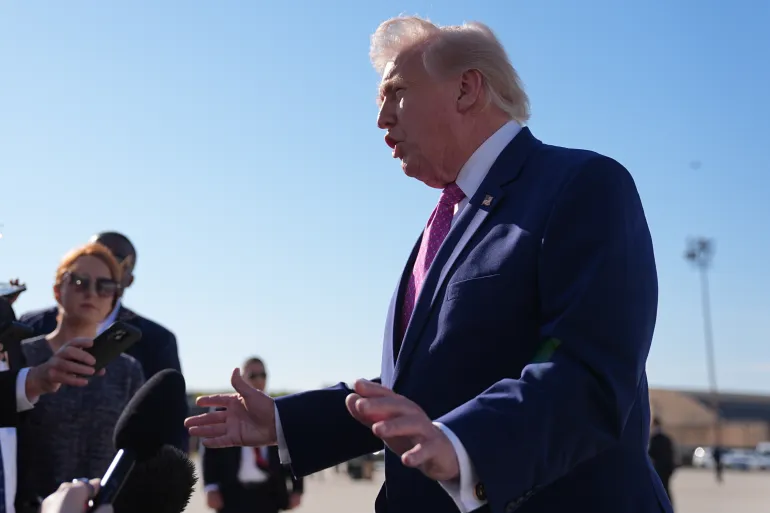
Speaking to reporters on Friday in advance of peace talks between US and Iranian officials in Pakistan, Trump said that the US would “open up the Gulf” and that other countries were ready to “help out.” “It won’t be easy,” Trump said. He did not elaborate on how Washington would unblock the critical maritime chokepoint.
Trump also said that he would not accept Iran’s imposition of a de facto toll booth system in the strait.
Tehran has indicated that it intends to charge vessels fees for safe passage even in the event that a deal is reached with the US to end the war. “If they are doing that, we’re not going to let that happen,” Trump told reporters before boarding Air Force One at Joint Base Andrews in Camp Springs, Maryland.
Trump said that ensuring Iran does not possess nuclear weapons is the priority in any agreement, and the strait would open “automatically.” “No nuclear weapons, that’s 99 percent of it,” Trump said. He iterated that the strait will “open up,” adding, “If we just left … otherwise they make no money.”
READ ALSO: KMA Issues Warning As Oti Landfill Nears Total Capacity