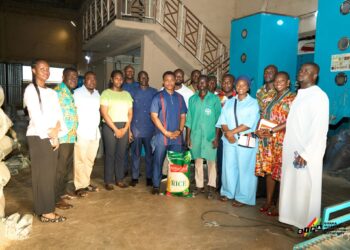
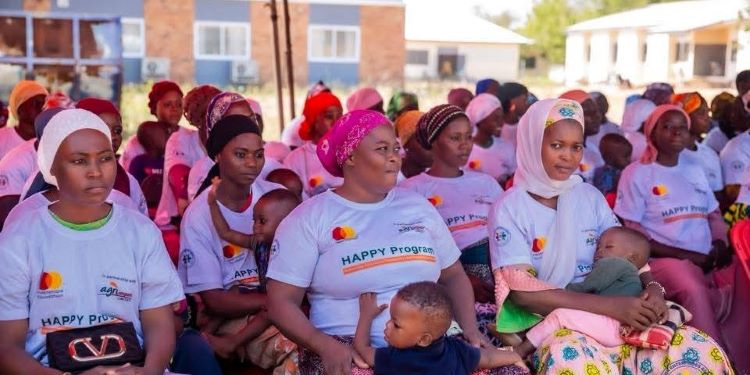
The Ghana Enterprises Agency (GEA), led by Chief Executive Officer Margaret Ansei, has initiated a targeted industrial mobilization in Walewale, distributing specialized start-up kits to 150 young women to mark the transition from theoretical vocational training to active market participation.
According to the Agency, this deployment, conducted under the Harnessing Agricultural Productivity and Prosperity for Youth (HAPPY) Project, is a calculated move to decentralize agricultural processing and anchor the rice value chain within rural communities.
The economic landscape of the North East Region has undergone a functional transformation, as equipping these women with the mechanical means of production addresses the structural gap between raw paddy cultivation and high-value market-ready products.
“In the North East Region, Walewale, 150 young women have taken a significant step toward economic independence following the distribution of start-up kits under the “HAPPY” Project. Trained in the rice processing value chain, these young agripreneurs are now equipped to add value, generate income, and strengthen local food systems”
Ghana Enterprises Agency
The Agency emphasized how strategically significant the choice of Walewale as a focal point for this intervention was. The North East Region is a major hub for paddy production, yet the lack of localized processing infrastructure has historically led to high post-harvest losses and suppressed profit margins for local farmers.
The HAPPY Project seeks to reverse this trend by empowering a new generation of agripreneurs to capture the value-added segment of the industry. This is an intervention meant to industrialize the local food system by providing the physical assets necessary to turn raw crops into income-generating commodities.
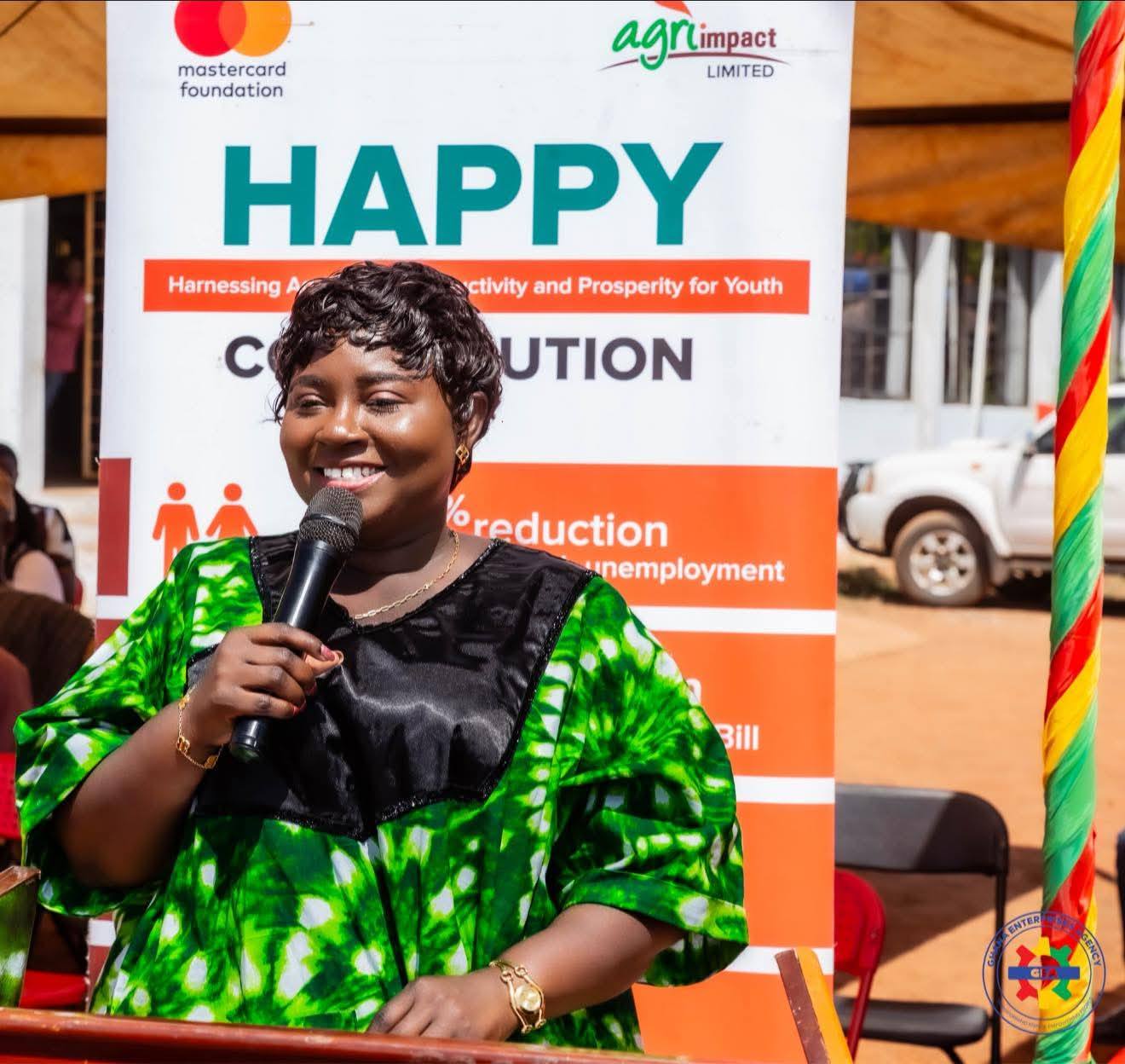
According to the GEA CEO, this initiative is underpinned by the desire to master the rice processing value chain.
Though processing is the critical phase where raw paddy is de-hulled, polished, graded, and packaged for the consumer market, much of the rice grown in the northern regions is transported to larger urban centers or even outside the country for processing, stripping the local economy of potential wealth.
Training and equipping these 150 women in specific technical processes related to this effectively creates a network of micro-industrial units across Walewale. These start-up kits serve as the primary capital investment required to bridge the processing gap, allowing these women to operate at a level that meets modern market demands for quality and consistency.
The distribution of these kits also addresses the issue of productive resources. For young women in rural settings, the barrier to entering agribusiness is rarely a lack of skill, but a lack of specialized equipment and capital. The GEA’s intervention acts as a safeguarding mechanism.
The GEA’s goal is to ensure that these women can enter the marketplace with products that can compete with imported rice via the machinery and tools provided for high-quality processing.
The Economic Multiplier
The decision to target young women for this project is backed by a clear macroeconomic logic.
In the context of rural development, female entrepreneurs act as a powerful economic multiplier, as women are statistically more likely to reinvest their earnings into household nutrition, education, and local health systems, ensuring that the prosperity generated by the HAPPY Project has a wide geographic and social reach.
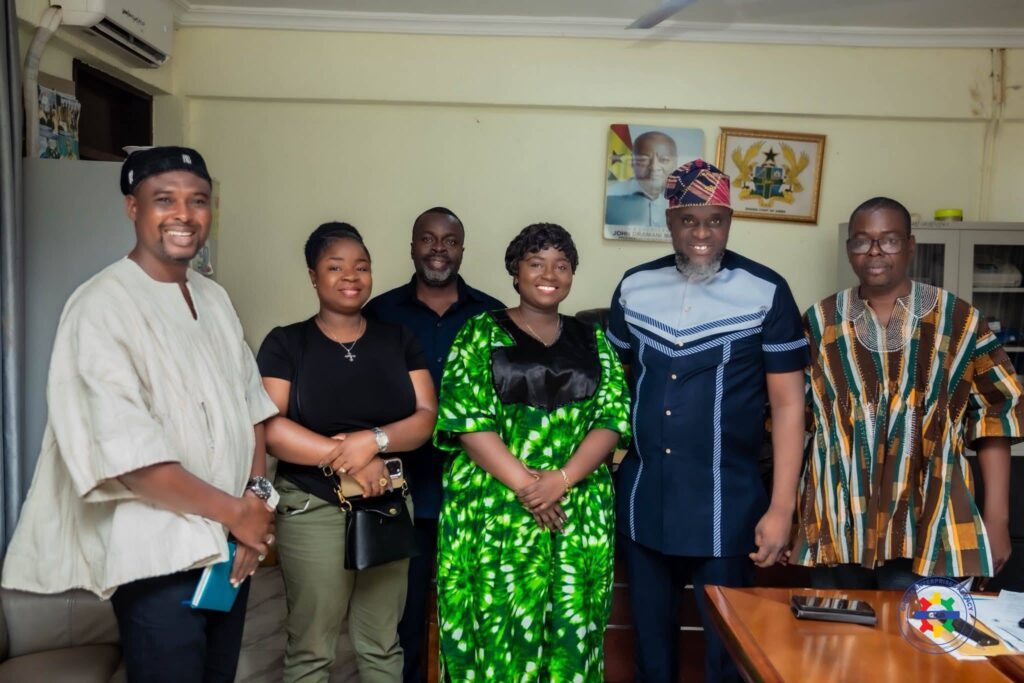
For the GEA, empowering 150 women in Walewale doesn’t just support 150 individuals; it fortifies the economic resilience of hundreds of households and creates a stable demand for raw paddy from local farmers. Furthermore, the rise of these female agripreneurs encourages the formalization of the local agribusiness ecosystem.
As these women scale their operations, they will require support services – ranging from equipment maintenance and logistics to software for inventory management. This creates a secondary layer of economic activity, turning Walewale into a more integrated and self-sustaining industrial hub.
The goal is to move beyond subsistence and toward a model of agricultural prosperity, where the entire community benefits from the professionalization of the rice value chain. The Agency noted that the long-term merit of the HAPPY Project lies in its contribution to national food systems.
Since Ghana spends significant foreign exchange on rice imports – a dependency that leaves the country vulnerable to global price fluctuations and supply chain disruptions – strengthening the domestic capacity for rice processing is a fundamental requirement for achieving food sovereignty.
The GEA noted that localizing the processing phase in the North East Region will reduce the carbon footprint of the rice supply chain, lead to a substantial aggregate effect on local food availability, and aid the national reliance on internal production capabilities.
For Margaret Ansei, this localized production is expected to make available fresh, high-quality rice to consumers at a lower cost than imported alternatives, as she pledged support for more policy manifestations that build long-term institutional and economic growth.
“The Ghana Enterprises Agency remains committed to expanding access to productive resources, strengthening agribusiness ecosystems, and delivering transformative outcomes where they matter most”
Margaret Ansei, GEA CEO
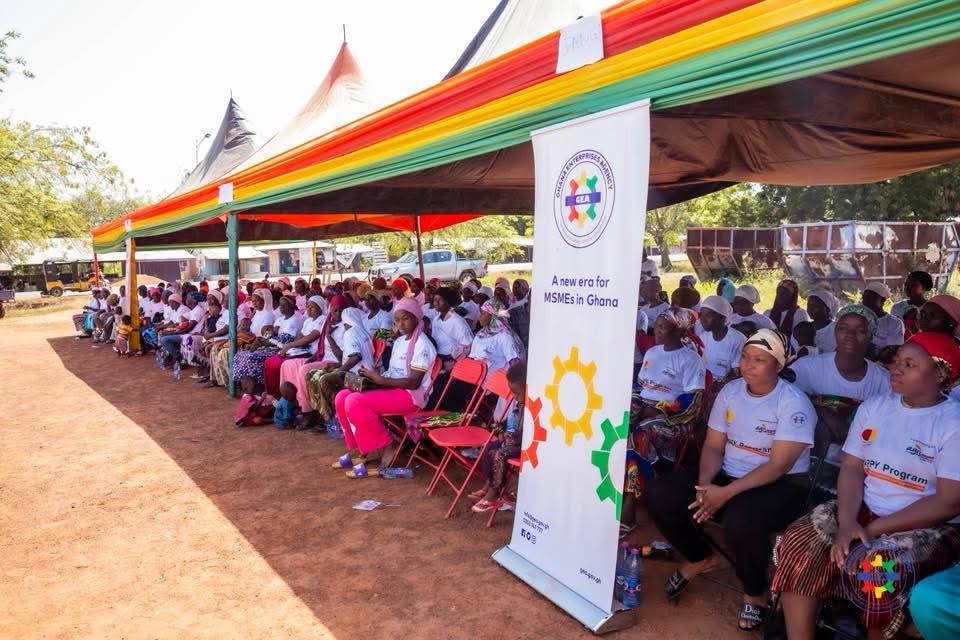
The launch of the HAPPY Project in Walewale marks a definitive step toward a more inclusive and industrialized agricultural sector, focusing on the rice processing value chain to address the most critical bottleneck in the northern agricultural economy.
As these 150 young women begin their journey as agripreneurs, the impact of their work is expected to be felt far beyond the borders of the North East Region.
READ ALSO: Mining Companies Bear Full Responsibility for Concession Safety & Stewardship – MinCom