Institute of Economic Research and Public Policy (IERPP) has raised concerns regarding extensive revenue leakages within the nation’s petroleum sector, revealing that over 200 million litres of fuel cannot be accounted for between 2020 and 2025.
This massive discrepancy has sparked fears over the integrity of Ghana’s fuel supply chain and the efficiency of existing regulatory frameworks.
According to the institute, the missing volumes have resulted in the loss of more than GH¢600 million in tax revenue, a situation they describe as a “major threat” to the country’s ongoing fiscal recovery and overall economic stability.
“The emerging consensus across industry groups, oversight bodies and sector reports are clear: over 200 million litres of fuel cannot be accounted for, resulting in more than GH¢600 million in lost tax revenue. This clearly indicates that at the ports, up and down streams, leakages are rampant. Ghana must choose transparency over silence, enforcement over excuses, and public accountability over institutional delay.”
Institute of Economic Research and Public Policy (IERPP)
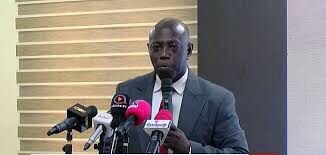
Prof. Isaac Boadi, the Executive Director of the IERPP, detailed these findings in a press statement asserting that the leakages are persistent across the entire distribution network.

The institute’s analysis drew from a wide range of data, including the Petroleum Product Analysis Report for 2025 and findings from the Public Interest and Accountability Committee (PIAC).
They argue that the failure to track these volumes suggests significant “structural inefficiencies” and weak monitoring at various entry points and depots.
Digital Oversight and the SML Paradox
A central concern raised by the IERPP is the apparent decline in the effectiveness of monitoring systems that were previously touted as robust.
The institute questioned why the petroleum distribution chain remains vulnerable despite the implementation of digital reforms like the Electronic Revenue Assurance System and the Integrated Customs Management System (ICUMS).
Specifically, the IERPP pointed to the prior involvement of Strategic Mobilisation Limited (SML), questioning why the controls and real-time tracking systems allegedly embedded during their engagement are no longer functioning effectively to prevent such massive losses.
The Chamber of Oil Marketing Companies has joined the call for improved oversight, recommending the mandatory use of Automatic Tank Gauging (ATG) technology and more rigorous routine stock reconciliation.

Prof. Boadi emphasized that the industry needs to move away from “paper-based oversight” and toward a “system-based enforcement” model where every litre is tracked in real-time.
The institute noted that while customs revenue surged from GH¢16.1 billion in 2021 to GH¢45.3 billion in 2024, the underperformance of indirect taxes by 21.5 per cent suggests that these technological gains are not being felt uniformly across the tax administration.
Fiscal Fragility and Structural Weaknesses
The IERPP’s report highlights a troubling paradox: while the Ghana Revenue Authority (GRA) showed strong nominal growth increasing tax revenue from GH¢43.9 billion in 2019 to GH¢153.6 billion in 2024 the actual collection remains far below the nation’s potential.
Citing the World Bank’s 8th Ghana Economic Update, the institute noted that tax collection averaged only 13.2 per cent of GDP between 2017 and 2021, nearly 8 percentage points lower than the estimated tax capacity of 21.2 per cent.
This gap indicates that “persistent structural inefficiencies” continue to undermine the state’s ability to fund public services and manage its debt.
Furthermore, the data for the first eleven months of 2025 shows an overall revenue shortfall, with total revenue and grants reaching GH¢187.87 billion against a target of GH¢201.37 billion.
Most concerning to the think tank is the “dramatic collapse” in oil and gas receipts, which plummeted to GH¢5.92 billion, missing the target by a staggering 64.2 per cent.

IERPP argues that these figures do not add up, especially when oil tax revenue itself exceeded expectations by 31.2 per cent, suggesting that the “missing fuel” is merely the tip of a much larger iceberg of systemic leakages.
A Call for Radical Accountability
The think tank also demanded immediate answers from the government regarding who is accountable for these missing volumes and why enforcement mechanisms have remained so weak.
They referenced the 2024 Auditor-General’s report, which flagged GH¢18.42 billion in irregularities across public institutions, as proof that the problem is not merely theoretical but a deep-seated culture of administrative failure.

The IERPP insists that the government must move beyond simply publishing reports and start implementing stricter “recoverable” enforcement measures.
To address these concerns, the IERPP has posed seven critical questions to the authorities, focusing on the disconnect between rising oil taxes and falling total receipts.
They are pushing for a full audit of the petroleum monitoring chain to identify the “private actors and officials” linked to the unaccounted fuel.
Prof. Boadi warned that Ghana’s fiscal sustainability is at stake, stating that “every avoidable leakage” directly weakens the government’s ability to protect its citizens from future economic shocks and global price volatility.
READ ALSO: Kuami Eugene Opens Up on Amicable Exit from Lynx Entertainment