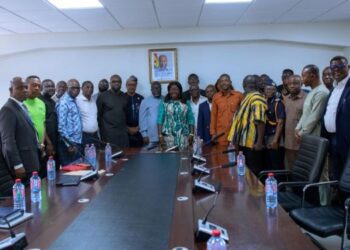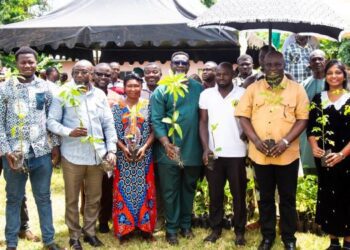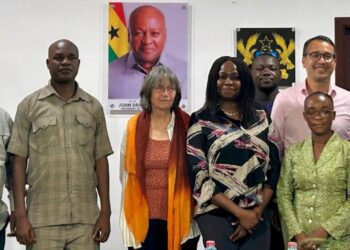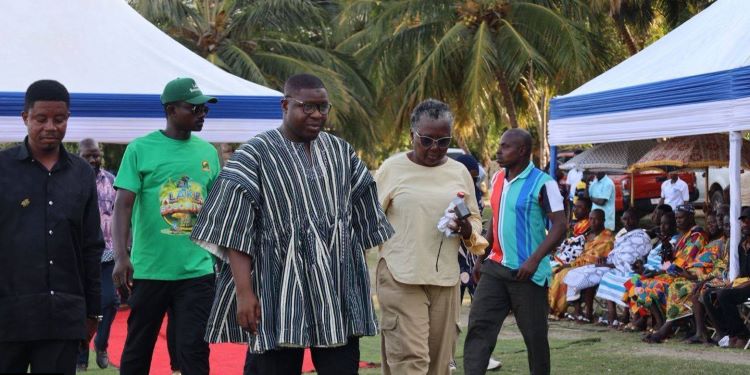
The Minister for Fisheries and Aquaculture Development, Hon. Emelia Arthur, has concluded an intensive six-day nationwide assessment of Ghana’s inland fisheries with a move toward biotechnological restoration and commercial-scale aquaculture at Lake Bosomtwe in the Ashanti Region.
According to the Ministry of Fisheries and Aquaculture Development (MoFAD), the tour served as the opening salvo of a state-led effort to modernize fish farming, restore depleted natural habitats, and anchor the nation’s blue economy in data-driven innovation.
Conducting site audits of both state-run research facilities and high-tech private enterprises, Hon. Emelia Arthur demonstrated that national self-sufficiency in fish production is no longer a matter of traditional guesswork but a rigorous industrial objective, underscoring a pivot where inland water bodies are viewed as a treasure trove.
“The tour reached a high point at the Kona Odumase Pilot Aquaculture Center (PAC), where the Minister emphasized that data-driven farming is the future of the industry. Discussions focused on turning the center into a premier hub for research and capacity building to help local farmers transition from subsistence to commercial-scale operations”
Ministry of Fisheries and Aquaculture Development
The PAC was repositioned as a premier hub for aquaculture adaptive trials, designed to provide the data necessary for local farmers to scale their operations. For the Ministry, the transition from subsistence to commercial farming requires a shift in the biological management of fish stocks, moving toward high-yield, disease-resistant varieties that can thrive in localized conditions.



This focus on “data-driven farming” is intended to eliminate the high failure rates associated with informal pond management, providing a scientific floor for private investment and rural job creation.

The conclusion at Lake Bosomtwe highlighted the Ministry’s most sophisticated ecological intervention: the restoration of a UNESCO Biosphere Reserve. Recognizing that the lake’s unique biodiversity is under threat from overfishing and habitat degradation, Hon. Emelia Arthur committed to a major hatchery restoration project on-site.
Unlike traditional stocking programs that introduce fast-growing exotic species, the initiative will focus on the breeding and reintroduction of indigenous native fish. This “bio-restoration” strategy is to preserve the natural equilibrium of the lake while ensuring that the 2016 UNESCO status remains a functional reality rather than a ceremonial title.
The Ministry aims to create a biological reservoir that will sustain the livelihoods of the surrounding communities for generations.
During the community durbar at the lake, the dialogue shifted toward the enforcement of responsible fishing practices and the protection of juvenile fish, where Hon. Arthur lauded the efficacy of traditional fisheries management practices, suggesting that the future of inland conservation lies in a hybrid model where local customs and modern scientific oversight work in tandem.
This stakeholder engagement was crucial because the success of the hatchery program depends on the community’s willingness to enforce “closed windows or mesh-size regulations.” For Lake Bosomtwe, the goal is to create a self-sustaining ecosystem where the preservation of the UNESCO heritage provides the foundation for a thriving, sustainable local economy.
Private Sector Agility
A recurring theme throughout the six-working-day mission was the “private sector agility” observed at facilities like CART4D, G-Farms, and private aquaculture centers in the Ashanti Region.
Hon. Arthur identified the private sector as the primary engine for technological adoption, noting that commercial farms are moving faster than state institutions in implementing innovative fish farming techniques. At CART4D, the discussions focused on the role of specialized technology in optimizing feed conversion ratios and water quality management.
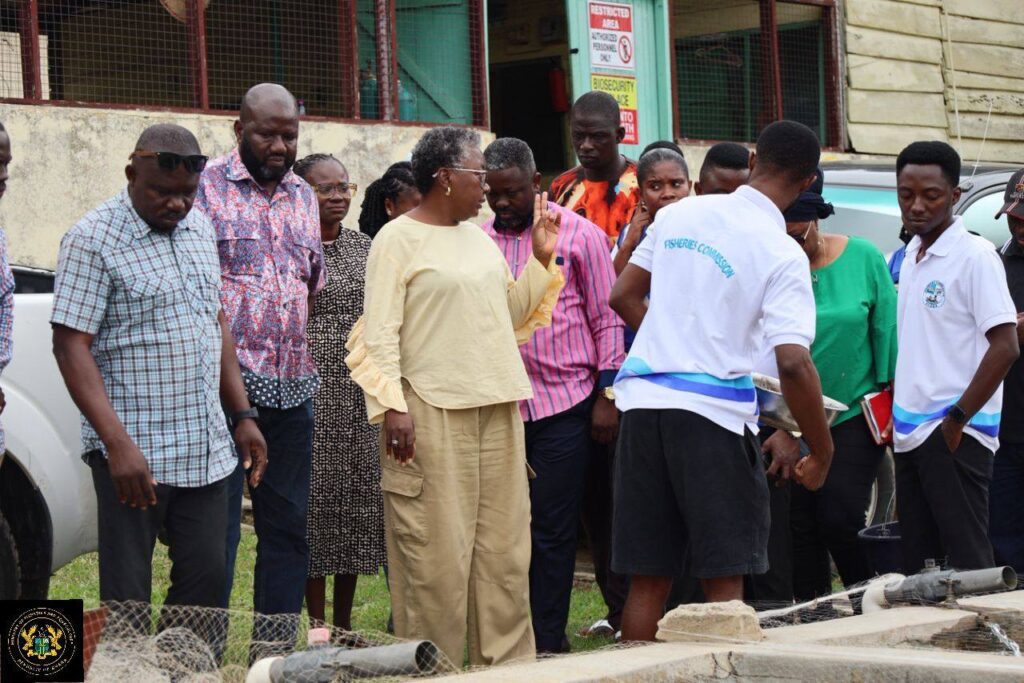
The engagement signaled the Ministry’s intent to foster a public-private partnership (PPP) model where the state provides the regulatory and research floor, while private capital drives the expansion of production capacity.
The Minister’s visit to the Nkawie Agric/Fisheries Site further emphasized the need for technical and financial synergy between state-supported projects and site managers. MoFAD identified the specific infrastructure gaps that prevent local aquaculture from reaching international standards by auditing these facilities.
The strategy is to ensure that these sites receive the necessary support to remain sustainable, effectively turning them into satellite demonstration hubs for aspiring fish farmers. This industrial modernization is a direct response to the growing national demand for protein, positioning aquaculture as a viable alternative to the increasingly stressed marine fisheries sector.
The conclusion of Hon. Emelia Arthur’s landmark tour marks the beginning of a renewed phase of development defined by a four-fold strategy centered on food security, employment, ecosystem preservation, and innovation.
MoFAD noted that it aims to increase inland production to reduce the nation’s reliance on fish imports and strengthen national food security. Simultaneously, the expansion of the aquaculture value chain is expected to create thousands of jobs for youth in rural and peri-urban areas, particularly in the Ashanti Region, where the infrastructure for pond and cage farming is already established.
The preservation of ecosystems like Lake Bosomtwe serves as the environmental anchor for this growth, ensuring that the drive for productivity does not come at the cost of long-term ecological health.
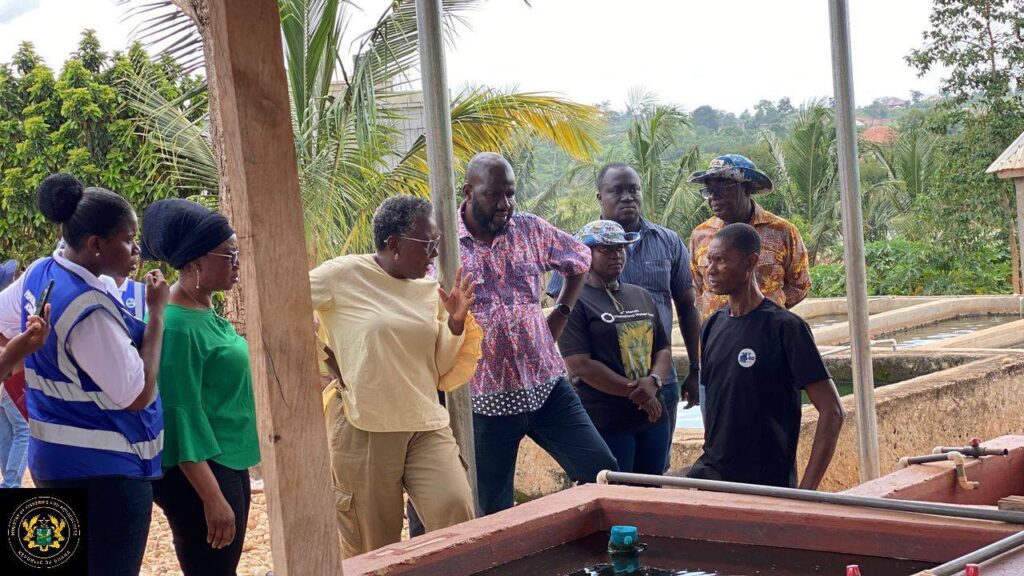
Hon. Arthur called on Metropolitan, Municipal, and District Chief Executives (MMDCEs) to treat aquaculture as a local investment priority, adding that aquaculture should be a key component of district-level economic planning rather than a centralized government project.
READ ALSO: Hegseth Defends $1.5 Trillion Budget Request