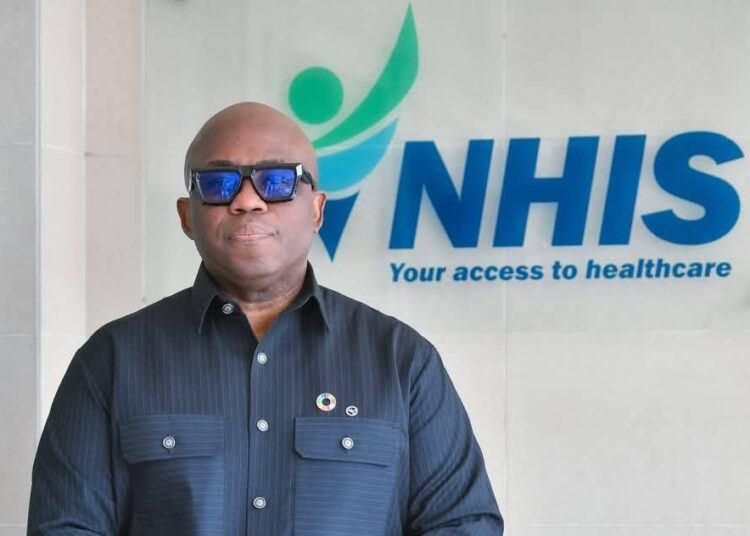
The National Health Insurance Authority has confirmed disbursing more than GHC157 million in claims to healthcare service providers across Ghana in April 2026, marking another significant step in efforts to strengthen the country’s health financing system and ensure uninterrupted service delivery under the National Health Insurance Scheme.
According to an official statement issued by the Authority’s Claims Directorate, the payments were made in two separate tranches during the month.
The first payment of GHC43.7 million was released on April 14, while a second and larger disbursement of GHC113.6 million was made on April 30, bringing the total amount paid within the month to more than GHC157 million.
The Authority explained that the payments covered accrued and unvetted claims dating back to 2019 which had remained outstanding due to what it described as isolated peculiar challenges within the claims processing system.
In addition, some vetted claims processed through March 2026 were also included in the latest round of disbursements.
Officials at the NHIA said the prompt settlement of claims forms part of the institution’s broader commitment to ensuring that members of the National Health Insurance Scheme continue to receive uninterrupted access to healthcare services while service providers maintain the financial stability needed to operate effectively.

Private Facilities Receive Largest Share
The latest claims payment also reflected the scale of service delivery across Ghana’s healthcare network, with private healthcare facilities receiving the largest share of the total disbursement. Public health institutions followed, while mission facilities also received substantial allocations under the claims settlement exercise.
The distribution further showed that high volume facilities accounted for 64 percent of all claims paid, underscoring the heavy patient load managed by larger hospitals and treatment centers across the country.
Clinics and health centers received 23 percent of the payments, while Community-based Health Planning and Services compounds accounted for nine percent. Specialized healthcare facilities received the remaining four percent.
The NHIA noted that this structured disbursement approach is intended to ensure that all categories of service providers remain financially supported while continuing to deliver quality healthcare services to insured patients nationwide.
The Authority reiterated its determination to clear all outstanding arrears and further strengthen the financial capacity of health institutions across the country.
Financial Reforms Reshape the NHIA
The latest claims payment comes amid sweeping structural and financial reforms being implemented by the NHIA under the administration of President John Dramani Mahama.
The reforms are designed to place Ghana on a sustainable path toward universal health coverage by 2030 while strengthening the long term financial stability of the national insurance system.
A major turning point in this reform process came with the repeal of Act 947, a law that previously imposed annual funding caps on allocations to the National Health Insurance Authority.

The removal of these restrictions created a new financial framework that significantly expanded the Authority’s spending capacity and operational flexibility.
Following the repeal, the NHIA budget increased from GHC7 billion to an unprecedented GHC10.7 billion, creating the fiscal space required to tackle historical arrears, improve provider reimbursements, and modernize the country’s healthcare financing system.
The expanded budget has transformed the Authority’s ability to respond to provider concerns while ensuring that hospitals, clinics, and community health facilities receive payments on time.
Historical Arrears Cleared
The uncapped funding model has also enabled the NHIA to systematically clear historical provider arrears accumulated between 2022 and 2025, restoring financial confidence among healthcare providers across the country.
For years, delayed reimbursements had created operational difficulties for many facilities, with some providers struggling to maintain supplies, pay staff, and deliver essential services. In some cases, patients were reportedly compelled to make out of pocket payments for services that should have been covered under the insurance scheme.
However, the introduction of prompt disbursement mechanisms has injected billions of cedis back into the healthcare system, significantly restoring trust between service providers and the national insurer.
The renewed confidence among providers is already improving patient experiences and strengthening the overall credibility of the National Health Insurance Scheme.
Digital Transformation Improves Efficiency
Beyond financial reforms, the NHIA has also accelerated the digital transformation of its operations to improve efficiency, accountability, and fraud detection.
More than 4,000 healthcare providers connected to the national insurance network have now transitioned from manual claims processing to unified electronic claims validation systems. The move is expected to reduce administrative inefficiencies, eliminate unnecessary delays, and curb financial leakages within the system.
The Authority has also introduced artificial intelligence driven fraud protection systems designed to analyze claims data, identify irregular patterns, detect operational loopholes, and improve compliance across both public and private healthcare providers.
Health sector analysts say the integration of automated verification systems represents a significant modernization of Ghana’s healthcare financing architecture and could help protect the sustainability of the insurance scheme in the years ahead.
Tariff Adjustment Targets Illegal Co Payments
Another major reform introduced by the Authority involves a 120 percent tariff adjustment for healthcare providers. Officials say the revised tariff structure is intended to provide more realistic economic compensation for medical services and permanently eliminate illegal co-payments often demanded from insured patients.
The tariff correction forms part of broader efforts to end out of pocket patient exploitation and ensure that National Health Insurance Scheme members receive the full benefits promised under the programme.
At the same time, the Authority has introduced biometric and cashless administrative systems across regional offices, while mobile phone based membership renewal platforms have made it easier for citizens to maintain active insurance coverage.
Toward Universal Health Coverage
With more than GHC157 million paid in April alone, the NHIA says it remains focused on building a financially stable, technologically advanced, and patient centered insurance system capable of delivering universal healthcare access by 2030.
As claims continue to be settled, digital systems expanded, and provider confidence restored, Ghana’s health insurance sector appears to be entering a new phase of stability and reform aimed at ensuring equitable healthcare access for all citizens.