Petroleum Commission has participated in the 2026 Africa Energies Summit in London as part of efforts to deepen investor engagement and promote Ghana’s upstream petroleum opportunities.
The high-level delegation capitalized on the premier global gathering to position the West African nation as a highly competitive destination for oil and gas capital.
By spearheading these dialogues in the United Kingdom, the state regulator aimed to revitalize exploration activities and showcase untapped offshore blocks to a sophisticated audience of financiers and technical experts.
“The Commission engaged key international oil companies, regulators, and industry stakeholders on investment opportunities, regulatory reforms, partnerships, and regional collaboration. The Summit further highlighted growing global interest in Africa’s oil and gas sector and the importance of competitive policies, clear regulations, and efficient approval processes in attracting investment.”
Petroleum Commission
The Commission engaged key international oil companies, regulators, and industry stakeholders on investment opportunities, regulatory reforms, partnerships, and regional collaboration.



These comprehensive, face-to-face engagements focused heavily on demonstrating Ghana’s political stability, progressive fiscal terms, and newly structured hydrocarbon blocks.
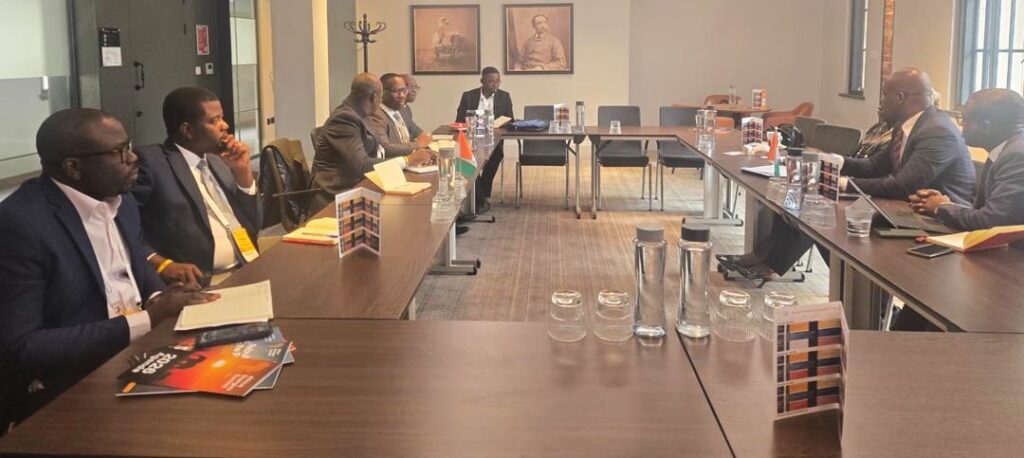
The Summit further highlighted growing global interest in Africa’s oil and gas sector and the importance of competitive policies, clear regulations, and efficient approval processes in attracting investment.
By addressing these critical parameters directly with global executives, the Ghanaian delegation successfully emphasized the country’s commitment to eliminating bureaucratic bottlenecks and fostering a highly secure operating environment.
Catalyzing Upstream Investments and Legal Safeguards
The aggressive investment promotion strategy deployed by the state authority in London is positioned to serve as a major catalyst for the country’s primary energy sector.
By directly engaging tier-one international oil companies (IOCs) and showcasing geological data from untapped blocks, the country can reverse the recent decline in offshore exploration activities.
The introduction of competitive asset licensing models and flexible contractual setups during the summit provides the legal predictability that institutional investors crave when committing long-term capital to emerging markets.
Furthermore, the promotion of recent legislative updates minimizes the risk profiles of deepwater exploration projects, ensuring that foreign entities view the jurisdiction as a reliable operational base.
These structured dialogues effectively demonstrate that Ghana is actively refining its hydrocarbon governance framework to remain highly responsive to the shifting dynamics of global energy financing.
The strategic focus on regulatory transparency acts as an open invitation to global operators, reassuring them that their investments are legally insulated against arbitrary regulatory shifts or unexpected bureaucratic interference.
Fostering Strategic Alliances and Operational Synergies
Securing new international partnerships and deepening regional networks at the London summit will inject advanced technical capabilities into the domestic upstream ecosystem.
Collaborative partnerships with global operators allow for the seamless transfer of cutting-edge deepwater drilling technologies, seismic imaging data systems, and enhanced oil recovery mechanisms to local entities.
This technological infusion will significantly optimize output from maturing fields while reducing the technical risks associated with frontier basin exploration.
Additionally, the emphasis placed on cross-border collaboration allows the country to align its upstream master plans with broader regional infrastructure initiatives across West Africa.
This creates critical operational synergies, such as shared logistical hubs and unified pipeline networks, which reduce production costs for incoming operators.
By positioning the local industry within an integrated regional framework, the regulatory body is transforming the country into a strategic focal point for West African offshore logistics, thereby increasing the collective commercial appeal of its maritime concessions.
Enhancing Approval Efficiencies and Local Integration
The global emphasis on efficient approval procedures and policy clarity serves as a blueprint for domestic institutional optimization, ensuring a highly responsive operating environment.
By modernizing its internal regulatory structures to guarantee accelerated permitting timelines, the state agency reduces the costly project lead times that often deter international financiers. This administrative agility ensures that exploration and appraisal workflows transition swiftly into commercial development cycles, accelerating the timeline for first oil and state revenue generation.
Crucially, this continuous investor engagement creates an ideal environment for integrating robust local content mandates within international joint ventures.
As foreign capital enters the market under a transparent policy regime, domestic service providers, local engineers, and technical institutions gain unprecedented access to high-value procurement contracts and specialized skill development programs.
This strategic alignment guarantees that foreign direct investment is successfully converted into sustainable economic industrialization, expanding the domestic supply chain and solidifying long-term wealth creation for the nation.
READ ALSO: Minority Fires “87 Demands” at Mahama’s Government