• About
  • Advertise
  • Privacy Policy
  • Contact
Tuesday, July 14, 2026
  • Login
The Vaultz News
  • Top Stories
  • News
    • General News
    • Education
    • Health
    • Opinions
  • Economics
    • Economy
    • Finance
      • Banking
      • Insurance
      • Pension
    • Securities/Markets
  • Business
    • Agribusiness
    • Vaultz Business
    • Extractives/Energy
    • Real Estate
  • World
    • Africa
    • America
    • Europe
    • UK
    • USA
    • Asia
    • Around the Globe
  • Innovation
    • Technology
    • Wheels
  • Entertainment
  • 20MOBPL2DNew
  • Jobs & Scholarships
    • Job Vacancies
    • Scholarships
No Result
View All Result
The Vaultz News
  • Top Stories
  • News
    • General News
    • Education
    • Health
    • Opinions
  • Economics
    • Economy
    • Finance
      • Banking
      • Insurance
      • Pension
    • Securities/Markets
  • Business
    • Agribusiness
    • Vaultz Business
    • Extractives/Energy
    • Real Estate
  • World
    • Africa
    • America
    • Europe
    • UK
    • USA
    • Asia
    • Around the Globe
  • Innovation
    • Technology
    • Wheels
  • Entertainment
  • 20MOBPL2DNew
  • Jobs & Scholarships
    • Job Vacancies
    • Scholarships
No Result
View All Result
The Vaultz News
No Result
View All Result
in Economy, One Top Story

BoG’s Rate Freeze: Is This the Calm Before Ghana’s Economic Storm?

Maynard Championby Maynard Champion
May 25, 2026
Reading Time: 6 mins read
BoG's Rate Freeze: Is This the Calm Before Ghana's Economic Storm?

The Bank of Ghana’s decision to freeze its Monetary Policy Rate at 14 percent has triggered discussions among economists across the country. 

Announced after the 130th Monetary Policy Committee meeting, this pause in the easing cycle comes after five consecutive rate cuts. 

While the central bank highlights balanced risks and strong domestic buffers, many economists, businesses, and analysts question whether this hold might leave Ghana exposed to escalating global headwinds; with many also asking if this could be the quiet period before a more turbulent economic phase?

Background to the Dramatic Policy Hold

The BoG has delivered significant monetary easing since late 2025. The policy rate stood higher earlier in the recovery phase before successive reductions brought it to 15.5 percent in January 2026 and further down to 14 percent in March 2026. The May decision to maintain the rate marks a clear shift toward caution. 

ADVERTISEMENT

Governor Dr. Johnson Asiama emphasized that risks to inflation and growth remain broadly balanced, but persistent geopolitical tensions, particularly in the Middle East, warrant vigilance.

BoG Opens High Stakes MPC Meeting Amid Mounting Economic Threats
BoG Governor Dr. Johnson Asiama at MPC Meeting

Headline inflation rose slightly to 3.4 percent in April 2026 from 3.2 percent in March. Although this remains exceptionally low and well below the 8 ± 2 percent target band, the uptick was driven mainly by non-food components, including fuel prices. Core inflation, however, continued to ease, suggesting underlying pressures are still moderating. 

Gross international reserves strengthened to around 14.4 billion US dollars, providing cover for over five months of imports. The cedi recorded an 8.4 percent year-to-date depreciation against the dollar by mid-May, influenced by energy sector demand and corporate outflows.

Robust Domestic Economic Recovery

Ghana’s economy has shown remarkable resilience in the post-crisis period. Real GDP growth reached approximately 6 percent in 2025, supported by strong performances in services, agriculture, industry, and gold exports. High-frequency indicators such as the Composite Index of Economic Activity expanded solidly in the first quarter of 2026. Private sector credit is gradually recovering, consumer and business sentiments have improved, and industrial output has picked up.

Fiscal outcomes also reflect progress. Provisional data for early 2026 showed improved expenditure control and a near-balanced budget position in the first quarter. The banking sector continues to strengthen, with better balance sheets, declining non-performing loans in several key metrics, and renewed profitability. 

ADVERTISEMENT

These developments represent a significant turnaround from the debt distress and high inflation environment of 2022-2023, aided by successful debt restructuring and the IMF-supported program.

Global Uncertainties Loom Large

Despite these domestic achievements, external risks dominate the BoG’s cautious stance. Escalating conflicts in the Middle East have disrupted global supply chains, pushed crude oil prices higher, and created uncertainty around energy costs. 

For Ghana, which relies on imported petroleum products for transport and power generation, any sustained spike in fuel prices could feed directly into higher transport fares, utility tariffs, and production costs.

ADVERTISEMENT
best places to hide in war 20 stocks analysts say to bet on amid us iran conflict

Analysts point to multiple transmission channels for potential shocks. A sharper depreciation of the cedi could inflate the cost of imports ranging from raw materials to consumer goods. Food inflation, although currently subdued, remains vulnerable to both global commodity trends and domestic supply disruptions such as weather events. 

Businesses already operating with relatively high real borrowing costs may delay investments, expansion, and hiring if the policy rate stays elevated for longer than anticipated.

International forecasts for Ghana’s 2026 growth have been tempered. Institutions project real GDP expansion around 4.8 to 5.5 percent, down from stronger 2025 outturns. This moderation reflects a higher statistical base effect as well as global uncertainties. While not alarming, the slowdown highlights the need for sustained momentum in private sector activity.

Effects on Businesses, Households, and Key Sectors

For businesses, especially small and medium enterprises that form the backbone of employment, the rate freeze means lending rates will remain relatively high in the short term. Average lending rates, though trending downward, still pose challenges for working capital, inventory financing, and long-term projects.

Manufacturers and traders worry about margin compression if energy and imported input costs rise. Exporters may enjoy some competitive advantage from a weaker cedi but face higher costs for essential imports.

Households currently enjoy the benefits of historically low inflation, which has preserved purchasing power and supported consumption. However, any pass-through from higher fuel and utility prices could quickly reverse these gains and reignite cost-of-living pressures. Youth unemployment and structural job creation issues persist, underscoring that monetary policy must work hand-in-hand with fiscal measures and sectoral reforms in agriculture, manufacturing, and digital services.

Financial markets will watch closely for signals in upcoming data releases. The uniform Cash Reserve Ratio adjustment to 20 percent in domestic currency, effective June 4, 2026, aims to tighten liquidity management while supporting stability.

Strategic Outlook and Policy Recommendations

The BoG has stressed its data-driven approach and readiness to adjust policy if incoming information alters the risk balance. Inflation is projected to trend gradually toward the target band in the medium term, supported by strong reserves, fiscal discipline, and anchored expectations. Nevertheless, vigilance against second-round effects from global shocks remains critical.

Experts recommend several complementary actions. Accelerating structural reforms to boost agricultural productivity and food security can reduce vulnerability to price swings. Diversifying exports beyond gold and cocoa, investing in renewable energy, and expanding digital infrastructure will enhance overall resilience. Deeper financial inclusion and improved access to affordable credit for SMEs could stimulate broader-based growth even under a cautious monetary stance.
Ghana’s Economy Soars 6.3% in Q2 2025 as Services Sector Leads the Charge
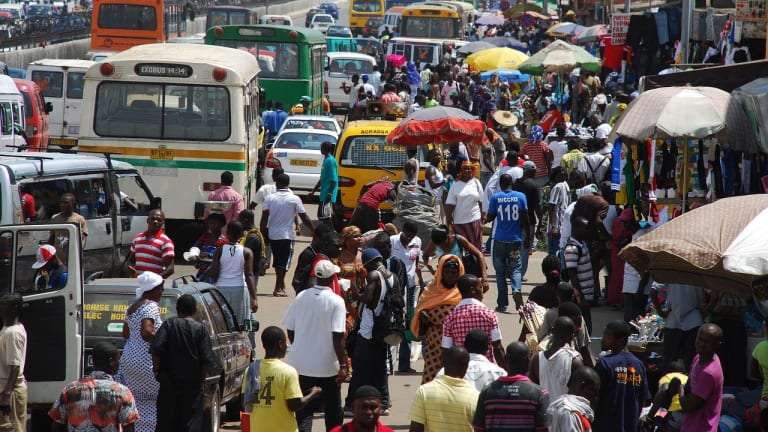
A typical Ghanain Market

Closer coordination between monetary and fiscal authorities will be essential to prevent any return to fiscal dominance that undermined stability in the past. Stakeholders should also prioritize productivity-enhancing investments and private sector-led initiatives.

In the intervening time, the BoG’s dramatic rate freeze reflects prudent risk management amid an uncertain global environment. Domestic foundations appear solid after years of difficult reforms, yet the coming quarters will test Ghana’s preparedness for potential economic storms. 

Whether this period proves to be a calm pause or the prelude to renewed challenges depends on how effectively policymakers, businesses, and citizens navigate the external pressures while building on hard-won internal strengths. The next MPC meetings will provide crucial signals on the future policy path.


READ ALSO: IMF Sees Fresh Threats in Ghana’s Banking System

ADVERTISEMENT

Sign Up to Our Newsletter

Fresh updates, Straight to your inbox

Tags: Bank of Ghana MPC May 2026BoG policy rate holdBoG rate freeze 2026Cedi depreciation concerns 2026Ghana economic storm fearsGhana GDP growth outlook 2026Ghana inflation April 2026Global shocks impact Ghana economy
ShareTweetShareSendSend
Please login to join discussion
Previous Post

GNPC, APPO Partner to Launch New African Energy Bank

Next Post

NPA Extends Public Fuel Safety Campaign Across Volta and Ashanti

Related Posts

Ghana Nears Historic External Debt Restructuring Finish as It Seals Landmark SADEREA Debt Exchange
Economy

Ghana Nears Historic External Debt Restructuring Finish as It Seals Landmark SADEREA Debt Exchange

July 13, 2026
Fiscal Recovery Faces Fresh Debt Service Threats
Economy

Fiscal Recovery Faces Fresh Debt Service Threats

July 13, 2026
Ghana's Economic Recovery Sparks Fresh Investment Optimism
Economy

Ghana’s Economic Recovery Sparks Fresh Investment Optimism

July 11, 2026
Debt Reforms Key to Ghana's Economic Recovery
Economy

Debt Reforms Key to Ghana’s Economic Recovery

July 10, 2026
ADVERTISEMENT

Sign Up to Our Newsletter

Fresh updates, Straight to your inbox

ADVERTISEMENT

Recent News

Seal of United States Central Command.svg

US Strikes Iran Again Amid Hormuz Strait Standoff

July 14, 2026
Basic School Children   in Ghana receiving instructions from their teacher

One in Three Districts in Ghana Faces Severe Teacher Shortages, Report

July 14, 2026
CalBank Profit Soars 25% to GHS353.6 Million in Strong First Half Performance CalBank PLC has delivered an impressive financial performance for the first half of 2026, posting a remarkable 25 percent increase in Profit Before Tax (PBT) to GHS353.6 million. The outstanding results highlight the bank's successful strategic transformation and underline its growing strength as one of Ghana's leading financial institutions. The latest figures show that Profit Before Tax climbed from GHS283.2 million in the corresponding period of 2025 to GHS353.6 million, driven by robust growth across the bank's core business operations. The performance reflects improvements in lending, customer deposits, fee based services, trading income, and overall operational efficiency. Unlike previous periods where earnings were significantly supported by impairment recoveries, CalBank's latest results demonstrate that its profitability is now being powered largely by the strength of its underlying banking business. Core Banking Business Drives Exceptional Earnings One of the biggest highlights of the first half performance was the remarkable growth in net interest income, which surged by 83 percent to GHS347.5 million. The increase came despite a relatively lower interest rate environment. Interest income rose from GHS399 million to GHS451.5 million as the bank continued expanding its earning assets. At the same time, funding costs fell sharply, with interest expenses dropping from GHS209 million to GHS104 million. This significant reduction in funding costs improved the bank's profitability and demonstrated stronger balance sheet management. CalBank also recorded exceptional growth from non interest income sources as it continued diversifying its revenue streams. Net fees, commissions, and trading income almost doubled, rising by 99 percent to GHS323.3 million from GHS162.7 million during the same period last year. The strong performance reflects increased customer activity across the bank's retail, commercial, and corporate banking segments. The diversified earnings profile places CalBank in a stronger position to withstand changing market conditions while maintaining sustainable profitability. Stronger Earnings Quality Boosts Investor Confidence Perhaps the most significant aspect of CalBank's results is the improved quality of its earnings. During the first half of 2025, impairment recoveries contributed approximately GHS154 million to profits. However, in the latest reporting period, impairment gains accounted for only GHS7 million. This means the overwhelming majority of profits were generated through normal banking operations rather than one off recoveries. The shift highlights the success of management's transformation strategy and provides greater confidence that future earnings will remain sustainable. Industry analysts often view recurring operating income as a stronger indicator of long term financial health than exceptional gains. Assets and Deposits Record Strong Expansion CalBank also recorded significant growth in its balance sheet during the period. Total assets expanded by 30 percent to GHS13.9 billion from GHS10.7 billion recorded at the end of June 2025. Customer deposits increased by the same margin, rising to GHS10.9 billion. The growth in deposits reflects increasing customer confidence in the bank's brand, improved service delivery, and expanding retail and commercial banking operations. Higher deposits also provide the bank with a stable funding base to support future lending and business expansion. The figures reinforce CalBank's growing position within Ghana's competitive banking industry. Bad Loans Decline Dramatically One of the most remarkable achievements during the first half of the year was the dramatic improvement in asset quality. The bank's Non Performing Loan ratio dropped sharply to 10.10 percent from an exceptionally high 51.60 percent recorded at the end of June 2025. The improvement reflects the successful execution of CalBank's balance sheet remediation programme and disciplined credit risk management practices. A healthier loan portfolio reduces future credit losses while creating additional room for prudent loan growth. The significant decline in bad loans also strengthens investor confidence and enhances the bank's overall financial stability. Capital Position Strengthens After Recapitalisation Following its successful recapitalisation in 2025, CalBank has continued strengthening its financial foundation. Its Capital Adequacy Ratio improved dramatically to 18.17 percent from a negative 7.6 percent recorded a year earlier. The turnaround highlights the success of the bank's recapitalisation efforts and demonstrates its renewed financial resilience. Strong liquidity levels further position the bank to support customers, finance new business opportunities, and meet future regulatory requirements with confidence. The improved capital position also creates greater flexibility for expansion while protecting shareholders against unexpected financial shocks. Management Confident of Even Better Results Commenting on the results, Managing Director Carl Selasi Asem described the first half performance as clear evidence that CalBank's transformation strategy is producing sustainable financial outcomes. He said the bank had achieved strong growth across its core businesses while improving funding efficiency, strengthening profitability, enhancing asset quality, reinforcing its capital base, and expanding its balance sheet. Mr. Asem stressed that the latest earnings were driven by the strength of the bank's underlying operations rather than one time recoveries, reinforcing the quality and sustainability of the results. Looking ahead, he expressed confidence that the momentum built during the first half would enable CalBank to deliver an even stronger performance during the remainder of 2026. Management says the bank remains committed to disciplined execution of its strategic priorities, strengthening customer relationships, maintaining prudent risk management, and creating sustainable long term value for shareholders. CalBank's Transformation Continues to Deliver CalBank's latest financial performance paints the picture of a bank that has successfully rebuilt its foundations and is entering a new phase of sustainable growth. With rising profits, stronger capital, expanding customer deposits, healthier assets, and significantly lower bad loans, the bank appears well positioned to compete aggressively within Ghana's banking sector. As economic conditions continue to improve, CalBank's focus on operational excellence and disciplined execution could make 2026 one of the strongest years in the institution's recent history. READ ALSO: GSE Opens Week with Explosive Trading Activity CalBank Profit Soars 25% to GHS353.6 Million in Strong First Half Performance

CalBank Profit Soars 25% to GHS353.6 Million in Strong First Half Performance

July 14, 2026
Foster Buabeng (CEO/Fund Administrator)

Teachers’ Fund Directs Members to Verify Names Across Official Records

July 14, 2026
GSE Opens Week with Explosive Trading Activity

GSE Opens Week with Explosive Trading Activity

July 14, 2026
ADVERTISEMENT
Next Post
NPA with WLGA

NPA Extends Public Fuel Safety Campaign Across Volta and Ashanti

The Vaultz News

Copyright © 2025 The Vaultz News. All rights reserved.

Navigate Site

  • About
  • Advertise
  • Privacy Policy
  • Contact

Follow Us

Welcome Back!

Login to your account below

Forgotten Password?

Retrieve your password

Please enter your username or email address to reset your password.

Log In
No Result
View All Result
  • Top Stories
  • News
    • General News
    • Education
    • Health
    • Opinions
  • Economics
    • Economy
    • Finance
      • Banking
      • Insurance
      • Pension
    • Securities/Markets
  • Business
    • Agribusiness
    • Vaultz Business
    • Extractives/Energy
    • Real Estate
  • World
    • Africa
    • America
    • Europe
    • UK
    • USA
    • Asia
    • Around the Globe
  • Innovation
    • Technology
    • Wheels
  • Entertainment
  • 20MOBPL2D
  • Jobs & Scholarships
    • Job Vacancies
    • Scholarships

Copyright © 2025 The Vaultz News. All rights reserved.

This website uses cookies. By continuing to use this website you are giving consent to cookies being used. Visit our Privacy and Cookie Policy.