Consumer advocacy group CUTS International Accra has accused Mobile Money Fintech Limited (MMFL), operators of MTN Mobile Money (MoMo), of abusing its dominant market position with the introduction of a proposed 0.75% wallet-to-bank transfer fee.
The controversial fee, which was expected to take effect on June 1, 2026, has now been suspended by the Bank of Ghana (BoG) following growing public backlash and concerns over consumer protection.
CUTS International praised the central bank for swiftly stepping in to halt the implementation pending broader consultations, describing the intervention as a victory for fairness, transparency, and consumer rights in Ghana’s rapidly growing digital finance ecosystem.
BoG’s Swift Intervention Wins Praise
The public policy think tank commended the Bank of Ghana for acting decisively at a time many consumers feared they would be burdened with additional transaction costs amid economic pressures.
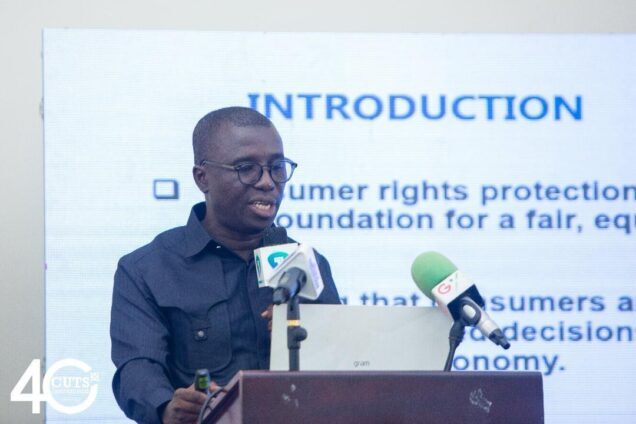
Speaking on the issue, Appiah Kusi Adomako, West Africa Regional Director of CUTS International Accra, applauded the regulator’s action.
“We applaud the Bank of Ghana for acting swiftly to protect consumers. This is exactly the kind of proactive regulatory oversight that builds public trust in our financial system. The regulator has sent a clear signal that changes to charges in the mobile money ecosystem must be introduced fairly, transparently, and in a manner consistent with the law.”
Appiah Kusi Adomako
The intervention by the BoG has sparked widespread debate about the balance between business sustainability and consumer protection within Ghana’s booming mobile money sector.
MMFL Defends Pricing Adjustments
While CUTS criticized the manner in which the fee was introduced, the organization clarified that it does not oppose MMFL’s right to review and adjust its pricing structure.
According to the group, businesses operating in competitive markets have legitimate reasons to revise charges to ensure operational sustainability and continued service delivery.
However, CUTS insisted that such changes must follow due regulatory procedures and prioritize fairness to consumers who depend heavily on mobile money services for daily financial transactions.
The organization argued that the proposed timeline for implementation was deeply problematic and potentially harmful to millions of users.
Dominance Concerns Shake Mobile Money Industry
CUTS pointed to MMFL’s overwhelming control of Ghana’s mobile money market as a major reason the proposed fee triggered public concern.
According to the group, MMFL controls nearly 75 percent of the country’s mobile money market, giving the company enormous influence over pricing and consumer behavior.
The think tank warned that such market dominance comes with significant responsibilities.
“Giving consumers barely one week’s notice about such a significant new charge is, in our view, a textbook example of the kind of conduct that constitutes an abuse of dominance. It is not just a matter of inconvenience; it is a fundamental breach of the principle of fair notice. Consumers deserve adequate time to understand a change, assess its implications, and make an informed choice about whether to continue with a provider or switch to an alternative.”
Appiah Kusi Adomako
The remarks have intensified calls for stronger oversight within the telecommunications and digital finance sectors.
The Battle Over Fair Notice
A major concern raised by CUTS was the short notice period provided before the proposed fee was expected to take effect.
The organization described the seven-day notification period as inadequate and unfair to consumers who rely on mobile money platforms for banking, transfers, savings, and payments.
CUTS argued that consumers should have enough time to study changes, compare alternatives, and make informed financial decisions.
“The doctrine of fair notice is a cornerstone of consumer protection and a basic tenet of ethical commercial conduct. By providing sufficient and reasonable notice, service providers enable consumers dissatisfied with new terms to exercise their right to switch to competing providers, such as Telecel Cash or AT Cash. The truncated notice period offered by MMFL effectively denied consumers this fundamental right.”
Appiah Kusi Adomako
The issue has reignited discussions around competition policy and customer rights in Ghana’s digital economy.
Mobile Money’s Critical Role In Ghana
CUTS also highlighted the enormous contribution mobile money has made toward financial inclusion across Ghana.
Over the years, mobile money services have transformed access to financial services, especially for people in rural and underserved communities who previously lacked access to traditional banking infrastructure.
The advocacy group emphasized that mobile money has reduced congestion at banking halls, lowered transaction costs, expanded financial access to the unbanked population, and strengthened participation in the formal economy.
“Mobile money has come to stay. It is central to our financial inclusion story and the daily lives of millions of Ghanaians. Any changes to its fee structure must therefore be handled with the utmost care, transparency, and respect for the consumer. We call on MMFL to engage meaningfully with regulators, consumer advocates, and the public during the consultation period to arrive at a fair and sustainable outcome.”
Appiah Kusi Adomako
In the interim, the suspension of the proposed fee has brought temporary relief to millions of MoMo users nationwide as consultations continue over the future of mobile money charges in Ghana.
READ ALSO: President Mahama Calls For National Unity During Eid-ul-Adha Celebration