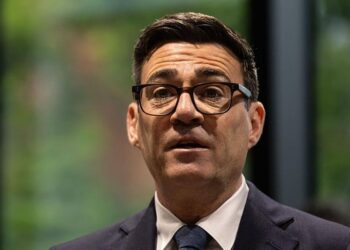
Former UK Armed Forces Minister Al Carns has stated that a major economic speech by Labour leadership frontrunner Andy Burnham will be critical in determining whether he runs for the party’s top job, arguing that Britain requires not only an ambitious vision but also a credible plan to deliver long-term national renewal.
Speaking amid growing speculation over Labour’s leadership contest following the resignation of Sir Keir Starmer, the Labour MP for Birmingham Selly Oak stated he would carefully assess Burnham’s proposals before making any decision about entering the race.
The comments come as momentum continues to build behind the former Greater Manchester mayor, with several senior Labour figures opting not to contest the leadership. Health Secretary Wes Streeting and Chief Secretary to the Treasury Darren Jones are among those who have ruled themselves out, leaving Burnham increasingly viewed as the leading candidate to succeed Starmer.
However, Carns argued that the nation has significant difficulties that necessitate careful policy planning across the economy, public services, and national defence, and that leadership should ultimately be determined by the power of ideas rather than political momentum, noting, “we need to see a vision, we need to see the plan because unfortunately a vision without a plan is a dream.”
Rather than focusing solely on broad political messaging, Carns noted that he wanted to hear concrete ambitions that could unite both the Labour Party and the wider country around common national objectives.
“What I would like to see is where do we want to be by 2029 and where do we want to be by 2034-35.
“Is it the healthiest nation in Europe, is it adding a trillion pounds onto our GDP, is national security important, how do we get the next generation to have a better deal than the last generation et cetera, et cetera.”
Al Carns
He added, “let’s see how that lands, let’s see how much that pulls everybody together. I’m not going to start jumping up and down until I’ve had a look.”
Should Carns decide to seek the Labour leadership, he would first need to overcome significant procedural hurdles. Under party rules, candidates require nominations from at least 81 Labour MPs before securing additional endorsements from affiliated organisations, including trade unions, making any leadership bid dependent on broad parliamentary and organisational support.
Defence Spending Emerges as Central Test for Labour’s Next Leader

National security has become one of the defining issues shaping the leadership debate following Carns’ recent resignation as Armed Forces Minister over disagreements surrounding defence funding.
His departure earlier this month highlighted growing discussion within British politics about how to strengthen the country’s military capabilities while balancing wider economic pressures and public spending commitments.
The government is expected to publish its Defence Investment Plan before the NATO summit scheduled for 7 July, making defence policy one of the first major tests awaiting whoever ultimately becomes Labour leader and potentially Britain’s next prime minister.
Carns indicated that Burnham’s position on defence would be among the most important aspects of the forthcoming economic speech.
“It’s much broader than just defence, bombs, bullets and battleships, it’s actually about national resilience.”
He argued that strengthening Britain’s security should extend beyond military procurement to include wider investment in economic resilience, infrastructure and public preparedness.
At the same time, Carns rejected suggestions that increased defence expenditure should be financed by reducing welfare spending.
Instead, he proposed that greater efficiency across government departments could generate savings without forcing a direct choice between social protection and national defence.
“I actually think there’s a far broader strategy across all the government departments to make it more productive and indeed shave 10% off by actually enhancing our standards across the country.”
Al Carns
Moreover, opposition parties have advanced different approaches to funding higher defence expenditure.
Neil Shastri-Hurst, Conservative MP for Solihull West and Shirley, argued that welfare spending should be reduced to provide additional resources for the armed forces.
“We’ve been very clear, we think the money should come from the welfare state. The welfare state should be there to protect the most vulnerable but it shouldn’t be there as a better alternative to going out to work.”
Neil Shastri-Hurst
He added, “we would reintroduce the two-child benefit cap, we would be cutting that welfare bill – at the moment the defence budget is a fifth of what we spend on welfare.”
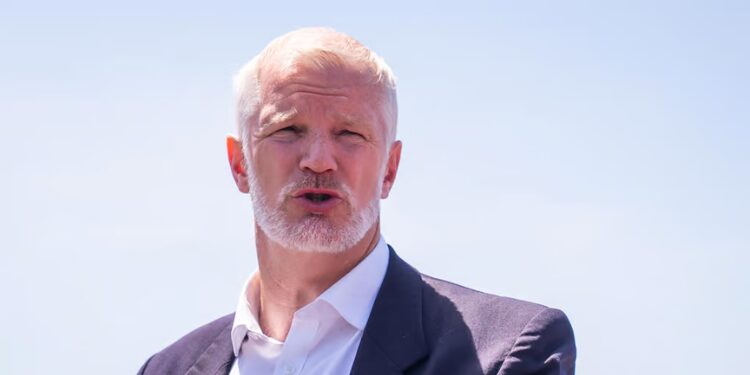
Reform UK also advocated redirecting government spending toward defence while criticising current fiscal priorities.
Dawn Husemann, Reform UK’s group leader on Shropshire Council, indicated that her party remained committed to increasing defence spending to 3.5% of gross domestic product by 2035.
“We’ve already committed to spending 3.5% of GDP by 2035 on defence spending which is incredibly important, we pull our weight on the world’s stage and we see that as a floor not a ceiling, Spending is about political choices and those choices at the moment are net zero, they are benefits for non-British people.”
Dawn Husemann
As Labour prepares for one of its most significant leadership contests in recent years, the debate has increasingly broadened beyond personalities to encompass competing visions for Britain’s economic future, defence strategy and public finances.
READ ALSO: Africans Have Been Underrated in Major Competitions – Thomas-Asante