Sudan’s paramilitary Rapid Support Forces (RSF) have been accused of committing crimes against humanity, ethnic cleansing and widespread atrocities during their prolonged campaign to seize the strategic city of el-Fasher in Darfur, according to a new report by Amnesty International that has renewed calls for urgent international intervention in the country’s devastating civil war.
Allegations of mass killings, torture, rape, sexual slavery, forced relocation, and the intentional targeting of civilians based on their ethnic identity are all documented in the report, which presents a graphic picture of the systematic violence committed during the RSF’s 18-month siege of el-Fasher.
Amnesty International stated that its investigation, which includes testimony from over 200 survivors, satellite photography, and thorough analysis of open-source evidence, suggests that some of the reported violations “may be relevant to the crime of genocide.”
The findings add to growing international concern about crimes perpetrated in Sudan’s western Darfur region, where severe combat between Sudanese Armed Forces (SAF) and the RSF has turned villages into some of the world’s most deadly battle zones.
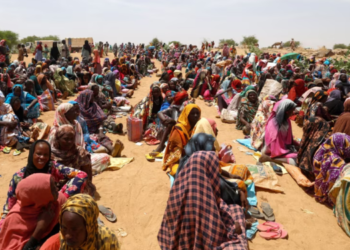
Sudan has remained engulfed in civil war since conflict erupted between the country’s military and the RSF nearly three years ago. The conflict, rooted in a struggle for political and military control following the collapse of Sudan’s transitional government, has evolved into one of the gravest humanitarian crises in the world. Hundreds of thousands of people are believed to have been killed, while more than 14 million have fled their homes, creating an unprecedented displacement crisis across Sudan and neighbouring countries.
Aid agencies estimate that nearly 28 million people now face acute hunger as conflict, economic collapse and repeated attacks on civilian infrastructure continue to devastate livelihoods.
The battle for el-Fasher has emerged as one of the defining episodes of the war. Located in North Darfur, the city became the last major urban centre in the region outside RSF control after the paramilitary group lost ground elsewhere, including its eventual withdrawal from the capital, Khartoum. Following setbacks in central Sudan, the RSF redirected its military campaign toward Darfur and neighbouring Kordofan, placing el-Fasher under siege for more than a year.
According to Amnesty International, civilians trapped inside and around the city bore the brunt of the offensive.
“The RSF’s crimes included murder, forcible transfer, imprisonment, torture, rape, sexual slavery, other forms of sexual violence, enslavement, extermination and persecution.”
Amnesty International
Investigators concluded that Arab fighters aligned with the RSF deliberately targeted members of non-Arab communities, with many victims selected because of their ethnic background rather than any military affiliation.
Moreover, researchers examined 89 open-source videos alongside satellite imagery documenting widespread destruction across North Darfur. The organisation said the evidence was corroborated by dozens of eyewitness accounts describing killings, forced displacement, sexual violence and attacks on children.
One of the survivors, Yagoub, a 17-year-old Zaghawa boy interviewed by Amnesty described how he was attacked while fleeing violence in Abu Zerega, south of el-Fasher.
“They tied me up and beat me with sticks and the back of an AK-47. Then one of them approached on a camel and just shot me in the leg,”
Yagoub
The teenager, who now relies on crutches to walk, noted eight of his cousins including four boys aged between 11 and 17 were killed during the same attack.
The rights organisation argues that such testimonies reflect a broader pattern of abuses committed throughout the siege rather than isolated incidents.
Although the RSF has acknowledged that violations have occurred during the conflict, it has consistently denied responsibility for widespread atrocities and has previously argued that allegations against its fighters have been exaggerated.
International Pressure Mounts as Humanitarian Crisis Deepens Across Sudan

Amnesty International’s findings have intensified calls for stronger international action to protect civilians and hold perpetrators accountable, with the organisation urging governments and international institutions to move beyond expressions of concern and adopt concrete measures to end the violence.
Amnesty Secretary General Agnès Callamard noted that the scale of abuses documented around el-Fasher represents one of the darkest chapters of Sudan’s conflict.
“Children were not collateral damage of this violence often, they were deliberately targeted and have suffered immensely. They have been killed, injured, raped, abducted, and forcibly recruited on a massive scale.”
Agnès Callamard
Callamard also criticised the international community’s failure to respond decisively despite repeated warnings about the deteriorating humanitarian situation in Darfur.
“The world was warned of the horrors that civilians in el-Fasher confronted as the RSF laid siege to the city. It is a stain on the conscience of humanity.”
Agnès Callamard
She called for an immediate ceasefire, stronger international protection for civilians and the urgent deployment of an international force capable of helping prevent further atrocities.
The report also states that Amnesty has identified RSF commanders allegedly responsible for serious violations of international humanitarian law and argues that those individuals should face independent criminal investigations.
The latest allegations reinforce earlier assessments by the United Nations, which previously warned that attacks on el-Fasher bore the “hallmarks of genocide.”
UN investigators reported that more than 6,000 people were killed during just three days of intense fighting around the city, underscoring the extraordinary scale of violence witnessed in North Darfur.
The conflict has also been characterised by widespread sexual violence, which the United Nations has repeatedly described as a weapon of war. Women, girls, men and boys have reportedly been subjected to rape and other forms of sexual abuse by armed groups operating across several regions of Sudan.
While much international attention has focused on allegations against the RSF, both the paramilitary force and the Sudanese Armed Forces have been accused of committing grave human rights violations during the conflict.
Humanitarian organisations warn that continued fighting is making it increasingly difficult to deliver aid to vulnerable communities, many of whom remain trapped in areas cut off by insecurity and damaged infrastructure. Displacement camps are struggling to cope with growing numbers of people fleeing violence, while food shortages, disease outbreaks and collapsing health services continue to worsen conditions.
READ ALSO: Rains Kill 18, Flatten 58 Houses Across Three Regions