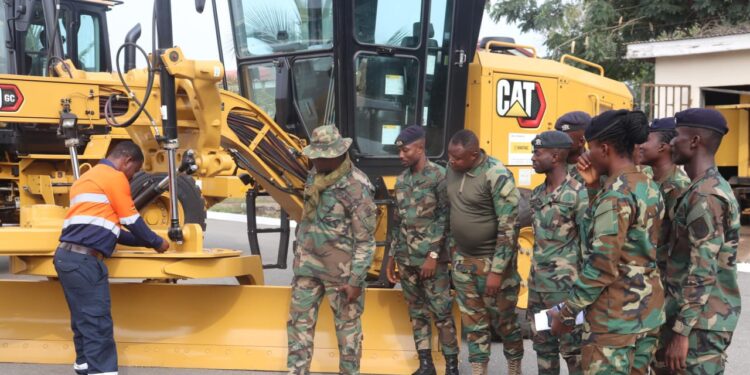
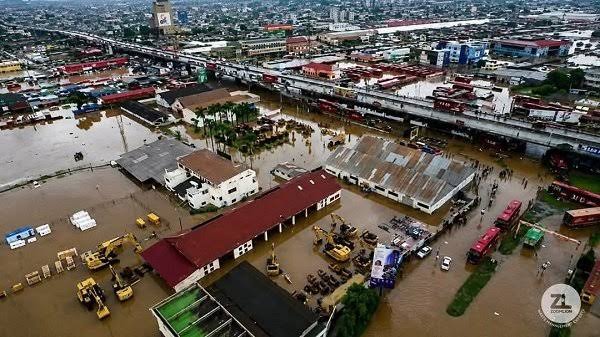
The 48 Engineer Regiment of the Ghana Armed Forces has been formally tasked to lead emergency clearance works across flood affected areas in Ghana, as the government moves to bypass standard procurement delays and get military engineers onto blocked waterways and drainage systems without losing time.
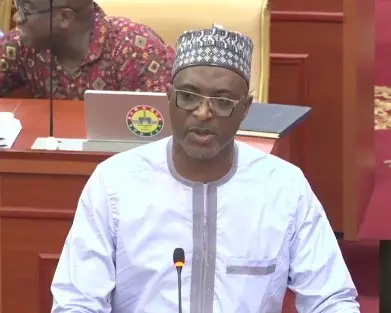
Interior Minister Mubarak Muntaka Mohammed announced the deployment before Parliament, alongside a GHS 350 million relief and mitigation package and the activation of the National Disaster Management Committee.
At the center of the government’s emergency response sits the 48 Engineer Regiment, a unit chosen precisely because its deployment allows government to act fast.
“Using military engineers will enable the government to remove debris, clear blocked drainage systems and undertake urgent engineering works without delays associated with procurement procedures.”
Interior Minister Mubarak Muntaka Mohammed
The decision reflects a clear prioritization of speed. With waterways still blocked and communities across multiple regions bearing the consequences of sustained heavy rainfall, waiting weeks for contractors to be engaged and mobilized was not an option government was willing to take.

The regiment is now on the ground, and its work forms the technical backbone of the broader coordinated response.
Presidential Directive Releases GHS 350 Million
The regiment’s deployment came alongside a direct presidential intervention. Following an aerial assessment of the flood situation, President John Dramani Mahama directed the immediate mobilisation of resources from the Contingency Fund, with a total of GHS 350 million earmarked for the disaster response.
The allocation splits across two lines. GHS 200 million will fund relief items and humanitarian assistance for more than 10,000 affected households, while GHS 150 million will finance flood mitigation measures across coastal communities.
Hon. Muntaka told Parliament that the Finance Committee would present further details on the allocation in due course.
National Disaster Management Committee Formally Activated
Alongside the military deployment and the funding release, Hon. Muntaka informed Parliament that the National Disaster Management Committee has been formally activated under Section 21 of the National Disaster Management Organisation Act, 2016, Act 927.
He chairs the Committee, which draws together representatives from all major emergency response institutions across government, the security services and civil society.
The membership spans the National Disaster Management Organisation, Ghana Health Service, National Ambulance Service, Ministries of Works and Housing, Finance, Local Government, Food and Agriculture, Environment, and Gender, Children and Social Protection.
Other state agencies include the Ghana Armed Forces, the Ghana Police Service, the Ghana National Fire Service, the United Nations Country Team, civil society organisations, and representatives of persons with disabilities.
“Government has decided that Ministers themselves, supported by their Chief Directors, will participate directly in the Committee’s work to ensure faster decision making and stronger coordination.”
Interior Minister Mubarak Muntaka Mohammed
Hon. Muntaka said this decision was designed to ensure faster decision making and stronger coordination across institutions. A high level meeting has already been convened at the Presidency to align the national response.
Twelve Lives Lost as Minister Frames Preparedness as the Real Test
Hon. Muntaka told Parliament that the floods have claimed 12 lives, describing the losses as deeply unfortunate while arguing that disasters remain an inevitable feature of every society.
He drew on remarks from a national media interview the previous day, in which he said what ultimately determines the scale of casualties is the level of preparedness a country maintains, not the occurrence of the disaster itself.
To support that argument, he pointed to the United States, noting that California, one of the wealthiest states in one of the world’s most resource rich nations, continues to experience natural disasters that claim lives despite advanced infrastructure and vast financial resources.
“This comparison is not intended as an excuse but as a reminder that while natural disasters cannot always be prevented, governments and citizens must work together to minimise their impact.”
Interior Minister Mubarak Muntaka Mohammed
A Whole of Government, Whole of Society Framework
The Minister framed the government’s overall approach to the crisis as a whole of government and whole of society response, a model that distributes accountability broadly rather than concentrating it within a single ministry or agency.
Under this framework, citizens are expected to protect the environment and stop activities that worsen flooding, including dumping waste in drains and building on waterways. Metropolitan, Municipal and District Assemblies carry the responsibility of enforcing planning regulations consistently and without exception.
Government institutions are charged with strengthening disaster preparedness mechanisms to reduce reliance on emergency responses that arrive after damage has already been done.
Hon. Muntaka argued that acting across all three levels simultaneously offers the most sustainable path to reducing avoidable casualties when future disasters strike.
Minister Urges Parliament to Resist Politicization
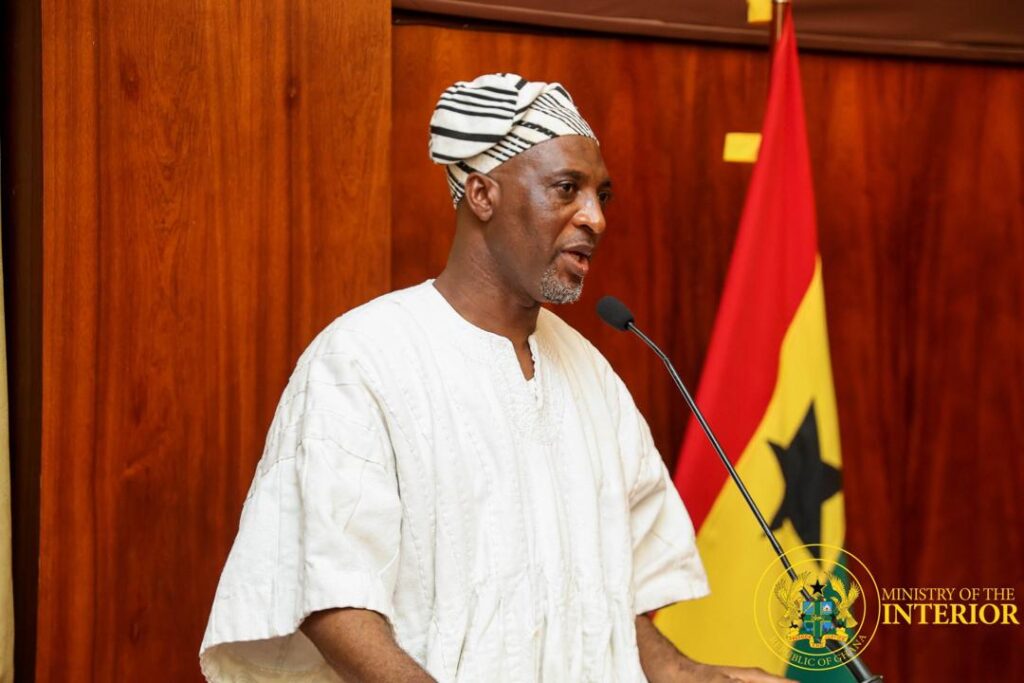
Closing his address, the Minister for Interior, Hon. Muntaka made a direct appeal to Members of Parliament to avoid politicizing the tragedy.
With 12 lives lost and thousands of citizens awaiting urgent relief, he said the collective duty of the House is to support recovery efforts and focus on preventing future disasters rather than turning the crisis into a political contest.
The appeal speaks to a familiar dynamic in Ghana, where major disasters quickly draw political commentary about government failures and preparedness gaps.
With the 48 Engineer Regiment now deployed, GHS 350 million committed, and the National Disaster Management Committee fully operational, the government has staked its credibility on a response that is visible, coordinated and fast moving.
The results on the ground in the coming weeks will determine whether that credibility holds.
READ ALSO: Three Winners Outshine Two Losers on Ghana Bourse