Zambia is preparing for a closely watched presidential election in August, with incumbent President Hakainde Hichilema seeking a second term on the back of an improving economy while facing an increasingly determined challenge from opposition candidate Brian Mundubile, who has vowed to convince voters that the country’s economic recovery has failed to improve everyday life.
It is widely anticipated that the election will function as a referendum on Hichilema’s first five years in administration, which were characterised by attempts to re-establish economic stability following Zambia’s 2020 emergence as Africa’s first national debt defaulter during the epidemic.
Since taking office in 2021, the president has managed debt restructuring talks, won backing from global financial organisations, and worked to restore investor trust in the continent’s second-largest copper producer.
The campaign has revealed a widening gap between official statistics indicating a recovery and the everyday struggles of many Zambians who still struggle with high living expenses, unemployment, and financial difficulty, even though important economic indicators have much improved under his government.
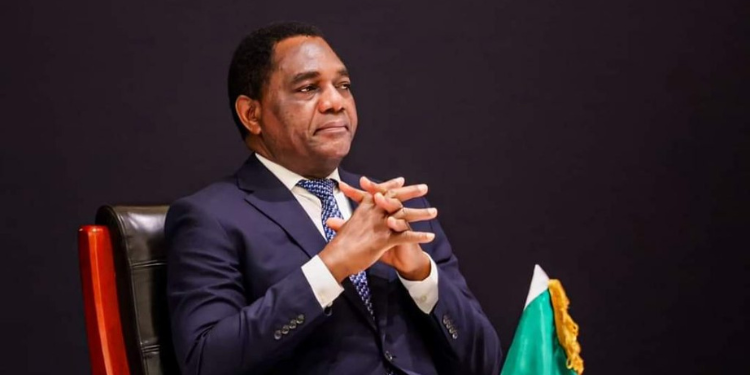
The 64-year-old businessman Hakainde Hichilema, who defeated the late former President Edgar Lungu in a landslide victory in 2021, has made economic management the focal point of his reelection campaign.
Speaking to supporters at the start of his campaign in Lusaka, the nation’s capital, he admitted that despite indications of economic growth, many households are still struggling.
“A lot of our families still need support beyond what we are delivering today, but I want you to know we hear you.”
Hakainde Hichilema
His administration points to a series of encouraging economic developments as evidence that Zambia is moving in the right direction. Annual inflation slowed to 6.5 percent in June, the lowest level recorded in more than eight years, reflecting easing price pressures after years of economic turbulence.
The country’s debt restructuring has also helped restore confidence among international investors, while high global copper prices have strengthened export earnings and government revenues.
The International Monetary Fund projects Zambia’s economy will grow by 4.3% this year, up from 3.8% in the previous year, with foreign investment also showing signs of recovery as confidence gradually returns to one of Africa’s most important mining economies.
These numbers support Hichilema’s claims that challenging changes are starting to yield noticeable effects and that leadership continuity will aid in solidifying the nation’s economic recovery.
Opposition parties contend, however, that macroeconomic advancements have not resulted in significant relief for common people.
Leading that challenge is Brian Mundubile, a 55-year-old lawyer and Member of Parliament making his first presidential bid after opposition parties rallied behind his candidacy following months of internal divisions. Although he entered the race relatively late, Mundubile has sought to position himself as the candidate who understands the economic frustrations facing ordinary Zambians.
Throughout his campaign, he has questioned the government’s emphasis on improving financial indicators while many families continue to struggle to afford basic necessities.
“How can you boast that you have built $6.5 billion in foreign reserves when your people are going hungry?” Mundubile asked during a campaign rally last month.
The contrast between economic recovery at the national level and persistent hardship at household level has emerged as one of the defining issues of the election campaign. While inflation has eased and investment has increased, many voters continue to express concerns about food prices, employment opportunities and their overall standard of living.
Election Race Heats Up Amid Opposition Concerns Over Freedoms
Beyond economic concerns, the campaign has been influenced by escalating disputes about political rights and governance.
Leaders of the opposition have charged that President Hichilema’s administration is making it harder for opposing parties to freely campaign and hold public gatherings. They contend that recent legislative amendments run the risk of restricting political participation and that police have interfered with opposition operations.
According to Mundubile, opposition parties have encountered considerable challenges in their efforts to rally supporters throughout the nation.
“Any dissenting voice is regarded as an enemy of the state, so it’s been very difficult for the opposition to engage their members.”
Brian Mundubile
Claims that the administration is repressing political opposition have been refuted.
However, since Zambia’s Cyber Crimes Act was introduced in 2025, worries have only increased. The legislation’s wide wording, according to civil society organisations, may deter people from openly expressing their thoughts on digital platforms out of fear of legal repercussions.
The constitutional reforms that President Hichilema signed into law in December have also drawn criticism. Opponents claim that by raising the size of Parliament, the measures could increase the political power of the ruling United Party for National Development (UPND).
However, supporters of the administration contend that rather than offering electoral advantages, the reforms are meant to modernise governance systems and increase representation.
Despite the political disputes, Zambia is still known for holding mostly peaceful elections, and its post-independence political history is characterised by democratic transitions.
According to recent surveys, President Hichilema is still the front-runner to win another term. 55% of those surveyed by the Zambia Election Research Network late last year stated they planned to vote for the current president, and 51% thought the election would be free and fair.
However, the survey was completed before Mundubile formally launched his presidential campaign, making it difficult to gauge the full impact of the opposition’s recent mobilisation efforts.
READ ALSO: ACEP, Solar Taxi Build Female Engineering Talent for Ghana’s Clean Energy Transition