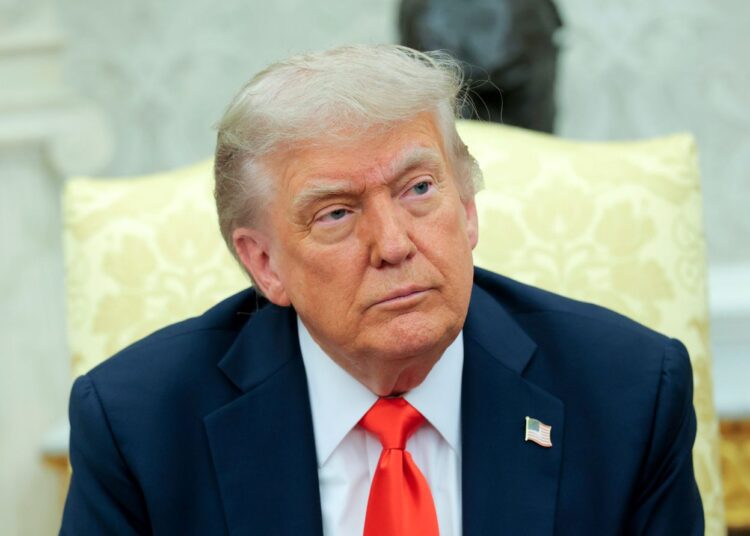
Donald Trump has announced a reversal of plans to charge a 20% toll on cargo going through the Strait of Hormuz, saying that Middle Eastern countries will instead make investment and trade deals with the US.
The US President said in a social media post that the Strait of Hormuz is open to “ALL Ship traffic except for Iran — and that is because of their lying, violent, malicious leadership, which is taking them down the path of TOTAL DESTRUCTION.”
“Based on highly productive conversations with Middle East leadership, I have decided to replace the 20% United States Reimbursement Fee with Trade and Investment Deals that the various Gulf States will be making into the United States.”
Donald Trump
Trump said that the investments “will be MASSIVE,” though it’s unclear if these would be new commitments.
The new announcement come after Trump said on social media yesterday that the US was reinstating “THE IRANIAN BLOCKADE,” adding that the US would charge fees on other ships equal to 20% of the value of their cargo to help cover “any and all costs necessary to do the job of providing safety and security.”

Meanwhile, attacks continue to intensify. The US had launched strikes earlier in the day, and Iran retaliated by attacking American allies in the region. The latest exchange of fire affects an interim deal meant to pause the fighting, reopen the waterway that is key to world energy supplies and give negotiators time to hammer out a permanent end to the war.
Instead, fighting has once again engulfed the region, threatened the global economy and brought warnings to commercial airlines. Unless a diplomatic solution is found quickly, it could intensify into all-out war.
The focus of the conflict now is the strait of Hormuz, through which a fifth of all traded crude oil and natural gas passed in peacetime. Iran effectively shut the passage during the war by attacking and threatening ships — a tactic that proved its greatest strategic advantage. It sent the price of oil, fertilizer and other goods soaring at a time when world leaders were already struggling to address rising costs.
The interim deal was supposed to reopen the waterway, but Iran has attacked ships moving through the strait on a route overseen by the U.S. military that is outside Tehran’s control.
The Strait of Hormuz recorded the lowest navigational passage of ships since the signing of the MoU on June 17, as only four ships have passed since this morning. According to the Marine Traffic platform data, the passage included an oil tanker and three container ships.The navigational data also showed the four ships departed ports in Oman and the UAE before crossing the strait, but upon their return, they hid their final destination and ownership registration data.
Majority Of Iran Lawmakers Want End To US Interim Deal
In another development, one hundred eighty members of Iran’s 290-strong parliament issued a statement declaring the end of the memorandum of understanding with the United States. The lawmakers emphasised the necessity of “pursuing revenge.” They also called for the passing of new legislation to manage the Strait of Hormuz on Iran’s terms.
“We will swear an oath in the path of bloodlust and revenge; let us not neglect any moment of effort, planning, and operational action.The parliament will place legal measures on its agenda, including upgrading the defence doctrine and passing the law on the management and governance of the Strait of Hormuz.
“Now that the president of the United States declared this agreement over, it is expected the heads of the branches of government announce their firm and revolutionary stance in this regard.We firmly support the performance of the armed forces, especially in exercising Iran’s sovereignty over the Strait of Hormuz, and we will not fail to provide any support to meet their needs.”
Iranian lawmakers statement
Regional mediators are still trying to get the United States and Iran back to the negotiating table, according to two regional officials.The officials, speaking on condition of anonymity, said that Pakistan-led mediation was working around the clock to reactivate the ceasefire.
Meanwhile, Lebanese and Israeli delegations met in Rome today to continue US-mediated negotiations. Last month, Lebanon and Israel announced a “framework agreement” outlining the withdrawal of Israeli forces from southern Lebanon in exchange for the disarmament of Hezbollah. Implementation has stalled.
Before the fighting around the strait intensified, Israel’s war against Hezbollah in Lebanon repeatedly threatened to derail the interim deal. A truce now exists in Lebanon, but it remains unclear whether it will hold if the US and Iran return to full-scale war.
READ ALSO: CalBank Profit Soars 25% to GHS353.6 Million in Strong First Half Performance