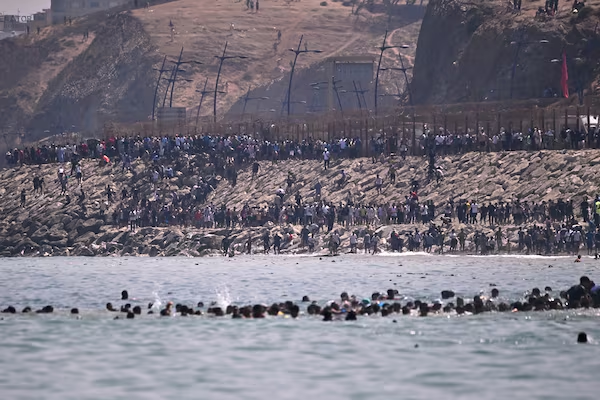
France has announced tougher controls along its border with Spain following the mass crossing of migrants into the Spanish enclave of Ceuta, as the latest migration crisis on Europe’s southern frontier fuels political debate over border security and the future of the Schengen free movement area.
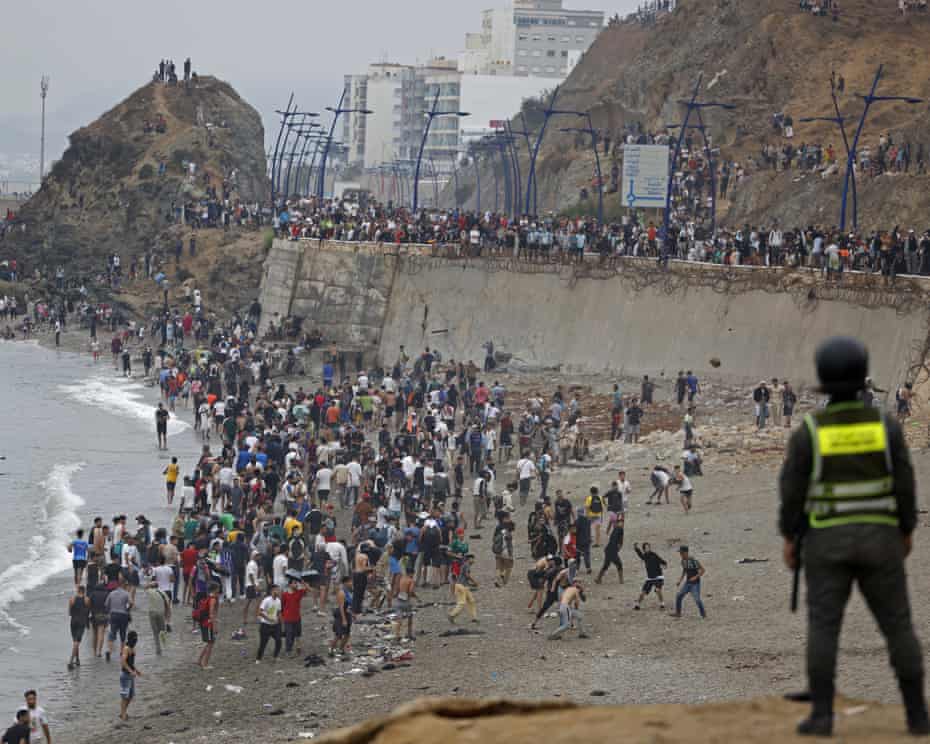
France’s Interior Minister, Laurent Nuñez said that an immediate strengthening of border checks was ordered after thousands of migrants breached the Spanish-Moroccan border at Ceuta, an incident that left at least 18 people dead and renewed concerns about irregular migration into the European Union.
In a post on X, Nuñez said the measures were introduced without delay in response to developments at the Spanish enclave. The announcement signals France’s intention to increase surveillance and inspections along its frontier with Spain as authorities seek to prevent secondary movements of migrants into French territory.
“In response to the situation observed in the Ceuta enclave, I gave instructions as of last night to immediately strengthen the controls at the Spanish border. Furthermore, I am activating the Rapid Intervention Border Force for in-depth checks.”
Laurent Nuñez
Nuñez did not specify how long the enhanced border controls would remain in place, but the deployment of the Rapid Intervention Border Force is expected to increase inspections of vehicles and individuals crossing from Spain into France.The decision comes after one of the deadliest migration incidents in recent years at the Tarajal border crossing in Ceuta, where thousands of migrants entered the Spanish enclave from Morocco.
Ceuta and the nearby Spanish enclave of Melilla are the European Union’s only land borders with Africa and have long served as focal points for irregular migration. Both territories have experienced repeated attempts by migrants to cross into Europe, often leading to humanitarian and political challenges.
His post on X came shortly after the crisis in Spain prompted some strong reactions in France. Far-right presidential candidate Marine Le Pen argued that France needed to act decisively to protect its borders from the consequences of the mass crossings.“Faced with the massive and coordinated influx of migrants into Spain, encouraged by the Spanish government, France must without delay strengthen controls at its borders.” she stated.
Le Pen also linked the incident to her party’s broader immigration agenda ahead of France’s 2027 presidential election. “And in 2027, we will put an end to this madness by reserving Schengen free movement for EU nationals,” she added.

Her remarks reflect longstanding criticism by France’s far right of the Schengen Area, the passport-free travel zone that allows people to move freely between most European Union member states and several associated countries.
Although Schengen permits temporary internal border controls under exceptional circumstances, such measures are generally intended to remain limited in scope and duration. France has previously reintroduced temporary border checks in response to security threats, migration pressures and major international events.
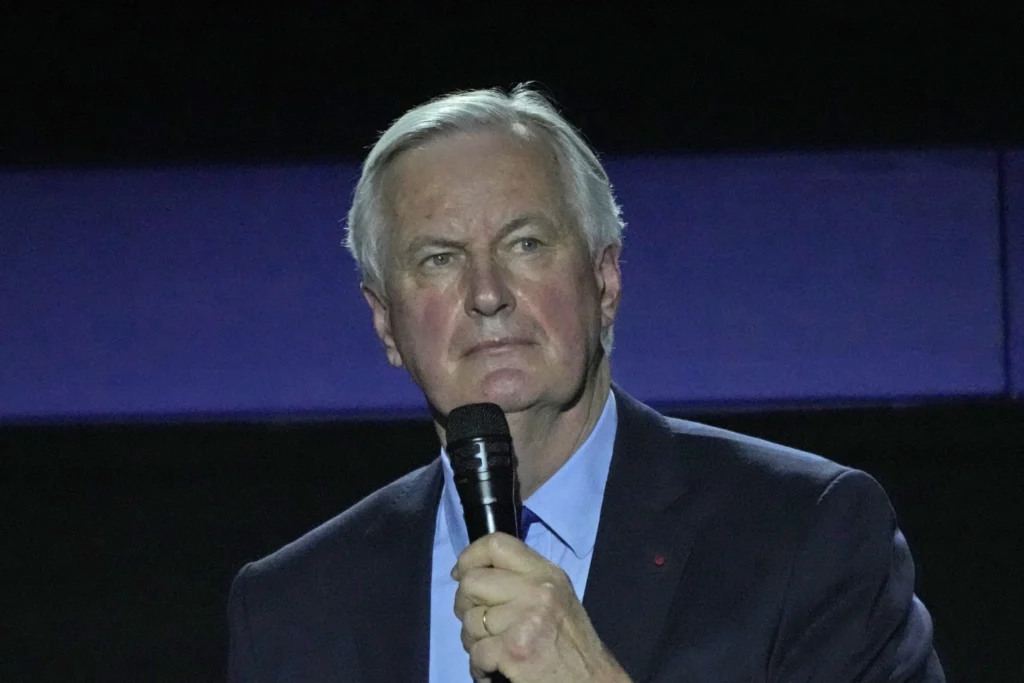
Former Prime Minister Michel Barnier struck a fairly similar tone of protecting France’s borders.
“The European Union now has an essential tool thanks to the advances achieved by the @EPP & @fxbellamy in the European Parliament with the new return directive.It is time to move from texts to action: every person in an irregular situation who is not meant to stay must be effectively returned. France cannot suffer the consequences of its neighbours’ migration choices. If a Member State makes decisions that create a pull factor for migration, we must be able to immediately protect our borders, particularly with Spain.”
Michel Barnier
Former Premier Urges Firm Implementation Of Immigration Rules
Barnier also asserted that mastering immigration is a condition of sovereignty, security, and trust between European states. “The rules exist: they must be applied firmly, in the interest of France and Europe,” he added.
The latest measures come as European governments continue to grapple with migration challenges along the bloc’s external borders. Countries including Spain, Italy and Greece have repeatedly called for stronger cooperation among EU member states to manage irregular migration while protecting the integrity of the Schengen Area. Spanish government’s decision to regularise over 500,000 undocumented migrants resident in Spain.
Migration remains one of the European Union’s most politically sensitive issues, with member states divided over how responsibility for asylum seekers and border management should be shared. Recent years have seen repeated efforts to reform the bloc’s migration and asylum policies, though disagreements have often slowed progress.
France’s decision to tighten controls highlights the broader challenges facing European governments as they seek to balance border security, humanitarian responsibilities and the principles of free movement within the European Union.Whether the latest measures remain temporary or signal a broader shift in French border policy may depend on how migration pressures evolve in the coming weeks. For now, French authorities say their priority is to strengthen border security while responding to the consequences of one of the most significant migration incidents seen in Europe this year.
READ ALSO: Parliament Passes COCOBOD Bill 2026 to Transform Ghana’s Cocoa Sector