The Chief Executive Officer of the Ghana Export Promotion Authority, GEPA, Francis Kojo Kwarteng Arthur, Esq., has concluded a working visit to businesses and associations in the handicrafts sector in the Western Region as part of efforts to deepen support for non-traditional exports.
The visit, which took place on August 13, 2026, provided the CEO with first-hand insight into the operations, challenges, and opportunities within the sector. It also offered an opportunity for direct engagement with artisans, trainees, and business owners on how GEPA can facilitate their growth and access to international markets.
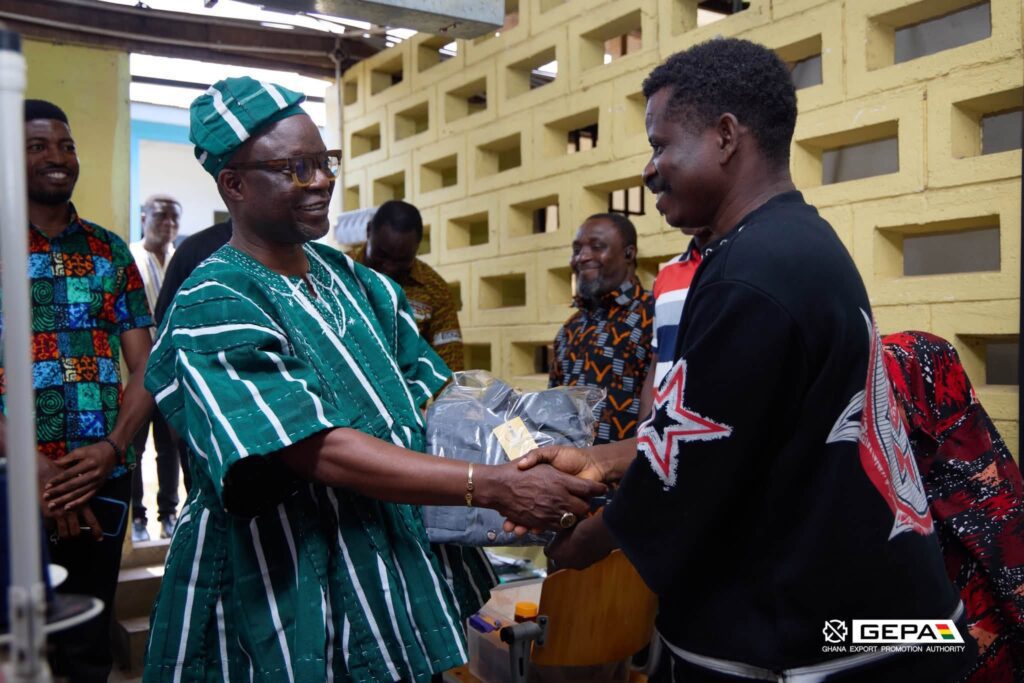
The CEO’s first engagement was with the Wood Carvers and Cane Weavers Association. Members of the association presented concerns ranging from access to raw materials, working capital, and market linkages to the need for institutional support to scale production. They also highlighted difficulties in meeting export standards and documentation requirements.
Addressing the association, Mr. Arthur encouraged members to formalize their businesses by registering with the appropriate regulatory bodies. He explained that registration is a key requirement for accessing government support programs, export development funds, and technical assistance provided by GEPA and other state agencies.

The CEO further responded to the specific concerns raised by the artisans. He assured them that GEPA would work with relevant partners to address issues around capacity building and product development. Members of the association expressed appreciation for the visit, noting that it was the first time a GEPA CEO had engaged them directly in their workshop.
Mr. Arthur emphasized that the handicrafts sector holds significant potential for job creation and foreign exchange earnings. He urged the wood carvers and cane weavers to focus on quality, design innovation, and consistency in order to compete in global markets.
Fashion Training and Footwear Manufacturing Get Boost
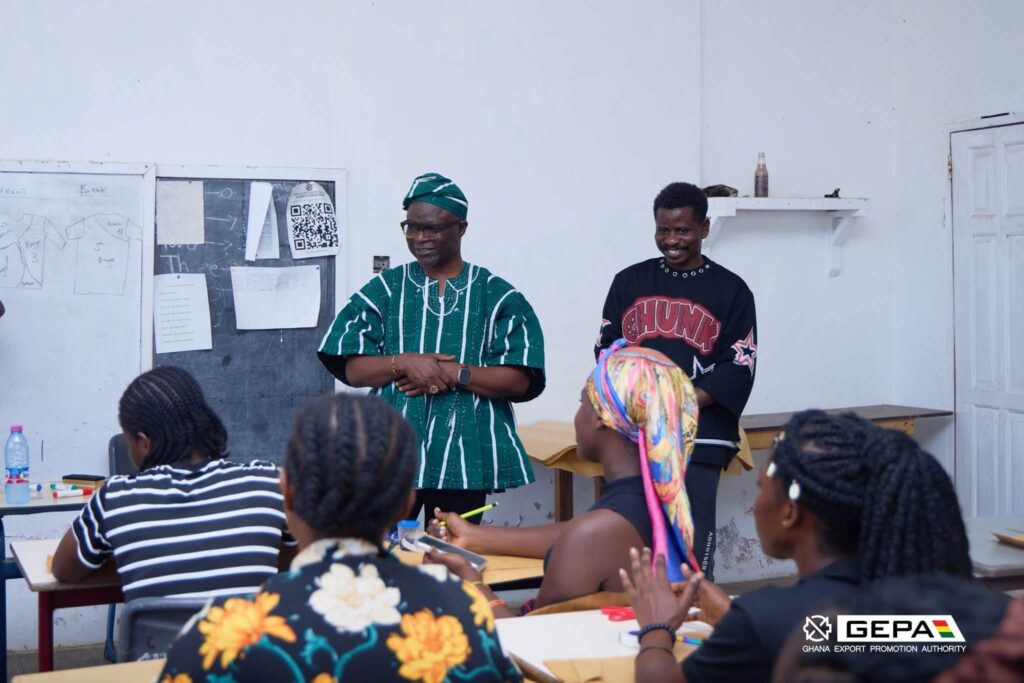
Following the engagement with the association, the GEPA CEO visited Dress Up College of Fashion, a fashion training institute in the region. He was received by Mr. Eric David Akwabeng, the head of the institute, who briefed him on the school’s operations and its plans to establish a street market for students and local designers.
Mr. Akwabeng explained that the proposed street market is intended to provide a commercial platform for trainees to sell their products, gain practical business experience, and transition into entrepreneurship. He requested support from GEPA in the form of training, branding assistance, and linkages to export opportunities.

The CEO welcomed the initiative and encouraged the institute to submit a formal proposal outlining the objectives, target beneficiaries, and implementation plan. He noted that GEPA would study the proposal and provide recommendations within its mandate to promote made-in-Ghana products and build export-ready enterprises.
Mr. Arthur also toured the training facility and interacted with students. He urged the young trainees to take their lessons seriously and to see fashion and design as viable career paths with global potential. “The skills you are acquiring here can take you beyond Ghana. The world is looking for authentic African design and craftsmanship,” he told them.
The third stop on the tour was Kolics Ventures, a footwear manufacturing company that specializes in producing shoes using recycled materials. The company, which has an operational outlet in Côte d’Ivoire, also runs a training program for young people in footwear production and design.
Management of Kolics Ventures briefed the CEO on their production process, sustainability model, and plans for regional expansion. They noted that using recycled materials not only reduces waste but also positions their products to meet growing global demand for sustainable goods.
Commending the company, the GEPA CEO described its work as innovative and forward-looking. He encouraged management to continue improving product quality and branding to meet international standards. He further urged the company to leverage GEPA’s participation in international trade fairs and buyer-seller missions to access new markets beyond West Africa.
CEO Stresses Formalization and Export Readiness for Regional Growth
The series of engagements provided the CEO with direct feedback from businesses on the realities of operating in the handicrafts and light manufacturing sectors in the Western Region. Key issues raised included access to finance, standardization, packaging, and logistics for export.
Mr. Arthur noted that the visits reaffirmed GEPA’s commitment to a sector-focused approach to export development. He said the Authority is prioritizing industries with high employment potential and products that reflect Ghana’s cultural identity, such as wood carvings, fashion, and leather goods.
He stressed that for businesses in the region to take full advantage of opportunities in the African Continental Free Trade Area, AfCFTA, and other export markets, they must prioritize formalization, product certification, and adherence to international quality standards.
“There is great potential within this region, what is required now is for businesses to position themselves properly, document their operations, and be ready to meet the demands of the global market space.”
GEPA CEO Francis Kojo Kwarteng Arthur
GEPA to Provide Capacity-Building Support
He added that GEPA will continue to provide capacity-building support, market information, and facilitation services to help SMEs scale. The Authority, he said, will also work with local government and industry associations to create an enabling environment for handicraft producers.
Stakeholders who met with the CEO welcomed the engagement and called for more frequent interactions between GEPA and grassroots businesses. They noted that direct dialogue helps to align policy interventions with the actual needs of producers.
The Wood Carvers and Cane Weavers Association expressed optimism that the visit would lead to concrete support, particularly in the areas of tooling, training, and market access. They pledged to begin the process of business registration as advised.
At Dress Up College, management indicated that it would work with GEPA to develop a framework for the street market project. The institute also expressed interest in participating in GEPA’s export training programs for SMEs.
Concluding the tour, Mr. Arthur reiterated that Ghana’s export diversification agenda cannot succeed without strong MSMEs. He assured the businesses that GEPA remains open to partnerships that will drive value addition, innovation, and export growth from the Western Region.
READ ALSO: GNPC Turns 40 With Growth, Gas and New Reserves at the Center