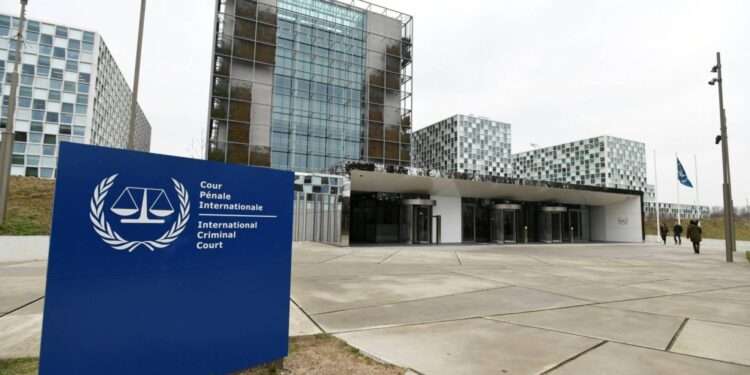
The International Criminal Court (ICC) has condemned the Trump administration’s decision to impose sanctions on its President, Tomoko Akane, and senior trial lawyer Abdoulaye Seye, describing the measures as a serious threat to the independence of international justice.
The Hague-based court said that the sanctions represented a direct challenge to its ability to operate independently, warning that targeting judicial officials could have wider implications for the rule of law and efforts to hold individuals accountable for serious international crimes. “These sanctions are a flagrant attack against the independence of an impartial judicial institution,” the ICC said in a statement, adding, “Such measures targeting judges, prosecutors and staff … undermine the rule of law.”

The sanctions are the latest escalation in the Trump administration’s confrontation with the ICC, which Washington has repeatedly accused of exceeding its jurisdiction and pursuing politically motivated cases. The dispute has been particularly focused on the court’s investigations involving Israel and its officials.
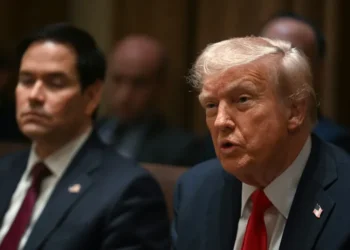
U.S. Secretary of State Marco Rubio said that the sanctioned individuals had been involved in efforts by the ICC to investigate, arrest, detain or prosecute officials whose governments had not consented to the court’s jurisdiction. The administration has argued that the ICC cannot exercise authority over U.S. citizens or officials because the United States signed but never ratified the Rome Statute, the treaty that established the court. Washington has also objected to ICC investigations involving Israel, a close U.S. ally that is not a member of the court.

The latest sanctions follow earlier measures against ICC officials. Those sanctions can restrict access to the U.S. financial system and prevent designated individuals from entering the United States.
The Trump administration has described the ICC as a “corrupt and fatally politicised body” and has intensified its diplomatic campaign against the institution.The court, however, maintains that its work is based on international law and that its jurisdiction applies in circumstances established under the Rome Statute.
Japan, EU Back ICC President
The latest U.S. measures have drawn criticism from several of Washington’s allies. Japan, which is the ICC’s largest financial contributor, objected to the sanctions against Akane, a Japanese judge who has served as the court’s President since March 2024.
Japanese Foreign Ministry Press Secretary Toshihiro Kitamura said that Tokyo has “consistently supported the ICC … in its efforts to prosecute and punish the most serious crimes of concern to the international community and to uphold the rule of law.”
European Commission President Ursula von der Leyen and European Council President Antonio Costa said that they “stand firmly” behind the court’s leadership and stressed that its officials should be able to carry out their responsibilities without outside interference.
The ICC was established in 2002 to prosecute individuals accused of genocide, war crimes and crimes against humanity when national legal systems are unwilling or unable to conduct credible proceedings. The court has increasingly faced political pressure from countries that oppose its investigations or reject its jurisdiction.
In 2024, the ICC issued an arrest warrant for Israeli Prime Minister Benjamin Netanyahu in connection with its investigation into the war in Gaza. The decision triggered strong opposition from the Israeli government and Washington. The Trump administration has since expanded its measures against ICC officials and launched a broader diplomatic campaign urging countries to distance themselves from the court.
The United States has argued that the ICC’s actions against officials from countries outside its jurisdiction represent an unacceptable expansion of the court’s authority. The ICC has rejected those criticisms and warned that political pressure against its officials could weaken international accountability mechanisms.
The court said that the latest sanctions were not simply an issue affecting individual judges and prosecutors but posed a broader challenge to the international legal system. “When judicial actors are threatened for applying the law, it is the international legal order itself that is placed at risk,” the ICC said.
The institution has also expressed concern about decisions by some countries to distance themselves from the court amid growing political pressure. Chad and Venezuela have announced moves to withdraw from the ICC, developments that the court says could weaken international efforts to pursue accountability for serious crimes.
The court’s officials have faced pressure from other major powers as well. In 2023, the ICC issued an arrest warrant for Russian President Vladimir Putin over alleged crimes connected to Russia’s war in Ukraine. Moscow rejected the warrant and subsequently issued its own arrest warrants for several ICC officials, including Akane.
Russia, like Israel, is not a party to the Rome Statute. The competing measures highlight the increasingly difficult political environment in which the ICC operates, with major powers challenging its authority while supporters argue that international courts are necessary to hold perpetrators accountable when domestic institutions fail.
The latest confrontation between Washington and the ICC is therefore part of a wider dispute over the reach of international law and the limits of international judicial authority.
READ ALSO: Ablakwa Secures Visa Waiver, Doubled Scholarships, and Defence Ratification in Russia