UNICEF Ghana is urging the Ministry of Education to use local data to guide teacher deployment and strengthen support for teachers working in underserved communities, following findings that show significant disparities in teacher distribution across the country’s regions.
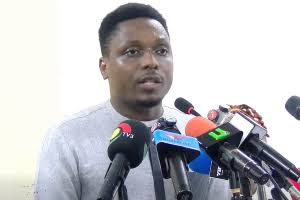
Bright Foli of UNICEF Ghana’s Office of Strategy and Evidence disclosed that some schools have more than 50 pupils per teacher, despite the national pupil-teacher ratio standing at approximately 1:32, a disparity he said is increasing workloads and affecting the quality of teaching in the most affected schools.
Mr Foli explained that the findings stem from research titled “Teachers for,” a collaborative effort between the Ministry of Education, UNICEF, and supporting partners including the UK’s Foreign, Commonwealth and Development Office (FCDO).
He said the research has been ongoing in Ghana for the past couple of years, focusing primarily on shortages within the teacher workforce and identifying where variations exist in teacher distribution nationwide.
“This is national representative research that we did. One of the most interesting things we found at the national level is that the pupil teacher ratio actually looks good at the national level, which stands at 32 students per teacher.”
Bright Foli of UNICEF Ghana’s Office of Strategy and Evidence
He explained that while this national average appears reassuring on the surface, drilling down into regional and district-level data reveals a considerably more complex and uneven picture across the country.
Significant Variation In Pupil-Teacher Ratios Across Regions
According to Mr Foli, almost 14 percent of schools nationwide have a pupil-teacher ratio greater than 50 students to one, a figure with direct implications for class sizes in the affected schools.
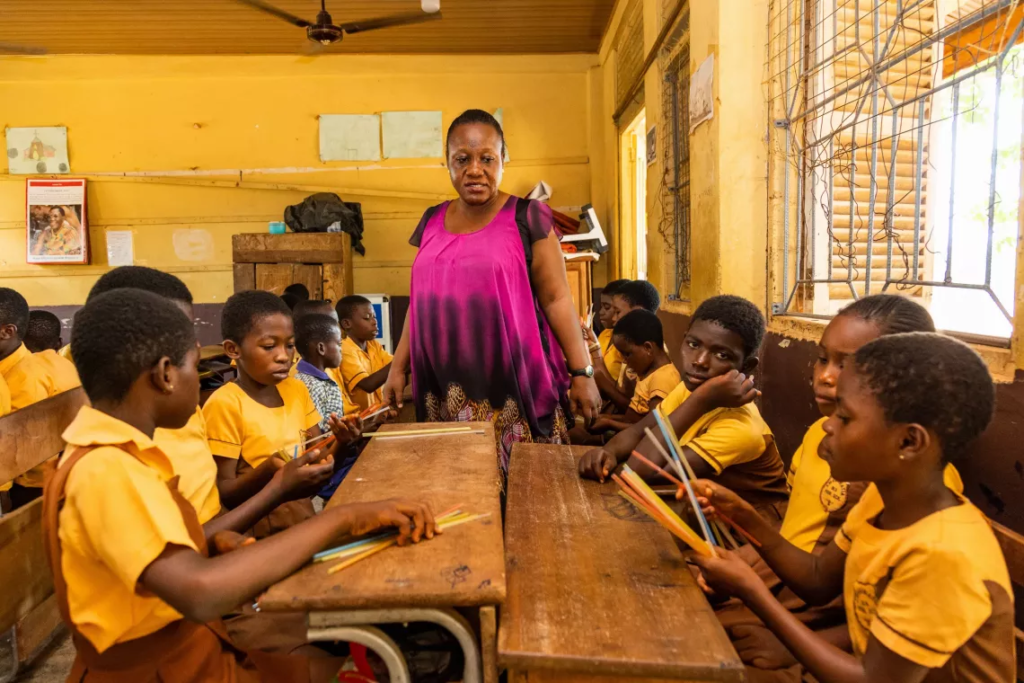
He explained that in schools where teachers must manage such large class sizes, workloads increase substantially, efficiency in the classroom declines, and teacher motivation is similarly affected.
He explained that the challenges facing teacher distribution in Ghana are essentially twofold, involving not only the overall number of teachers available, but also where those teachers are ultimately deployed within the country.
According to Mr Foli, teacher shortages are heavily concentrated geographically, with data drawn from the Ministry’s Education Management Information System (EMIS) showing considerably stronger pupil-teacher ratios in central and southern regions such as Bono, Ashanti, and Ahafo, compared to the country’s northern regions.
“As we go further up to the northern regions of the country, particularly the Northern Region, Savannah and Northeast, pupil-teacher ratios are quite high. They can get as high as 40 students to a teacher, going into the fifties and sixties as well.”
Bright Foli of UNICEF Ghana’s Office of Strategy and Evidence
Female Teacher Distribution Follows Similar Pattern
Mr Foli noted that a similar geographic trend emerges when examining the distribution of female teachers across the country. He explained that women teachers tend to be concentrated in metropolitan areas, particularly Accra and Kumasi within the Ashanti Region, where a greater proportion of female teachers are typically found.
By contrast, he identified districts such as Nanumba North and South, and Gushegu, located in the country’s northern zones, as areas with the lowest share of female teachers nationwide.

He explained that this imbalance carries direct implications for girls’ education, learning outcomes, and retention rates among female students, particularly in communities where the presence of female teachers can influence how comfortable girls feel remaining in school.
UNICEF Recommends Data-Driven Deployment Strategy
Outlining a set of recommendations arising from the research, Mr Foli called on the Ministry of Education to place greater emphasis on localised, granular data when determining where teachers are deployed.
He explained that this would involve drawing on district- and school-level data to identify precisely where teachers are needed most, allowing deployment decisions to be guided by evidence rather than generalised national averages that can mask significant regional disparities.
He further recommended that, particularly in deprived areas, government and the Ministry strengthen the support systems available to qualified teachers once they have been posted to these underserved communities, recognising that deployment alone is insufficient without adequate ongoing support to help teachers remain effective and motivated in challenging environments.
Call For Stronger Coordination Between Training Institutions And GES
Mr Foli’s final recommendation centred on strengthening coordination between Colleges of Education and the Ghana Education Service (GES), with a specific focus on how both institutions can work together more effectively to recruit and train teachers in subject areas and locations currently experiencing the most significant shortages.
He argued that such coordination would help ensure that the pipeline of newly trained teachers is better aligned with the country’s actual geographic and subject-specific staffing needs, rather than producing graduates whose distribution continues to mirror existing regional imbalances.
Taken together, UNICEF’s findings and recommendations point to a broader call for Ghana’s education sector to move beyond reliance on national averages when assessing teacher adequacy, and instead adopt a more granular, evidence-based approach to deployment planning.
With disparities in both overall teacher numbers and the presence of female teachers continuing to disadvantage northern regions in particular, the coming months are likely to test how effectively the Ministry of Education, in partnership with UNICEF and other stakeholders, translates these research findings into concrete deployment strategies capable of narrowing the gap between Ghana’s best- and worst-served school communities.
READ MORE: Minister of Education Calls for Greater Focus on Foundational Learning