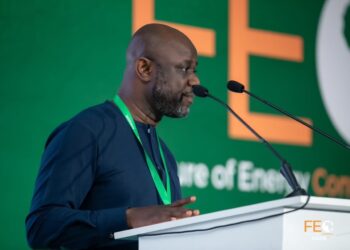

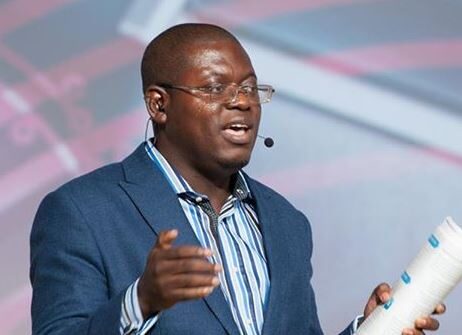
Bright Simons, Honorary Vice President of the IMANI Centre for Policy and Education, has called on African countries to build their own critical-mineral priorities around industrialisation needs rather than importing lists compiled by the United States, China or Russia, while proposing a structural change that would separate mineral data collection from mining rights to reverse a sharp decline in the continent’s exploration capacity.
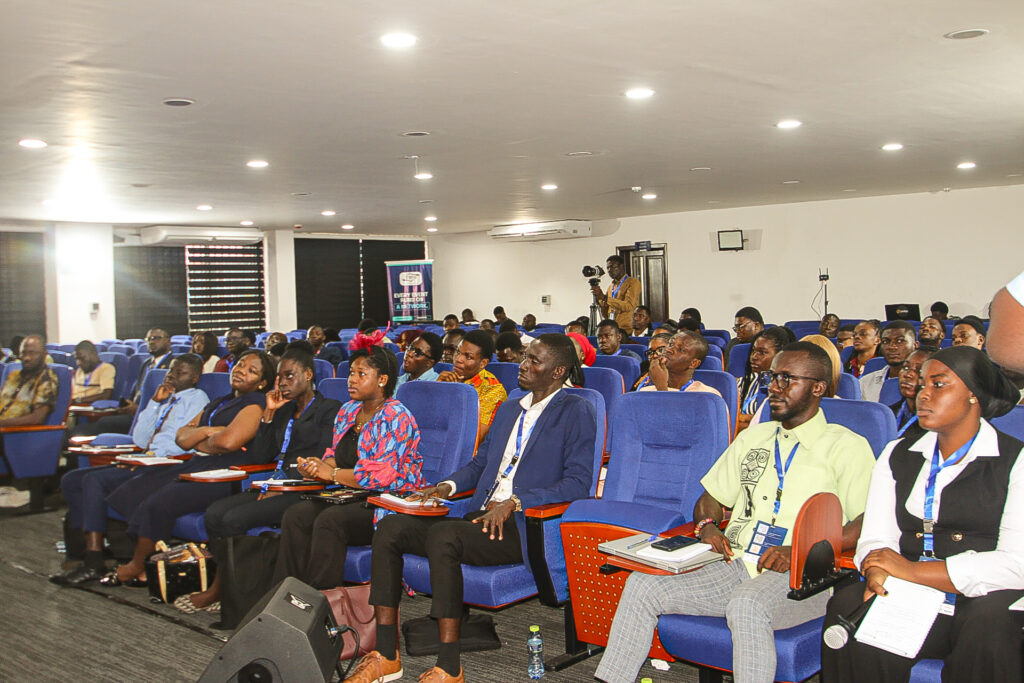
Speaking at SYPALA 2026 in Accra, Mr Simons said Africa’s share of global mineral exploration spending has fallen from roughly 60 percent to under 10 percent, a collapse he said reflects both underinvestment and a structural flaw in how exploration data is collected and owned across the continent.
Building Africa’s Own Critical-Minerals List
Mr Simons rejected the practice of adopting critical-mineral lists designed for other economies’ strategic priorities.
He argued the intersection of the African Union’s Agenda 2063 and the Africa Mining Vision should instead define which minerals genuinely matter for the continent’s own industrial transformation, rather than assuming that cobalt or lithium are automatically priorities simply because wealthy nations have designated them as such.
He challenged the framing around the global green energy transition specifically, using wind power as an example.
A 200-megawatt wind farm, he said, requires roughly 20,000 times more industrial materials such as cement, steel and manganese than it does the so-called critical minerals typically associated with the green transition, including cobalt, nickel and lithium.
He made a similar point about solar panels, noting that silica, used to produce both the panels themselves and the glass that covers them, rarely appears on critical-mineral lists despite being essential to manufacturing them locally.
“It all comes back down to industrial minerals,” he said, arguing that Africa’s exploration priorities should follow that reality rather than externally defined mineral hierarchies.
Gold Exploration Dominance and a Structural Fix
Mr Simons said roughly half of all African mineral exploration spending currently goes toward gold, a mineral the continent largely does not consume domestically, while the industrial minerals Africa actually needs to build housing, railways and power infrastructure receive comparatively little exploration investment.
He argued this imbalance persists because foreign investors, who fund most exploration, prioritise gold for export rather than the inputs African economies need for their own development. To address the continent’s shrinking exploration footprint, Mr Simons proposed separating the act of searching for minerals from the right to mine them.
Under current arrangements, he said, only companies intending to mine typically fund exploration, which sharply limits the pool of entities collecting geological data and leaves much of Africa mapped only at resolutions dating back to the colonial era.
He proposed a national data repository model in which independent explorers, potentially using drones and artificial intelligence rather than traditional mining operations, could register data and claim compensation on a strict liability basis whenever a mining company accesses their data and subsequently makes a discovery.
Stopping the Export of Raw Data
Mr Simons warned that African countries are already effectively exporting raw geological data much as they export raw minerals, pointing to American companies that have collected extensive African mineral data and built artificial intelligence models from it.

These models, he said, are then used primarily to locate minerals in Australia and elsewhere rather than in Africa itself. He argued that formalising data ownership and compensation would create the incentive structure needed to keep both the data and the resulting economic value on the continent.
He closed by reiterating that Africa’s mineral strategy must move beyond refining alone toward examining the full value chain, from grinding media to industrial acids, urging the young policy thinkers in the room to treat rigorous data collection as the foundation on which any credible mineral strategy must be built rather than an afterthought to political ambition.
READ ALSO: IMANI VP: African Democracies Have “A Lot of Noise, But No Signal