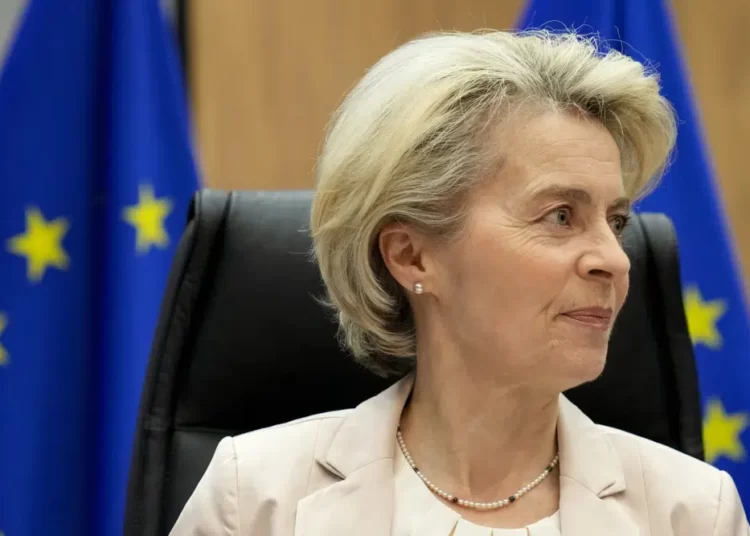
European Commission President Ursula von der Leyen has unveiled a €200 million ($232 million) investment package for Greenland as the European Union seeks to strengthen its relationship with the strategically important Arctic territory amid growing geopolitical interest in the island.
Von der Leyen announced the investment after signing a declaration with Greenlandic Prime Minister Jens-Frederik Nielsen and Danish Prime Minister Mette Frederiksen aimed at deepening cooperation between Greenland and the EU.
Describing the territory as a strategic ally and trusted friend, von der Leyen said, “Greenland can count on the EU.” Greenland is a semiautonomous territory of Denmark, which is a member of both the EU and NATO. While Greenland itself is not part of the European Union, the bloc has increasingly sought to expand its engagement with the island as attention on the Arctic grows.
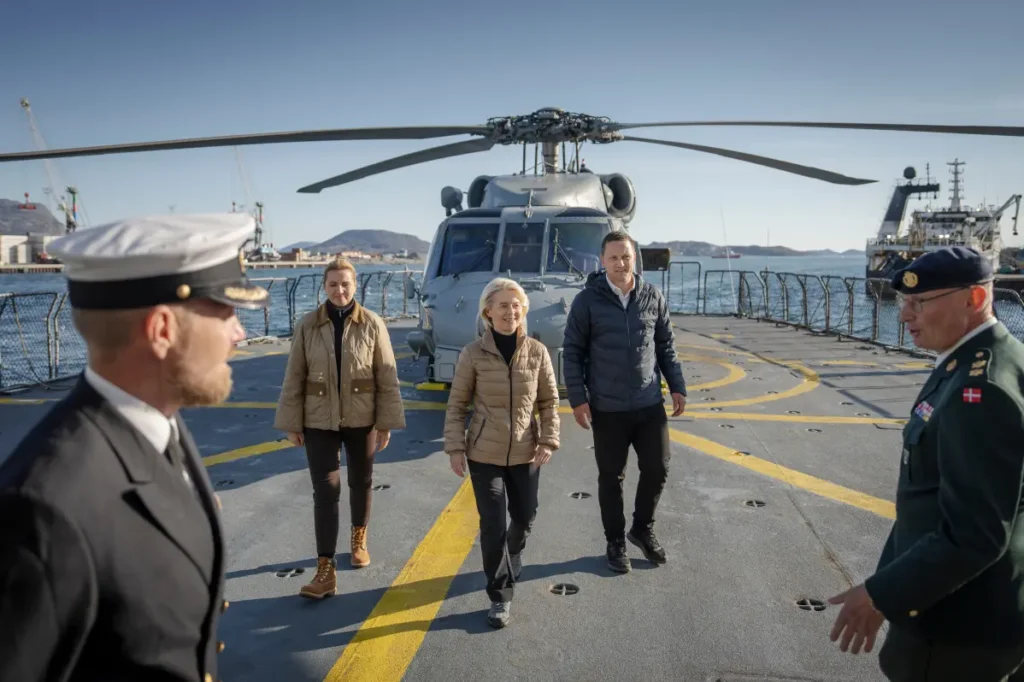
The investment partnership is intended to support several areas of Greenland’s economy and infrastructure, including education, fisheries, internet connectivity and hydropower systems. The package will also support the development and responsible use of critical raw minerals, which have become increasingly important to global economies because of their role in technologies such as electric vehicles, renewable energy systems and advanced electronics.
Additional funding is expected to go towards improving housing, supporting small businesses and developing sustainable tourism. Von der Leyen said that the partnership would create new opportunities for Greenland while giving the EU a stronger presence in the territory and the wider Arctic region.
The agreement comes as Greenland has attracted increased international attention, particularly since US President Donald Trump repeatedly expressed his desire for the United States to take control of the island, citing national security concerns.Trump’s position has generated strong opposition from Greenlandic and Danish leaders and raised concerns about the sovereignty of the territory.
The dispute has also created tensions among NATO allies, given Denmark’s role in the military alliance. Greenland’s strategic location between North America and Europe, together with its vast territory and Arctic resources, has made it increasingly important in discussions about security, trade and access to critical minerals.
The EU’s decision to deepen its economic engagement with Greenland therefore comes at a time when major powers are placing greater strategic emphasis on the Arctic. The investment package provides Brussels with an opportunity to strengthen economic ties with Greenland while supporting sectors that are important to the territory’s long-term development.
It also signals European support for Greenland’s sovereignty at a time when the island has become the focus of competing geopolitical interests.
NATO Allies Begin Greenland Military Drills
The EU announcement coincides with the launch of military exercises in Greenland involving 11 NATO countries, as the alliance seeks to strengthen its ability to operate in the increasingly important Arctic region.
The Arctic Shield exercises began today and are scheduled to continue until September 18, involving around 400 military personnel, including special forces troops from Canada, Denmark and Finland who are trained to operate in Arctic conditions. The drills are focused on strengthening Arctic security and improving the participating countries’ ability to operate in Greenland’s challenging environment.
The exercises come months after Denmark and seven other European allies deployed a small number of military personnel to Greenland for exercises intended to strengthen Arctic security and demonstrate support for the territory’s sovereignty. The participating countries were Denmark, Finland, France, Germany, the Netherlands, Norway, Sweden and the United Kingdom.
The deployment followed Trump’s repeated calls for US control of Greenland. Trump subsequently threatened to impose new tariffs on the countries involved, escalating tensions between Washington and its European allies. In response, the European countries said they remained committed to Greenland’s sovereignty and warned that tariff threats could damage relations between the United States and Europe.
They said in a joint statement that tariff threats undermine trans-Atlantic relations and “risk a dangerous downward spiral.” The statement added, “We are committed to upholding our sovereignty.” Trump later backed away from the tariff threat after NATO agreed to a security arrangement concerning the Arctic region.
The latest Arctic Shield exercises do not include US troops, despite the United States being a NATO member and maintaining a longstanding strategic interest in Greenland and the Arctic. The simultaneous military activity and EU investment announcement highlight the growing strategic importance of Greenland, with economic development and security increasingly becoming interconnected aspects of international engagement with the territory.
For the EU, the €200 million package offers a means of strengthening its economic and political relationship with Greenland. For NATO allies, the military exercises demonstrate the growing emphasis being placed on protecting Arctic territory and improving preparedness in one of the world’s most strategically contested regions.
READ ALSO: South Korea, Japan, U.S Commence Annual Freedom Edge Drills