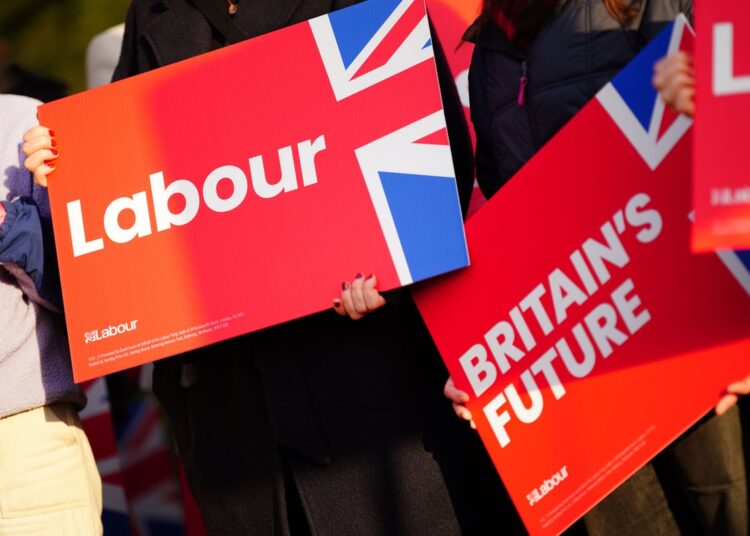
Prime Minister Andy Burnham is facing growing speculation over the timing of the next UK general election after a new YouGov model placed Labour ahead of Reform UK and the Conservatives, while projecting that Nigel Farage’s party could fall to third place in the House of Commons.
YouGov’s latest model projects Labour would win 241 seats if a general election were held now, compared with 130 for the Conservatives and 123 for Reform UK.
The projection leaves Labour as the largest party but short of the 326 seats required for an overall majority, creating a hung parliament.
The figures represent a significant change in the political landscape compared with the previous year. Reform UK had previously been projected to come close to a parliamentary majority, while Labour’s position had weakened substantially under former Prime Minister Keir Starmer.
YouGov’s latest assessment draws on polling of nearly 17,000 people conducted between August 23 and September 18 and represents the first MRP model released since Burnham became Prime Minister.
The model places Labour on 24% of the projected vote share, compared with 22% for Reform UK and 21% for the Conservatives, showing that Labour’s advantage in projected seats is not matched by a large national lead in votes.
The latest figures also show that the political contest remains fragmented. Labour’s projected 241 seats would leave the party 85 MPs short of an overall majority, while the Liberal Democrats are projected to take 71 seats, the SNP 40, Plaid Cymru 15 and the Greens nine.
A Labour government emerging from such an election would therefore need parliamentary support from other parties to pass legislation and maintain its administration.
The prospect of an early election has consequently become a subject of political discussion even though the government has maintained that it does not intend to call one.
Holborn and St Pancras Becomes an Early Test of Labour’s Position

The Holborn and St Pancras by-election has acquired significance well beyond the constituency because it comes only months after Burnham took over the Labour leadership and Downing Street.
Polanski’s candidacy gives the Greens an opportunity to test their appeal against a Labour government seeking to rebuild support among voters on the political left.
The Green leader has described the party as an underdog while maintaining that it has momentum in the constituency.
Recent local election results provide some basis for the increased attention surrounding the contest.
The Greens expanded their representation in Camden, while Labour retained overall control of the borough. The party’s wider advances have also contributed to speculation over whether it can challenge Labour in constituencies where disaffected progressive voters have previously supported the governing party.
Labour’s performance in Holborn and St Pancras will therefore be watched not only as a constituency contest but also as an indication of whether Burnham has succeeded in bringing left-leaning voters back into Labour’s coalition.
YouGov’s latest MRP shows Labour performing strongly in England, particularly in London and Greater Manchester, but continuing to face substantial losses in Scotland and Wales.
The model projects Labour winning 51 of London’s 75 seats and 24 of Greater Manchester’s 27 constituencies. Wales presents a far weaker picture, with Labour projected to retain only two seats.
The Conservatives have also begun to recover ground after a period in which Reform UK had threatened to displace them as the principal force on the right. YouGov’s current model puts the Conservatives seven seats ahead of Reform, although the difference remains narrow.
Meanwhile, polling expert Sir John Curtice has cautioned against assuming that Labour’s current position automatically translates into electoral security.
The continuing weakness of Labour in parts of the country where it previously dominated remains an important factor. Reform’s ability to make gains in those areas could produce a much different parliamentary outcome from what a national vote-share comparison might suggest.
According to the polling expert, the numbers are just not there, citing Labour’s local election losses and the chance that Reform may still perform highly in terms of seats.
The local elections provide an important context for that assessment. Labour suffered significant losses, including the loss of 38 councils, demonstrating that the national recovery has not been mirrored equally at the local level.
Burnham thus faces a political situation that contains both chances and risks. A better national position, less Reform support, and a closely divided opposition could lead Labour to seek a new mandate faster than necessary.
READ ALSO: Joshua, Fury Finally Set for Historic Bout With Date Confirmed