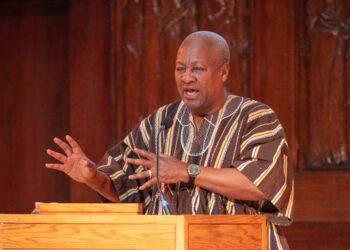
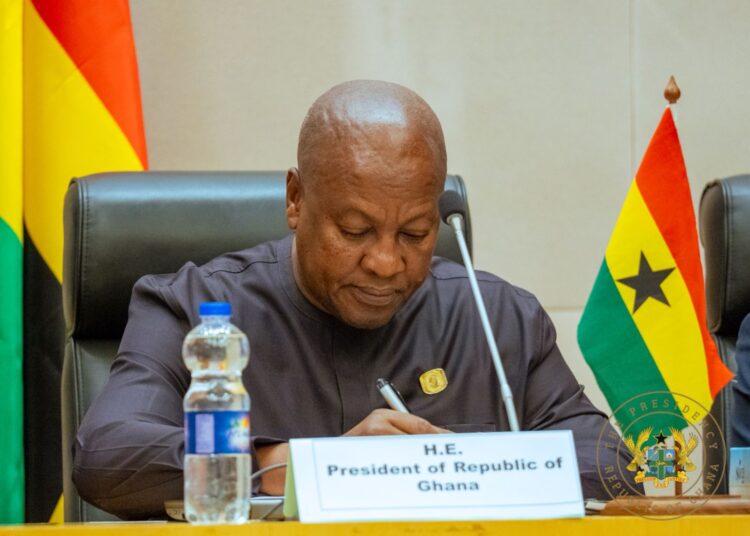
President John Dramani Mahama wants Ghana’s 2027 African Union chairmanship to confront the colonial-era transport networks that still route African goods through Europe instead of across the continent. He set out that objective at the Council on Foreign Relations in New York on Friday, 25 September 2026.
The continent has signed the protocols it needs on trade, he argued, but has not built the roads, railways and shipping links that would let Africans trade with one another. He tied that unfinished work to a credibility problem, saying a younger generation has grown dispirited and discontented with the union’s effectiveness.
A Union The Young No Longer Believe In
President Mahama was candid about what the chairmanship inherits. The task, he said, is to move the union up a notch so that people recognise it serves a good purpose.
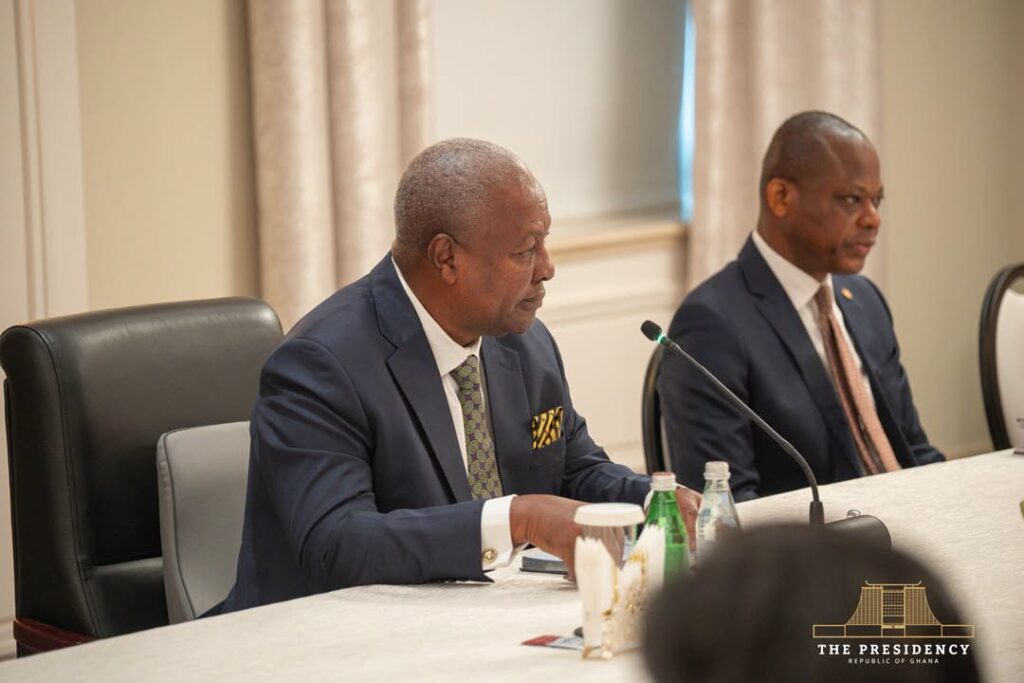
He located the difficulty in the organisation’s own history. In its early days the body was focused on the liberation of the continent, a mission that ended when the last colonies became independent. With that achieved, he said, the union must turn to the things that matter to Africans in the present.
That is a sharper criticism than incoming chairs usually offer, and it sets a standard his own year will be measured against.
Protocols Without The Plumbing
The African Union has produced good work, in his account, including protocols on democracy and good governance and, more recently, the African Continental Free Trade Area.
The gap is between agreement and operation. The protocol has passed, and many countries have assented to it, he said, but the framework and the logistics for actually exchanging goods across the continent remain to be built. That means roads and railways.
Free trade rules lower tariffs. They do not move a container, and a market of 54 countries connected by poor infrastructure trades on paper rather than in practice.

The Tea From Kenya
President Mahama reduced the argument to a single example. If he orders two containers of tea from Kenya, that tea should not travel to the United Kingdom before being shipped back to him in Ghana, he said. It should come directly.
The routing he describes is a legacy of the colonial economy, where railways ran from mine and plantation to the coast, and shipping lines connected each colony to its metropole rather than to its neighbours.
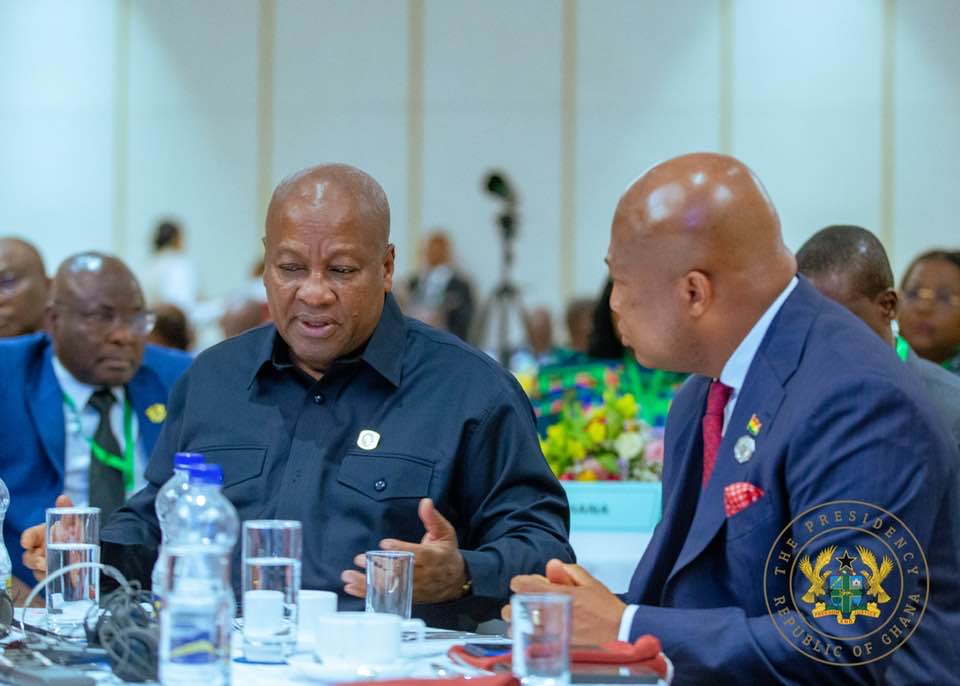
Those networks largely survive, which is why a Kenyan exporter and a Ghanaian buyer often find Europe the cheapest point of connection between them. That is the structure President Mahama says the chairmanship must confront, and it explains why he treats integration as a construction problem rather than a diplomatic one.
He extended the point to air travel, noting that it is often easier to fly to Europe than to another African country, a pattern the union’s own Single African Air Transport Market was created to address and has yet to fix.
Silencing The Guns
The second pillar he named is peace and security, covering the violent extremism in the Sahel that threatens Ghana’s own northern neighbourhood and the conflict in the Democratic Republic of Congo.
More work is needed to silence the guns, he said, invoking the union’s flagship campaign to end armed conflict on the continent, an objective first set for 2020 and since pushed to 2030.
An Agenda Already Set Out
The remarks expand on priorities President Mahama announced days earlier at the General Assembly, where he named continental integration, faster implementation of the free trade area, peace and security across Africa’s conflict zones, and a single continental voice on the global stage.
The preparation behind them runs back further. In August, a high-level committee of experts chaired by Foreign Minister Samuel Okudzeto Ablakwa submitted five reports covering a strategy document, priority pillars and a work programme.
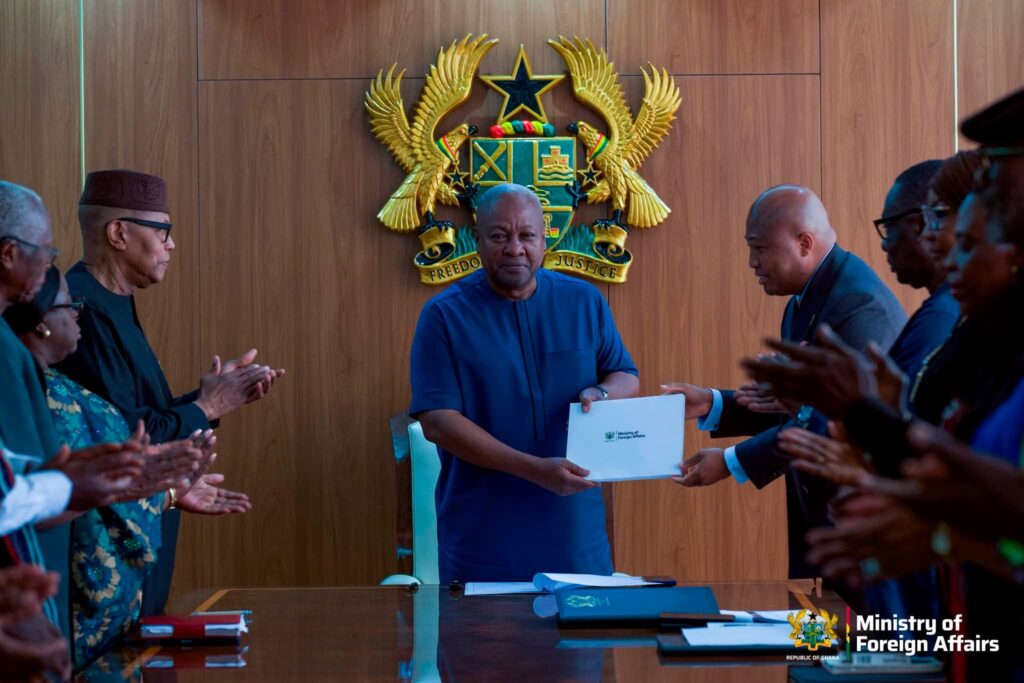
Ghana’s path to the chair opened in December 2025, when the ECOWAS Council of Ministers meeting in Abuja named Mahama the region’s sole candidate, a position heads of state unanimously endorsed days later. He was elected First Vice Chair of the union in February 2026.
Twelve Months Against A Century Of Infrastructure
The difficulty with his diagnosis is that it identifies problems no chairmanship can solve. Railways and ports take a decade and financing Ghana does not control, and the trade routes he wants redrawn were laid down over a century.
What a chair can do is set the agenda, convene the summits, and decide what the continent argues about for a year. If President Mahama uses that to shift the conversation from signing protocols to financing the infrastructure behind them, the younger Africans he describes may find the union easier to defend.
READ ALSO: Healey to Unveil New Age of Industrialisation for Britain