The Democratic Republic of Congo’s Ebola epidemic has surpassed the 8,000-case mark, marking another major escalation in an outbreak that has become the country’s largest and deadliest on record.
According to the latest government data, confirmed cases stand at 8,067, while the death toll has reached 3,901. The outbreak is caused by the Bundibugyo virus, a strain for which there is currently no licensed vaccine specifically approved to prevent infection and no approved specific treatment.
The latest milestone comes only days after the World Health Organization (WHO) reported 7,890 confirmed cases and 3,799 deaths as of September 23, highlighting the rapid increase in reported infections and fatalities within a matter of days.
The WHO’s update also recorded the expansion of the outbreak into two additional health zones, bringing the number of affected health zones to 63 across seven provinces.
The outbreak has now surpassed the scale of Congo’s 2018–2020 Ebola epidemic, which had previously been the country’s largest Ebola outbreak.
It has also emerged as the second-largest Ebola outbreak on record globally, behind the 2014–2016 West African epidemic that affected Guinea, Liberia and Sierra Leone and resulted in more than 28,600 reported infections and over 11,000 deaths.
The speed of the current epidemic has distinguished it from previous Ebola emergencies in the Democratic Republic of Congo. The outbreak crossed 1,000 confirmed cases within roughly 40 days of response activation, compared with about 235 days for the 2018 Ebola outbreak to reach the same threshold. WHO has described the current outbreak as spreading faster than any previous Ebola outbreak in the country.
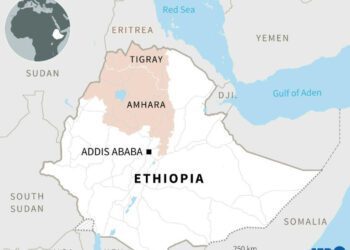
What began in Ituri Province has expanded into Bas-Uélé, Haut-Uélé, North Kivu, South Kivu, Sud-Ubangi and Tshopo, with the latest cases extending the geographical footprint towards the north-western and north-eastern borders of the country.
WHO reported that Bulu health zone in Sud-Ubangi and Dungu health zone in Haut-Uélé had become newly affected, with Dungu bordering South Sudan.
The development is unfolding against a difficult humanitarian and security environment. Conflict, displacement, population movement, limited access to healthcare and weak infrastructure are complicating efforts to identify infections early and ensure that patients receive timely treatment.
In affected communities, the challenge is not simply the number of infections. The persistently high case fatality ratio and continued deaths occurring within communities indicate that many patients are still being identified too late to receive adequate care and that transmission continues before cases are detected.
Rapid Expansion Raises Pressure on Ebola Response
The latest escalation places significant pressure on the health systems and emergency response structures supporting the outbreak.
According to WHO, Ituri remains the epicentre, accounting for majority of the confirmed case. North Kivu was also reporting the highest case fatality ratio in the outbreak, at 59.7%, prompting investigations into the factors contributing to the unusually high mortality.
Transmission has not followed a uniform pattern across the country. While incidence has gradually declined in Ituri from a peak reached in August, transmission remains elevated. North Kivu experienced a substantial increase in cases in September, while Haut-Uélé has continued to report sustained transmission. Tshopo has also shown renewed transmission after a period of lower incidence.
South Kivu, meanwhile, has reported no recent evidence of transmission, according to the latest assessment. Bas-Uélé has experienced more sporadic transmission, although the appearance of cases in additional provinces demonstrates the continuing capacity of the virus to reach new areas.
The response is also facing the enormous logistical burden created by the number of people requiring monitoring after exposure.
According to WHO’s recent report, more than 32,000 contacts required follow-up, with about 26,980 successfully monitored during the preceding 24 hours. The scale of contact tracing illustrates how quickly the demands placed on health authorities have expanded alongside the epidemic.
Authorities in the Democratic Republic of Congo and Uganda have activated emergency coordination mechanisms, while WHO and international partners have deployed technical experts, medical supplies and laboratory support.
The response includes intensified surveillance, laboratory testing, contact tracing, infection prevention and control measures and the establishment of dedicated surveillance cells in affected and high-risk areas.
Health facilities are receiving particular attention because Ebola transmission can occur in healthcare settings when infection prevention measures are inadequate. Response teams are mapping health facilities, strengthening triage, training health workers and distributing personal protective equipment.
Moreover, one of the most consequential challenges in the current outbreak is the limited availability of tools specifically designed for Bundibugyo virus.
The virus is one of the Ebola virus species capable of causing severe disease, but it remains considerably less studied than the Zaire species responsible for several major Ebola outbreaks.
WHO has revealed that there is currently no licensed vaccine specifically targeting Bundibugyo virus disease and no approved specific treatment. Research teams are therefore evaluating candidate vaccines and investigational therapeutics as the outbreak continues.
The situation has nevertheless prompted efforts to assess whether existing Ebola countermeasures can provide some protection.
READ ALSO: US, China Unveil Goods for Tariff Cuts