Malaysia has begun repatriating 1,476 Myanmar nationals under a voluntary return programme, despite warnings from the United Nations refugee agency and human rights organisations that ongoing conflict and political instability in Myanmar could expose returnees to serious risks.
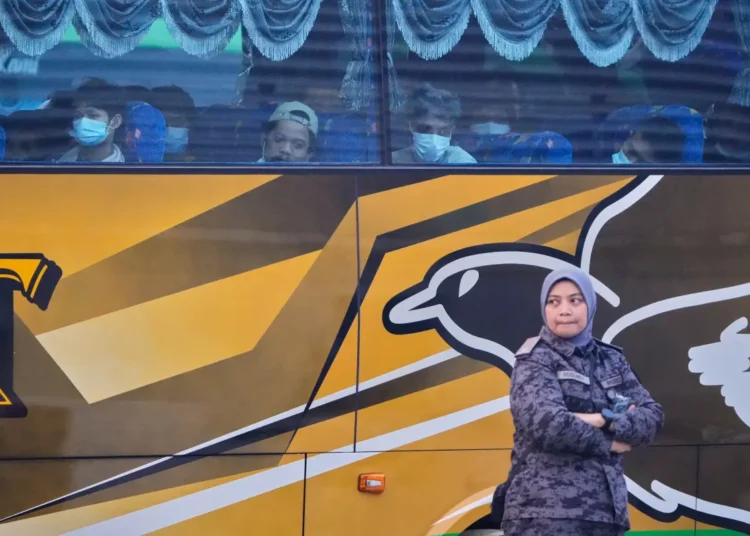
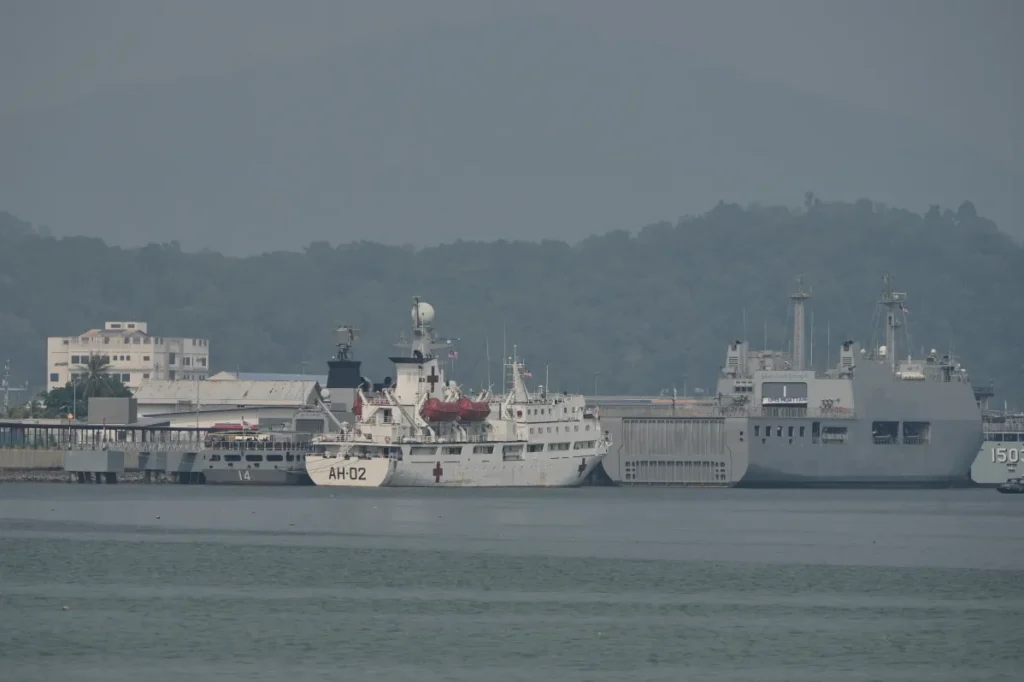
The first group began its journey on Tuesday, September 29, as part of a phased programme involving 5,000 Myanmar nationals who have agreed to return home. The operation is being conducted in coordination with Myanmar’s authorities and involves two Myanmar naval vessels and a hospital ship.
Malaysia’s Home Ministry confirmed that the repatriation was underway, with the first group departing under heightened security arrangements. Buses believed to be carrying returnees arrived at a stadium in Manjung, in the central Malaysian state of Perak, while vessels believed to be from Myanmar were docked at the nearby Lumut naval base.
The operation is part of Malaysia’s broader efforts to address longstanding challenges involving refugees and undocumented migrants, particularly those from Myanmar.
According to Malaysia’s Home Ministry, 10,388 Myanmar nationals were being held at immigration detention depots across the country as of August 15. The 1,476 returnees constitute the first group in a wider arrangement between Kuala Lumpur and Myanmar’s authorities.
Malaysian officials have described the programme as voluntary, maintaining that those participating have agreed to return and that the process is being conducted in coordination with Myanmar.
However, Myanmar has remained in turmoil since the military seized power in February 2021, triggering widespread resistance, armed confrontations and a prolonged humanitarian crisis.
The continuing instability has raised questions about whether returnees, particularly those belonging to persecuted ethnic minorities, can safely reintegrate into their communities.
Prime Minister Anwar Ibrahim has maintained that Malaysia cannot continue hosting refugees indefinitely and that Myanmar must assume responsibility for its citizens.

In a podcast published online on September 16, Anwar said that he intended to invite Myanmar’s military leader, Min Aung Hlaing, to Malaysia to discuss the longstanding refugee and undocumented migrant situation.
“I am inviting him to say that we can be friends and trade, we can accept Myanmar, but Myanmar must accept them back. To me, that’s better diplomacy than just shouting angrily at Myanmar.”
Anwar Ibrahim
His remarks reflect the Malaysian government’s preference for direct diplomatic engagement with Myanmar as it seeks to address the challenges associated with hosting a large refugee population.
Malaysia is home to approximately 215,600 refugees and asylum seekers registered with the UNHCR, including about 126,000 Rohingya Muslims, who constitute one of Southeast Asia’s largest refugee communities.
Despite hosting a substantial refugee population, Malaysia is not a signatory to the 1951 UN Refugee Convention and does not formally recognise refugees as a separate legal category. Instead, they are generally treated as undocumented migrants, leaving many without secure legal status or access to formal employment.
The situation has been particularly difficult for the Rohingya, a predominantly Muslim minority that has endured decades of discrimination and persecution in Myanmar.
Myanmar authorities have largely denied the Rohingya citizenship and refused to recognise them as a distinct ethnic group, leaving many stateless and vulnerable to restrictions, violence and displacement.
Their circumstances have also become increasingly challenging in Malaysia, where growing public hostility has been fuelled by concerns about employment, public services, security and the size of the refugee population. Misinformation and inflammatory content on social media have further contributed to tensions.
Due to this, the repatriation programme has become a significant test of Malaysia’s efforts to balance diplomatic relations, domestic concerns and humanitarian obligations.
Myanmar’s Foreign Ministry official, Han Win Aung, said that the current arrangement followed earlier repatriation operations in 2021 and 2022, during which Myanmar received more than 1,100 nationals who had been stranded in Malaysia. He maintained that the latest programme involved verified Myanmar citizens and was not intended to facilitate the return of Rohingya refugees as a group.
However, the distinction between verified nationals and refugees has not eliminated concerns among rights organisations about the safety of individuals returning to Myanmar.
With the first group now being repatriated, the programme has renewed debate over the conditions necessary for safe returns and the responsibilities of governments towards people fleeing conflict and persecution.
UN Refugee Agency Warns Against Myanmar Returns Amid Ongoing Conflict
The United Nations High Commissioner for Refugees has raised concerns over Malaysia’s repatriation programme, warning that ongoing conflict and instability in Myanmar could place returning refugees at risk.
The agency has emphasised that refugee returns should be voluntary, informed and conducted in conditions that guarantee safety and dignity. It has also expressed concern that it was not involved in selecting or identifying those participating in Malaysia’s latest repatriation operation.
Human rights organisations have similarly urged Malaysia to reconsider the programme, arguing that continued armed conflict and persecution in Myanmar undermine the prospects for safe and sustainable returns.
The concerns are particularly significant for the Rohingya, who have faced decades of discrimination, statelessness and persecution in their home country.
Malaysia’s government, however, has defended the initiative as voluntary and part of its broader diplomatic engagement with Myanmar. Prime Minister Anwar Ibrahim has argued that a lasting solution requires Myanmar to accept responsibility for its nationals and cooperate with Kuala Lumpur.
The disagreement highlights the tension between Malaysia’s efforts to address its longstanding refugee challenges and international concerns about protecting people from being returned to potentially dangerous conditions.
READ ALSO: Rubio Meets Lebanon PM As US Pushes For Ceasefire Framework