
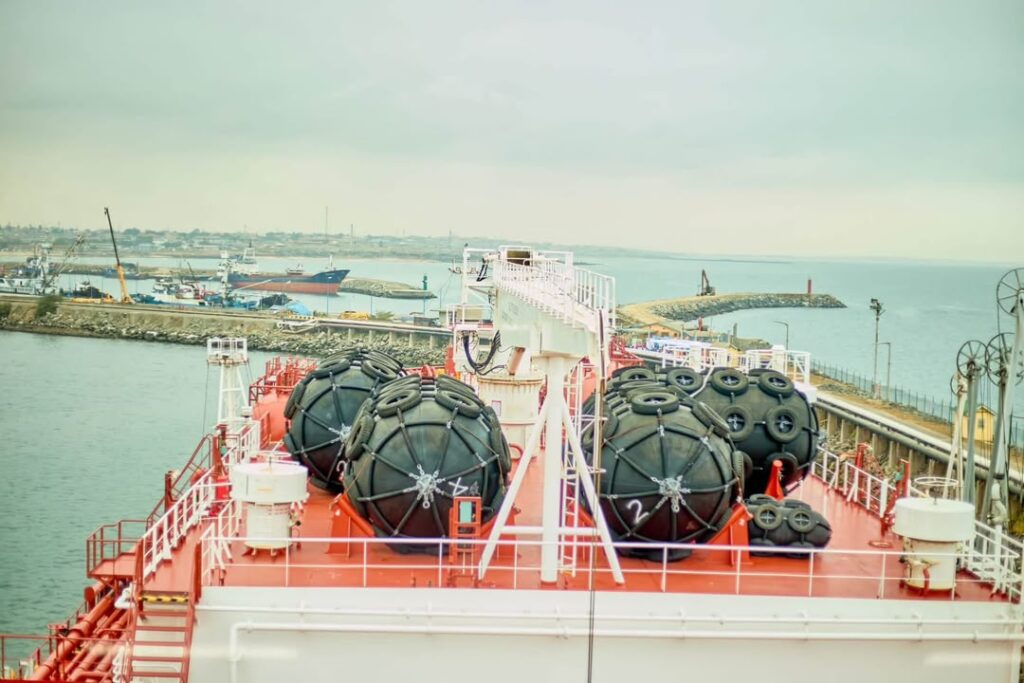
Asharami Ghana has taken a step towards strengthening Ghana’s liquefied petroleum gas (LPG) supply capacity following the arrival of a vessel carrying approximately 5,000 metric tonnes of LPG at the Tema Oil Jetty.
The company said the maiden shipment forms part of its efforts to expand its presence in Ghana’s downstream petroleum market and support greater availability of LPG, a fuel increasingly linked to the country’s cleaner-cooking and energy-transition ambitions.
The vessel’s arrival was marked by a ceremony at the Tema Oil Jetty on Tuesday, September 29, 2026, which also included the commissioning of Asharami Ghana’s LPG facility.
Industry Support Behind Vessel Arrival
The company’s Executive Director, Adewale Ajibade, used the occasion to acknowledge the National Petroleum Authority (NPA) for its support during preparations for the vessel’s arrival.

He specifically commended NPA Chief Executive, Godwin Kudzo Tameklo, for providing guidance to the company as it navigated the regulatory requirements associated with the operation.
“Thank you very much Mr. Tameklo, I acknowledge you specifically for your role, support and for tolerating us, not necessarily bending the rules, but accommodating some of those shortcomings and ensuring that this happened. Your guidance and unwavering support helped transform this aspiration into a reality,”
Mr. Ajibade
The remarks point to the importance of regulatory coordination as new private-sector infrastructure enters Ghana’s LPG market. For companies investing in storage, handling and import capacity, regulatory processes have a direct bearing on how quickly additional supply can be brought into the market.
5,000-Tonne Shipment Adds Supply Buffer
The approximately 5,000 metric tonnes delivered by Asharami Ghana provide an additional source of LPG supply for the domestic market.

While the shipment alone does not resolve Ghana’s broader LPG supply and distribution challenges, additional import capacity can strengthen the market’s ability to respond to changes in demand and supply.
The significance is also linked to the infrastructure supporting the shipment. The commissioning of Asharami Ghana’s LPG facility alongside the vessel’s arrival suggests that the company is seeking to establish a more permanent position in the downstream LPG value chain rather than relying solely on individual cargoes.
That distinction matters for a market where supply security depends not only on the availability of the product but also on adequate infrastructure for receiving, storing and distributing it.
LPG’s Role In Ghana’s Energy Transition
The development comes against a broader policy push to expand access to cleaner household and commercial fuels.
LPG can play an important role in Ghana’s transition away from traditional cooking fuels, particularly charcoal and firewood. Increasing LPG availability therefore has implications beyond the downstream petroleum industry, extending into household energy, public health and environmental policy.

The Ministry of Energy and Green Transition has also identified the gradual diversification of Ghana’s energy system as part of the country’s wider energy-security strategy.
In that context, additional LPG infrastructure could help support the transition by improving the physical capacity available to receive and distribute the fuel.
However, infrastructure expansion must ultimately be matched by affordability and distribution. Increased import and storage capacity does not automatically guarantee greater household adoption if consumers continue to face high retail prices or limited access to cylinders and distribution points.
Regulatory Oversight Remains Critical
The presence of the NPA at the ceremony also underscores the regulator’s role in balancing increased private-sector participation with safety, market stability and consumer protection.
As more companies invest in LPG infrastructure, effective regulation will become increasingly important to ensure that growth in capacity translates into reliable supply without compromising operational and safety standards.

For Asharami Ghana, the maiden vessel and facility commissioning represent an expansion of its operational footprint. For the wider market, the immediate value lies in the additional infrastructure and product availability that can strengthen Ghana’s LPG supply chain.
The longer-term impact will depend on how effectively the new capacity is integrated into the existing distribution network and whether it contributes to a more competitive and accessible LPG market.
New Capacity, Wider Market Test
The 5,000-tonne cargo is therefore best viewed as part of a broader effort to build resilience into Ghana’s LPG supply system rather than as a standalone solution to the country’s energy challenges.
The real test will be whether investments such as Asharami Ghana’s can consistently translate into dependable supply, wider access and greater use of LPG among households and businesses.
With the facility now commissioned and the company’s first LPG vessel received, Asharami Ghana has added another private-sector asset to Ghana’s downstream infrastructure. Its performance will ultimately be measured by how effectively that capacity supports supply security and Ghana’s transition towards cleaner forms of energy.
READ ALSO: Cocaine Seizures: Minority Vows to Keep Pushing After Speaker Rejects Probe