Priscilla Mbama Abasi never planned to become a bookseller. Yet from a spare bedroom in Accra, the former GIS specialist has built City Reads into one of Ghana’s growing independent bookstores, stocking more than a thousand titles across two physical locations and an online platform. Her mission is straightforward: make books accessible, affordable and relevant to Ghanaian readers.
Born in the Eastern Region, Abasi moved to Accra as a young child. Her earliest memories centre on a popular school in Adenta where weekly storybooks and strong reading comprehension classes left a lasting mark. “Reading was a good part of the curriculum that I was introduced to at an early age and it has stuck with me,” she said.
At home, her mother reinforced the habit, often choosing books over toys. One vivid memory involves her mother returning from a Kumasi market with armfuls of inexpensive titles bought for the equivalent of a few cedis each, filling the house with stories for years.
That early love for reading eventually collided with the practical frustrations many Ghanaian book lovers know well. Special editions were scarce. New releases arrived late. Prices climbed with every shift in the exchange rate. In 2020 Abasi began selling books informally with a friend. By January 2021 she decided to go further.
“I felt like the books that we were getting at the time was a bit pricey. So maybe there’s a way that we can get them at an affordable price so I got to work”
Priscilla Mbasi Abama, City Reads Books and Stationery Owner
The first stock arrived on 6 March 2021-Independence Day and City Reads was officially born with just over fifty carefully chosen titles. Those first books reflected her own tastes as a reader while stretching to appeal beyond them. She balanced the fledgling business with her full-time GIS work until growth demanded more.
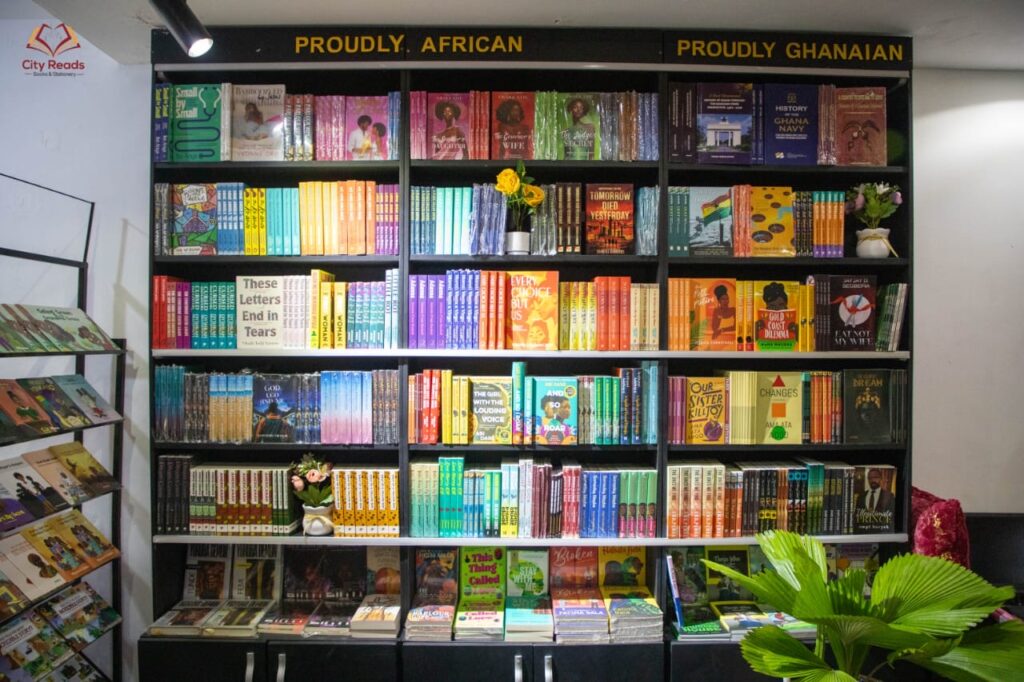
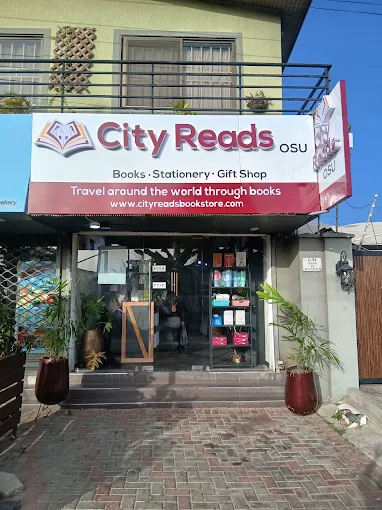
Today the company operates stores in Adenta and Osu. The decision to open physical spaces, Abasi explained, came after two years of online sales. Customers wanted a place to walk among books and see Ghanaian authors highlighted on the walls. A fixed address also built trust: people became more willing to pay before delivery once they knew where the business existed.
Keeping prices competitive remains deliberate and difficult. Import costs, shipping, staff salaries, rent and taxes all rise, yet City Reads maintains low margins. “The goal is not just to get rich quick, but then the purpose of, or the reason why we exist as City Reads is to make reading accessible,” she said. Cost control is strict; only essential spending is approved. The approach has allowed the store to grow while remaining within reach of ordinary readers.
Beyond the Sales
Beyond sales, Abasi has cultivated community through BookBorgas, an initiative that treats reading as a form of travel. Books, she believes, let people experience other lives and places without leaving home.
“You don’t have to travel to another country, but you can experience that country through a book. And so over time, everybody that sort of identifies with that ideology automatically connects with City Reads because they get it”
Priscilla Mbama Abasi, CityReads Books and Stationery Owner
Readers who share that view naturally connect with the brand. The community has, in turn, strengthened the business in ways she did not fully anticipate at the start.
What Ghanaian customers buy has shifted over time. Dark romance once dominated. Now African authors especially Nigerian writers lead sales across genres, with romance by African authors particularly strong. BookTok reviews heavily influence purchasing decisions; fewer customers browse impulsively. Many arrive with lists compiled from online feedback or after sampling digital copies.
Abasi welcomes the appetite for African stories but actively works to balance it. City Reads maintains a dedicated shelf for Ghanaian authors and prioritises stocking new local titles of solid quality. She notes that Nigerian books often succeed partly because of stronger production values better covers and finishes even among independently published works. Ghanaian publishers and self-published writers, she hopes, will invest similarly.

A turning point came when Abasi enrolled in a Master of Business Creation programme. Before the course she ran largely on intuition. Afterwards, decisions on finance, marketing and operations became more structured. Marketing content grew intentional; a capable team, largely women, now executes the vision.
“It has been life-changing. That’s the best word I can use to describe it. It has been life-changing because I’m thinking differently now”
Priscilla Mbasi Abama, City Reads Books and Stationery Owner
The shift has influenced staff mindset as well.
Looking five years ahead, Abasi wants a far wider selection of Ghanaian authors both online and in store. She sees possible expansion into publishing and hopes City Reads will help keep reading a valued leisure activity among working adults, not merely a childhood obligation. She also aims to improve access to educational materials in communities that need them most.
From fifty books in a bedroom to two stores and a growing online presence, City Reads reflects one woman’s determination to solve the practical barriers that once frustrated her as a reader. In a market where exchange rates and logistics constantly shift, Abasi continues to treat accessibility as the non-negotiable core of the business.
READ ALSO:Enrolment Doesn’t Guarantee Completion, Eduwatch Warns On Education Financing Gap