United Nations has called for urgent international action to confront a global housing crisis affecting nearly 3.4 billion people, warning that inadequate housing is increasingly reinforcing poverty, inequality, displacement and vulnerability to climate change.
Representatives from governments, civil society and academia gathered in Muscat, Oman, to mark World Habitat Day, with discussions centred on this year’s theme, “Adequate Housing for All.”
UN-Habitat Executive Director Anacláudia Rossbach described adequate housing as a fundamental component of human dignity and sustainable urban development, stressing that governments and other stakeholders must treat housing as a public priority.
She stated that, “adequate housing is not a luxury. It is a foundation for a dignified life and for sustainable cities.”
United Nations Secretary-General António Guterres, in his message for World Habitat Day, described adequate housing as “the foundation of dignity, security, and opportunity.”
Yet he noted that more than three billion people globally are denied what he described as a universal human right.
“Over one billion live in informal settlements and slums, and many more experience homelessness or have been displaced by conflict, disasters, and climate change.”
António Guterres
The figures highlight the increasingly complex nature of the global housing challenge. Housing shortages are not confined to the world’s poorest countries, while the pressures facing low- and middle-income countries are often compounded by rapid urbanisation, weak infrastructure and limited public financing.
In many developing countries, expanding cities have struggled to match population growth with investment in housing and essential services.
The result has been the growth of informal settlements where families may find shelter but lack the legal, physical and social protections normally associated with adequate housing.
According to the President of the United Nations Habitat Assembly, “a house without clean water, safety or legal security is not a home. It is a poverty trap.”
Families can remain vulnerable even when they occupy a permanent structure if they lack reliable water, sanitation, electricity, secure land rights, or access to employment and essential services.
That reality is particularly important as governments attempt to address housing shortages through rapid construction. While increasing the number of homes is critical, the quality, affordability, location and security of those homes can determine whether housing investment actually improves living conditions.
UN is consequently urging countries to move beyond short-term responses and towards structural changes capable of addressing the underlying drivers of inadequate housing.
“Therefore, to deliver adequate housing for all, we must move away from quick fixes to systemic transformation,” Nga Kor Ming stated.
Housing Crisis Deepens Amid Rising Costs and Climate Threats
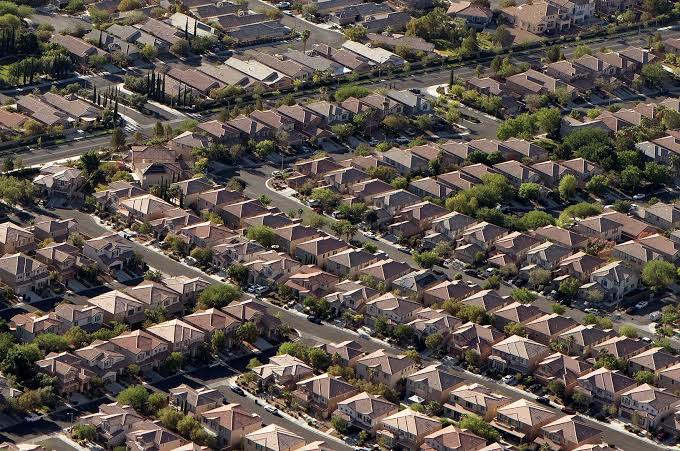
The growing housing crisis is increasingly being shaped by a combination of affordability pressures and wider socioeconomic and environmental challenges.
UN-Habitat’s Rossbach emphasised that adequate housing cannot be measured simply by whether a family has a physical structure in which to live.
Under the UN human rights framework, adequate housing encompasses criteria including the availability of services, habitability, affordability, location and accessibility.
“Adequate housing means much more than a physical structure with four walls and a roof. A family may have a roof and still spend so much on rent that there is little left for food, education, or healthcare. A home may be affordable, but located far from jobs, schools, or transport.”
Anacláudia Rossbach
A low-cost home located far from jobs, schools, hospitals, and public transport can impose additional costs on families, potentially leaving residents physically housed but economically excluded.
The challenge becomes even more complicated when housing insecurity intersects with climate change.
Floods, storms, extreme heat and other climate-related hazards can destroy homes, displace communities and deepen existing inequalities. Informal settlements are often particularly exposed where development has occurred in areas vulnerable to flooding or other environmental risks.
Guterres therefore linked investment in adequate housing to development and resilience goals.
“Investing in adequate housing and transforming informal settlements reduces poverty, tackles inequality, builds climate resilience, and fosters peaceful and inclusive societies.”
António Guterres
However, the ability to respond at scale remains constrained by financing.
Building affordable homes and extending water, sanitation, transport and electricity networks requires substantial long-term investment.
Yet governments facing debt pressures and competing development needs can struggle to mobilise the resources required to address rapidly growing urban populations.
Guterres consequently called for stronger coordination between national and local governments, improved use of data in decision-making and deeper partnerships involving different sectors of society.
He also pointed to the role of the global financial system in determining whether developing countries can mobilise adequate resources.
“The international financial architecture must also be reformed to mobilize the adequate, predictable, and affordable financing developing countries need to invest in housing at scale.”
António Guterres
The financing challenge is particularly relevant to Africa, where rapid urbanisation is expected to continue transforming the continent’s cities and placing additional pressure on housing, infrastructure and public services.
As populations move towards urban centres in search of employment and economic opportunity, governments face the challenge of expanding cities while ensuring that growth does not deepen inequality or push low-income households into increasingly vulnerable informal settlements.
Without coordinated investment in housing and basic services, urban expansion can produce communities that are physically disconnected from employment, healthcare, education and transport. Such patterns can reinforce poverty across generations, particularly when households lack secure tenure and the ability to invest in their homes.
READ ALSO: Ghana’s Energy Security Faces A Costly Dependence Trap