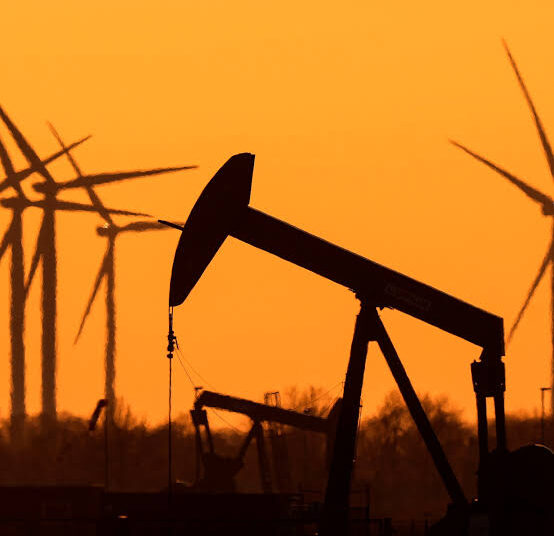
For decades, the continent’s role in global energy was often framed around what it could supply to the rest of the world: crude oil, natural gas, minerals and, increasingly, renewable-energy potential. The harder question was what Africa itself could build from those resources.
That distinction is becoming increasingly important as African countries compete for investment at a time when capital is selective, energy demand is rising and governments are under pressure to turn natural resources into electricity, industrial capacity, jobs and domestic value.
The sixth edition of African Energy Week (AEW), scheduled for October 12–16 in Cape Town, arrives against precisely that backdrop. What began in 2021 as an African-led response to the relocation of Africa Oil Week has developed into a major platform connecting governments, energy companies, financiers and project developers.
But the significance of AEW for Ghana lies beyond the size of the conference.
It raises a question that is increasingly difficult for African energy policymakers to avoid: can the continent convert its growing influence in the energy conversation into actual investment, production and infrastructure?
From Resource Holder To Investment Competitor
AEW’s evolution reflects a wider shift in how African countries are presenting their energy sectors.
The continent does not lack resources. The constraint is increasingly the ability to mobilise the capital, technology and infrastructure required to develop them.
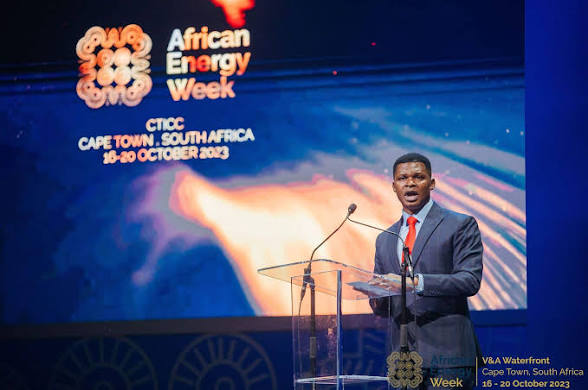
The African Energy Chamber says AEW has grown from roughly 1,700 participants at its inaugural 2021 gathering to a projected 10,000-plus participants in 2026.
The event now brings governments and investors together around exploration, power, finance, downstream development, technology and infrastructure.
That growth matters because African countries are effectively competing for the same pool of international capital.
A project may have attractive geological potential, but investors still have to consider fiscal terms, regulation, infrastructure, political risk, financing costs and the ability to recover their investment.
The result is that resource abundance is no longer enough to make an African energy project investable.
This is particularly relevant to Ghana.
Ghana has spent much of 2026 trying to reposition itself as an investment destination at a time when its established oil fields are maturing and production sustainability has become an urgent policy concern.
At Africa Oil Week in Accra, government and industry repeatedly emphasised the need to attract capital into existing discoveries, mature assets and frontier opportunities while improving project economics.
AEW now provides a different but complementary arena for that competition.
Ghana’s Energy Proposition Is Getting Broader
Ghana’s investment proposition is no longer confined to crude oil.
Its energy opportunity increasingly stretches across upstream petroleum, natural gas, refining, electricity infrastructure and renewable energy.
That broader proposition is important because investors are increasingly assessing energy systems rather than individual commodities.
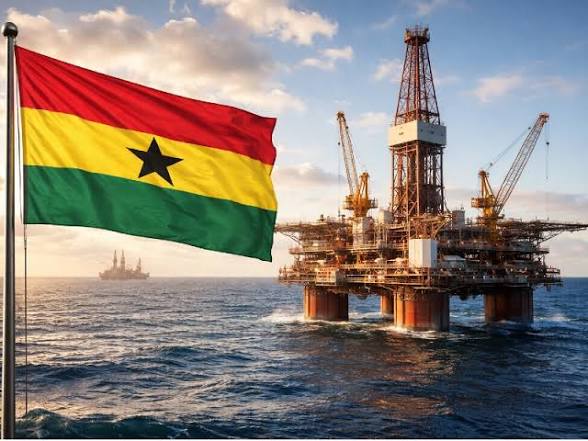
A gas development, for example, becomes more commercially significant when there is infrastructure capable of processing and transporting the gas and a power sector capable of consuming it.
Similarly, renewable generation becomes more attractive when transmission capacity, storage and demand growth can support additional electricity on the grid.
Ghana has been attempting to build precisely those connections.
The country’s participation in AEW therefore comes at a moment when it needs to demonstrate that its energy assets can form an integrated investment pipeline rather than a collection of unrelated projects.
That was already evident in Ghana’s presentation at Africa Oil Week, where the government placed investment, upstream reforms and energy security at the centre of its pitch to international operators and financiers.
The challenge now is execution.
The Capital Question Is Bigger Than Oil
Perhaps the most important development around AEW 2026 is the growing emphasis on African capital.
Pan African Visions reports that Africa’s energy financing gap remains between US$31 billion and US$50 billion, with African financial institutions and regional lenders increasingly seeking to play a larger role in closing that gap.
That changes the conversation.
For years, African energy development has been heavily dependent on international oil companies, foreign banks and development-finance institutions.
Those investors remain important, but African institutions are increasingly expected to mobilise their own balance sheets and participate in financing the continent’s infrastructure.
For Ghana, this has direct implications.
If the country wants to expand refining, develop gas infrastructure, improve electricity networks and accelerate renewable deployment, relying exclusively on external capital leaves the pace of development vulnerable to investment decisions made elsewhere.
The emergence of stronger African financing institutions could therefore give governments greater room to structure projects around continental development priorities.
But capital alone will not solve the problem.
Projects must still be bankable.
That means predictable regulation, credible revenue structures, transparent procurement and sufficient demand to support repayment.
From Deals On Stage To Projects On The Ground
This is where the credibility of platforms such as AEW will ultimately be tested.
There is an obvious difference between an agreement announced at an energy conference and a project that reaches financial close, begins construction and eventually produces electricity, fuels or hydrocarbons.
AEW’s organisers have increasingly tried to close that gap through deal rooms, investment forums and direct meetings between governments, developers and financiers.
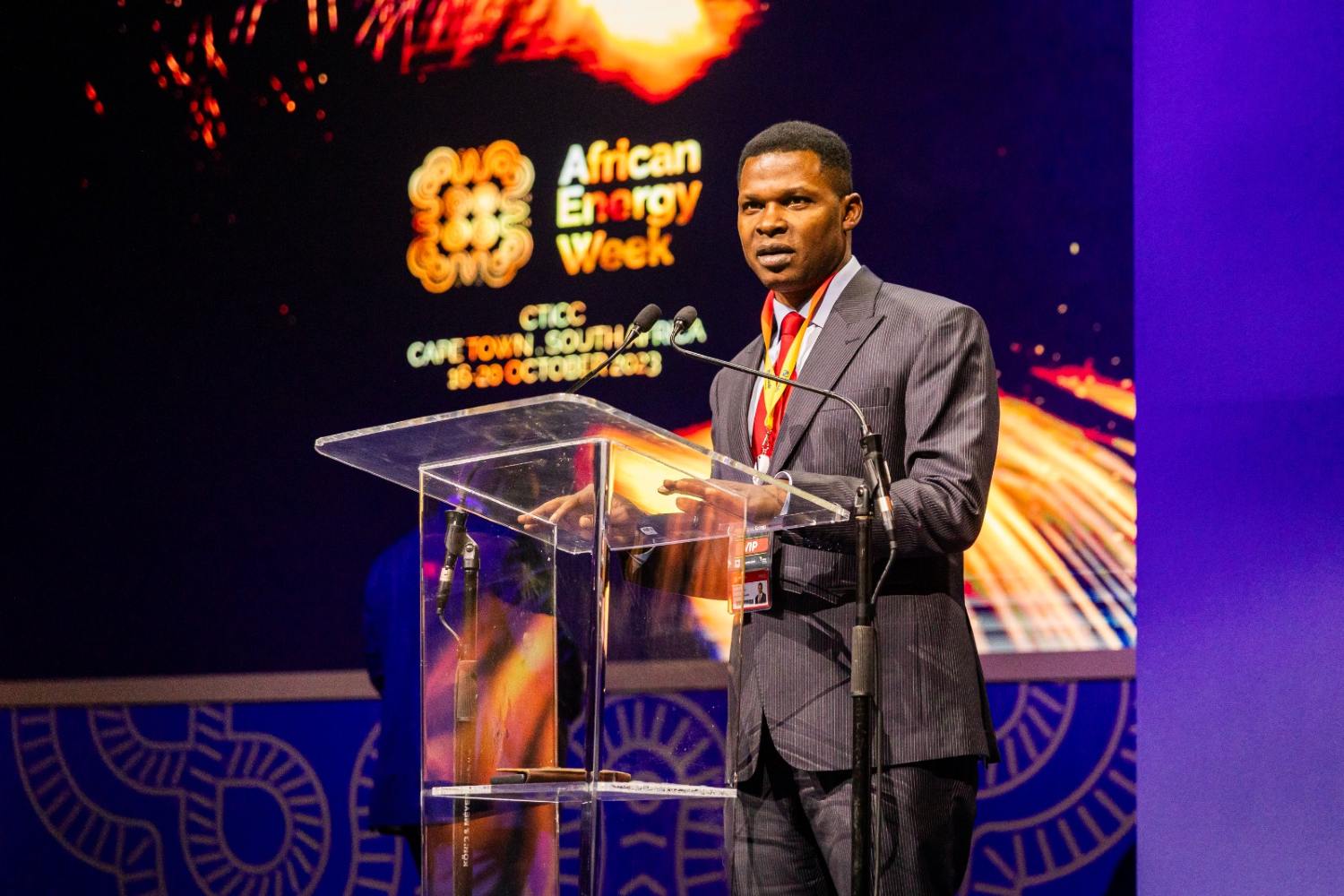
The conference has also facilitated financing arrangements and commercial partnerships involving African and international institutions.
That emphasis is significant because Africa’s energy problem is not primarily a shortage of announcements.
It is a shortage of completed projects.
“AEW is bigger than five days on a calendar. It is a movement.” NJ Ayuk, Executive Chairman, African Energy Chamber
The statement captures the organisers’ attempt to make the event part of a continuing investment process rather than an annual gathering that ends when delegates leave Cape Town.
For Ghana, that approach offers a useful lesson.
The country does not simply need to appear at international energy conferences. It needs to arrive with projects that can answer the questions investors will ask: How much capital is required? What is the revenue model? What risks does government assume? What risks does the private sector assume? What infrastructure already exists? And when can the investment begin generating returns?
Ghana Cannot Afford To Sell Potential Alone
Ghana’s energy sector has considerable advantages.
It has established petroleum infrastructure, producing fields, an experienced regulatory system and a growing domestic technical base.
It also has an expanding renewable-energy agenda and a strategic need for additional gas to support electricity generation.
But these advantages need to be converted into commercially credible propositions.
This is especially important as Ghana competes with other African producers and emerging energy markets.
At AEW, countries will not be competing simply on the quantity of oil or gas beneath their territories. They will be competing on the quality of their investment environments.
That makes Ghana’s ongoing reforms important.
The country has been working to improve the investment framework for upstream petroleum, encourage domestic refining and expand its electricity and renewable-energy infrastructure.
The objective is increasingly to create an energy system in which investment in one segment supports development in another.
The risk is that fragmented investment could produce isolated successes without solving the underlying energy constraints.
A new power plant cannot fully transform the economy if fuel supply is unreliable.
More gas production cannot deliver its full value if infrastructure and payment arrangements are weak.
More renewable capacity cannot guarantee energy security if the grid cannot accommodate it.
More upstream investment cannot reverse production decline permanently if exploration and development do not continue.
Africa Wants A Seat- And A Bigger Share
The broader significance of AEW is therefore not that Africa is finally being invited to the global energy table.
Africa has always been important to global energy.
The shift is that African countries increasingly want greater influence over what happens at that table, including where capital goes, who develops resources, where value is created and how energy investment contributes to domestic industrialisation.
For Ghana, that means the investment conversation must move beyond attracting international companies to the country.
It must also ask what Ghana receives from those investments.

More local expertise. More domestic procurement. More infrastructure. More gas for power. More refined products produced locally. More electricity capacity. More renewable-energy manufacturing and services. And, ultimately, more economic value retained within Ghana.
That is the standard against which the country’s participation in Africa’s increasingly competitive energy marketplace should be judged.
“This is where deals are made.” NJ Ayuk, Executive Chairman, African Energy Chamber
The real question for Ghana is what happens after the deal is made.
If AEW succeeds in connecting African resources with capital, technology and credible project developers, its significance will extend beyond the conference floor.
For Ghana, the opportunity is to ensure that its own energy pitch is not simply heard, but financed, implemented and translated into the reliable energy, industrial activity and jobs that the country needs.
That is ultimately what being at Africa’s global energy table should mean: not merely having a voice in the conversation, but having the capacity to turn that voice into investment and economic value.
READ ALSO: CRX Trade’s New Platform Could Reshape Institutional Crypto Trading