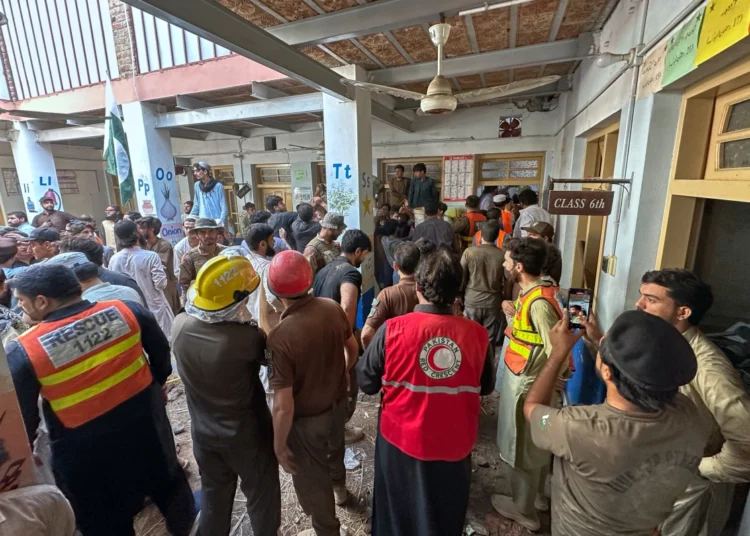
At least 29 people, including 28 children and a teacher, have been killed after the roof of a private school collapsed in Peshawar, northwestern Pakistan, authorities and a hospital official said.
More than 50 other people were injured in Thursday’s incident at Al-Khair school, located in a congested neighbourhood in the city, the capital of Khyber Pakhtunkhwa province.
Lady Reading Hospital Spokesman, Mohammad Asim disclosed that all the children killed or injured were aged 13 or younger. He added that some of the injured were in critical condition.
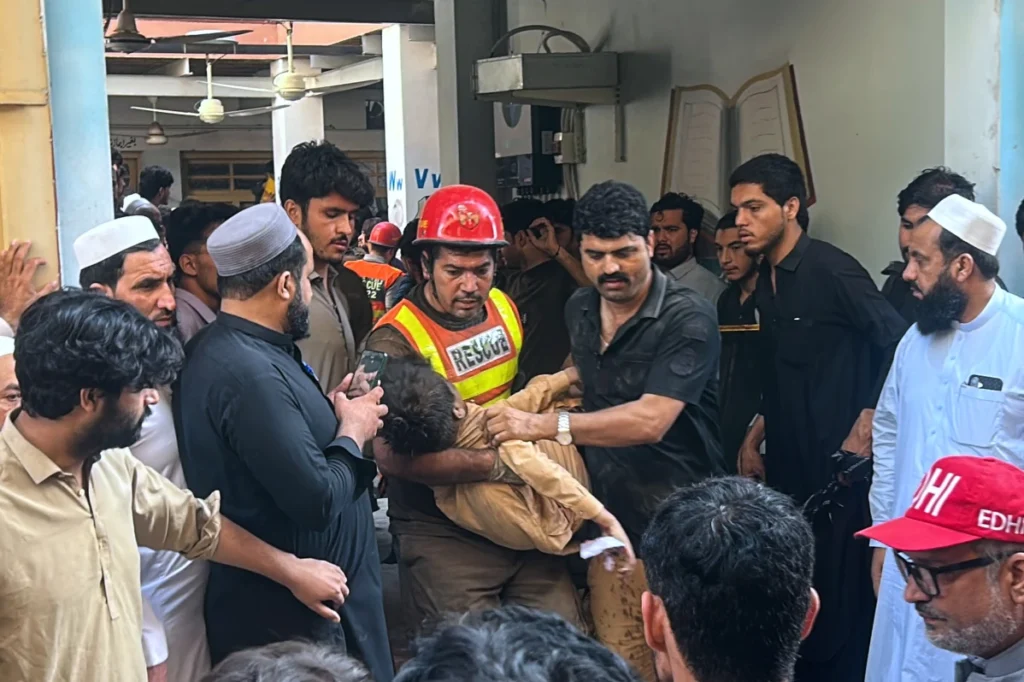
The hospital declared an emergency as medical staff treated the wounded and responded to the influx of casualties from the collapse.
Witnesses said that local residents were among the first to reach the school and assist those affected. Rescue workers arrived within minutes of receiving reports of the incident and began searching through the rubble for trapped children and other victims.
Hours after the collapse, rescue officials said everyone trapped beneath the debris had been pulled out, while crews continued clearing the site.
The provincial government said the school occupied a three-storey building, raising questions about its structural condition and whether it met the required safety standards.
Peshawar police Chief Saeed Ahmed said that the school’s owner had been arrested. He also described the building as structurally weak.
Authorities have not yet established the definitive cause of the collapse, with a committee formed by the provincial government to investigate the circumstances surrounding the incident.
The tragedy has renewed attention on the safety of school buildings and the risks faced by children attending institutions housed in potentially unsafe structures.
Authorities Order Investigation, Medical Assistance
Khyber Pakhtunkhwa Governor Faisal Karim Kundi expressed sorrow over the deaths and requested a report from the relevant authorities to establish what caused the roof to collapse.
He also directed officials to ensure that the injured children received the best possible medical care.
Provincial government Spokeswoman Samar Haroon Bilour said that officials had instructed hospitals to provide prompt treatment to the injured and commended rescue workers for their swift response.
She added that the government was deploying all available resources to ensure those trapped beneath the rubble were brought to safety.
The rescue operation involved efforts to locate victims, remove debris and transport the injured to medical facilities. Officials later confirmed that no one remained trapped beneath the rubble, allowing the operation to shift towards clearing the affected area.
The arrest of the school’s owner marks an early step in the authorities’ response, although the investigation is expected to establish the precise circumstances that led to the collapse.
The inquiry will also be important in determining whether structural weaknesses, construction practices or other safety failures contributed to the disaster.
Pakistan Leaders Offer Condolences, Call For Safer Schools
The incident has drawn national attention, with Pakistan’s political leadership expressing condolences to the victims’ families and calling for measures to prevent similar tragedies.
In Islamabad, President Asif Ali Zardari and Prime Minister Shehbaz Sharif separately expressed sorrow over the deaths and offered condolences to the bereaved families. “The entire nation shares the grief of the affected families in this hour of sorrow,” Zardari said.

The Pakistani President also called for a comprehensive investigation into the collapse and stressed the importance of ensuring that school buildings meet safety standards.
His remarks highlighted the need for authorities to examine the conditions of educational facilities and take steps to prevent similar incidents.
The Peshawar collapse comes amid wider concerns about building safety in Pakistan, where structural failures have been linked to poorly enforced construction standards and the use of substandard materials.
In some cases, safety regulations are ignored or inadequately implemented to reduce construction costs, increasing the risks associated with unsafe buildings.
In July, a roof collapsed at a tutoring centre under construction in Lahore, killing four schoolchildren.
The latest incident has again raised questions about the enforcement of building regulations and the protection of children in educational facilities.
For families affected by the Peshawar collapse, the immediate priority remains the treatment and recovery of injured children, while authorities work to establish what caused the disaster.
The government’s investigation is expected to clarify the circumstances surrounding the collapse and inform any further action against those found responsible.
The tragedy has also reinforced calls for stronger oversight of school infrastructure and compliance with safety requirements, particularly in buildings where large numbers of children gather daily.
As rescue teams clear the remaining debris and investigators examine the site, the focus will remain on accountability, support for the victims’ families and measures to reduce the risk of similar incidents.