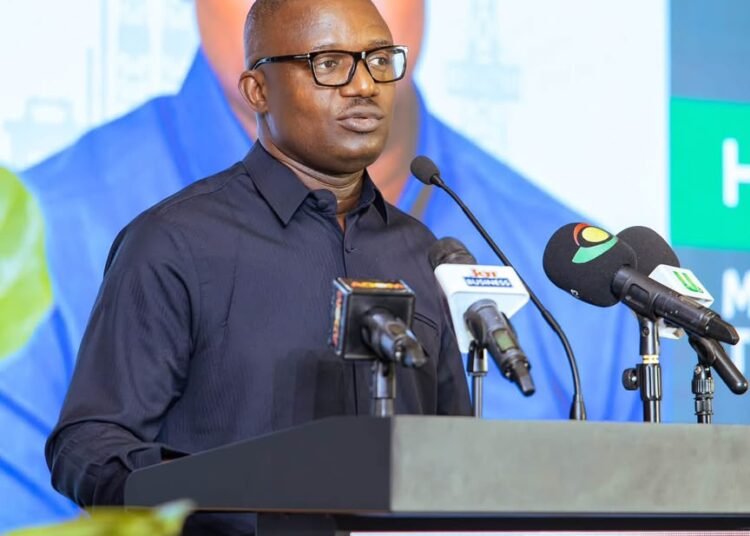
Ghana’s ambition to strengthen its position in West Africa’s energy market will depend on whether it can convert investment commitments, domestic gas resources and planned infrastructure into commercially competitive projects, as Energy Minister John Abdulai Jinapor prepares to address regional industry leaders in Senegal.
Jinapor is scheduled to speak at MSGBC Oil, Gas & Power 2026 in Dakar from December 1 to 3, bringing Ghana’s upstream petroleum priorities and power-sector challenges into a regional conversation increasingly shaped by gas development, cross-border infrastructure and competition for energy investment.
The conference will bring together policymakers, investors and operators working across Mauritania, Senegal, The Gambia, Guinea-Bissau and Guinea-Conakry.
For Ghana, participation offers an opportunity to attract capital and explore partnerships, but it also raises a more fundamental question: how can the country translate its established petroleum industry and energy infrastructure plans into a durable competitive advantage?
Ghana already has producing offshore oil and gas assets, a domestic gas market and a substantial electricity system.
Yet sustaining petroleum production, improving gas utilisation, strengthening power-sector finances and expanding domestic refining capacity require investment and execution that cannot be secured through international engagement alone.
The minister’s participation comes as the government pursues upstream investment, gas infrastructure development and reforms intended to improve the reliability and financial sustainability of the energy sector.
The challenge is to ensure these priorities reinforce one another rather than remain separate initiatives competing for capital and institutional attention.
Ghana Must Compete Beyond Its Petroleum Reserves
Ghana’s offshore petroleum resources have established the country as a producer, but the maturity of its existing fields makes continued investment in exploration, drilling and production essential.
At African Energy Week in Cape Town earlier in October, Dr Jinapor reported approximately US$3.5 billion in investment commitments for activities involving the Jubilee, Tweneboa, Enyenra and Ntomme (TEN), and Offshore Cape Three Points fields.
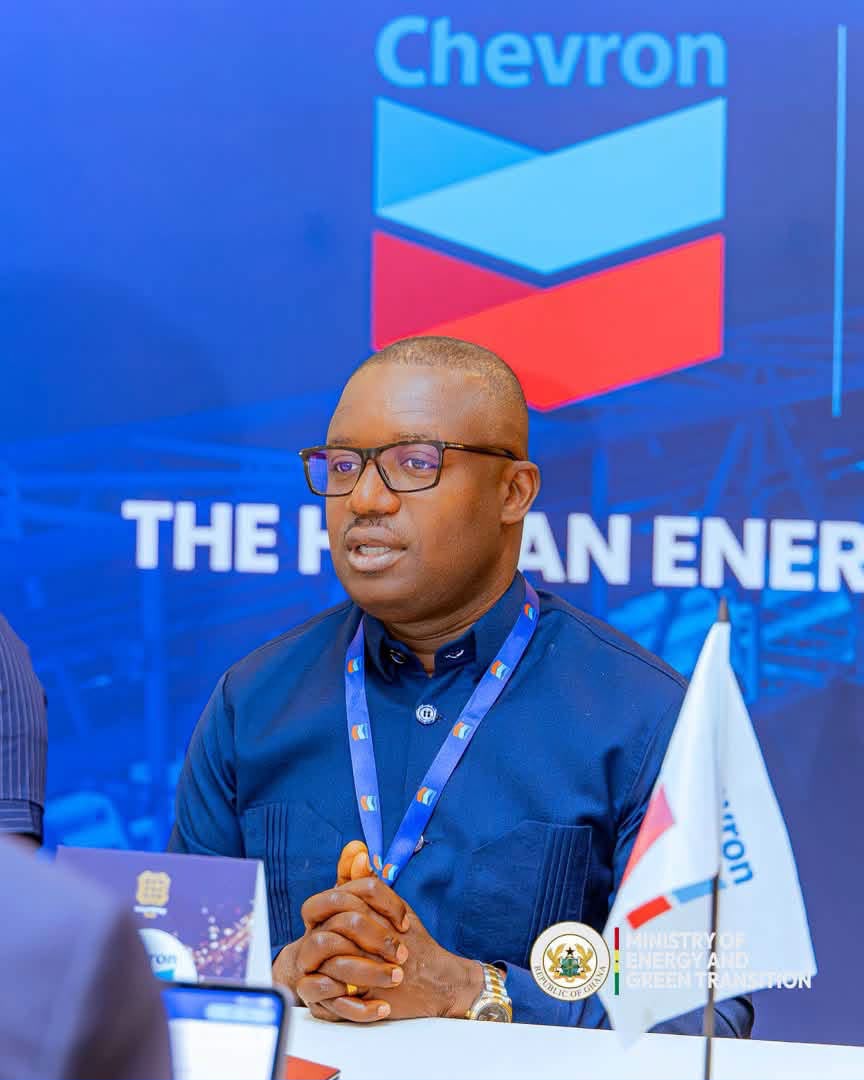
The government has presented these commitments as part of efforts to sustain operations and attract renewed investment into the upstream sector.
However, commitments should not be confused with completed investment or additional production. Their economic value will depend on how quickly projects move through financing, procurement, drilling and development, and whether the resulting output can offset declines from mature assets.
This distinction is important as Ghana competes with other African petroleum jurisdictions for capital. Investors assess not only geological prospects but also fiscal terms, regulatory predictability, project costs, infrastructure access and the time required to bring resources into production.
Jinapor has recently emphasised the government’s commitment to building a more predictable investment environment. At the same time, Ghana must demonstrate that announced reforms translate into practical improvements for companies making long-term capital decisions.
The minister’s participation in Dakar could help maintain that engagement with regional and international investors. But Ghana’s competitive position will ultimately be determined by the quality of its investment proposition and the consistency with which it delivers on agreed projects.
Gas Infrastructure Could Connect Upstream Growth To Power Security
Gas is another area where Ghana’s energy ambitions intersect.
Domestic gas can support electricity generation, reduce reliance on imported liquid fuels when it is available at competitive cost, and create opportunities for industrial users.
Yet the benefits depend on reliable production, processing capacity, transportation infrastructure and the financial ability of buyers to pay for supply.
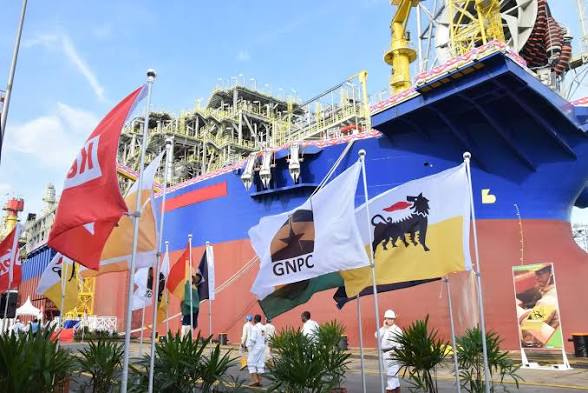
Ghana’s plans to advance its Second Gas Processing Plant and expand gas availability form part of a wider effort to strengthen the relationship between upstream production and domestic energy demand.
The government has also discussed cooperation with Nigeria involving electricity and natural gas supply through the West African Gas Pipeline.
These initiatives point to a broader regional opportunity: energy security does not necessarily require each country to develop every resource or piece of infrastructure independently.
Cross-border arrangements can help countries access complementary resources, provided commercial terms, infrastructure reliability and payment obligations are credible.
For Ghana, however, the central issue remains whether additional gas can be delivered reliably and used efficiently. Infrastructure investment must be coordinated with production forecasts, power-generation requirements and the financial position of electricity-sector institutions.
Without that coordination, new supply infrastructure may not deliver its full economic value. Conversely, well-integrated gas and power investments could support industrial activity while improving the flexibility of the electricity system.
Regional Integration Requires More Than Agreements
The MSGBC region is attracting attention because of its oil and gas prospects, developing infrastructure and efforts to connect energy resources with domestic markets and export opportunities.
Ghana’s participation provides a platform to explore partnerships in project development, gas trade, engineering services and energy infrastructure.
It could also help the country understand how neighbouring producers are approaching investment, monetisation and regional cooperation.
But cross-border energy trade is only as dependable as its commercial and physical foundations.
Gas pipelines require sustained supply, functioning infrastructure and buyers able to meet contractual obligations.
Electricity exchanges require compatible systems, transmission capacity and agreed arrangements for pricing and settlement. Petroleum-product trade depends on competitive supply, logistics and regulatory coordination.
The opportunity for Ghana is therefore not simply to sign additional cooperation agreements. It is to identify arrangements that address specific supply constraints, reduce costs or create new revenue streams.
This is particularly relevant as Ghana seeks to improve its own energy-sector finances. Regional integration can create value, but it should not be treated as a substitute for resolving domestic payment challenges, infrastructure limitations and weaknesses in project execution.
Domestic Refining And The Question Of Value Addition
Ghana’s downstream ambitions also form part of its wider investment proposition.
The government has argued that expanding domestic refining could reduce dependence on imported petroleum products, ease pressure on foreign exchange and retain more economic activity within the country.
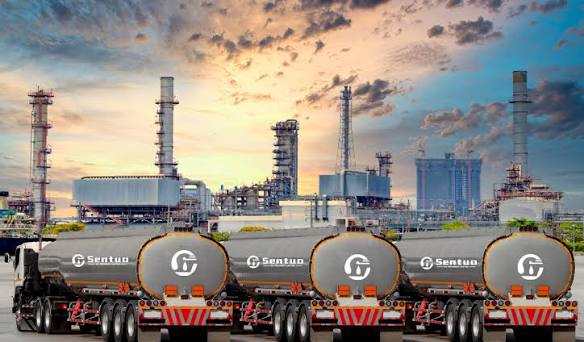
In July, Jinapor said planned expansions at Tema Oil Refinery and Sentuo Oil Refinery could eventually enable the two facilities to meet about 70 per cent of domestic demand for refined petroleum products.
That remains a projection tied to the completion and performance of the expansion projects, rather than an indication of current domestic supply.
The commercial test will be whether the refineries can secure crude feedstock, operate reliably, manage financing and production costs, and sell products competitively against imports.
For Ghana, refining and upstream development are connected but distinct investment challenges.
More domestic crude production does not automatically guarantee competitively priced refined products, just as additional refining capacity does not ensure financial sustainability without reliable feedstock and markets.
The country’s regional ambitions will be more credible if its domestic projects demonstrate that they can operate efficiently and attract capital on terms that do not create unsustainable public-sector exposure.
Turning Conference Engagement Into Measurable Results
The conference organisers say the event will bring together regional governments, investors and energy companies to explore investment and cooperation opportunities across the MSGBC basin.
Sandra Jeque, Vice President of Energy Capital & Power, said Jinapor’s participation would contribute Ghana’s experience to the regional discussions.
“Minister Jinapor’s participation brings valuable perspective on how Ghana is mobilizing investment across upstream production, gas monetization and power infrastructure to strengthen energy security and support industrial growth.”
Jeque added that his contribution would support discussions around “cross-border cooperation, infrastructure development and investment partnerships across West Africa.”
For Ghana, the value of the engagement will depend on what follows the conference. Investment discussions need to progress towards clearly defined projects, financing arrangements, technical cooperation or commercial agreements before they can be counted as tangible gains.
That requires the government to prioritise opportunities according to their likely contribution to production, electricity reliability, domestic value addition and fiscal sustainability. It also requires transparent reporting that distinguishes preliminary interest from binding commitments and completed investment.
Ghana enters the Dakar conference with an established petroleum industry and several major energy initiatives in development. Its challenge is to connect those assets and plans into a more coherent, competitive energy system.
The real measure of Ghana’s regional energy ambitions will not be how prominently its officials appear at international conferences, but whether engagement translates into productive investment, dependable energy supply and greater value retained within the domestic economy.
READ ALSO: Ghana Leads 26 Nations on Trade Convention