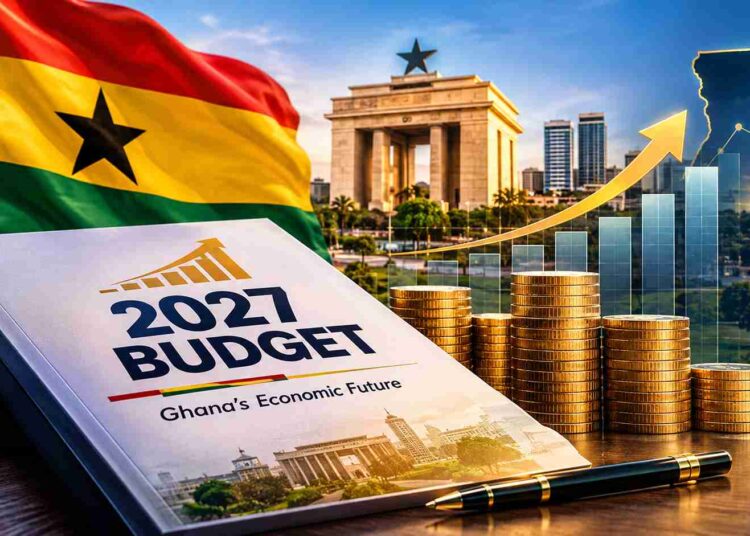
Ghana’s economic recovery has given the government some breathing room, but the next phase could prove even more difficult.
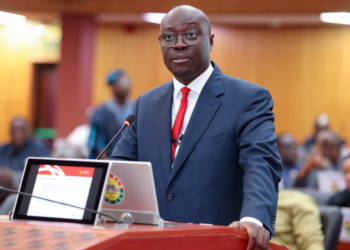
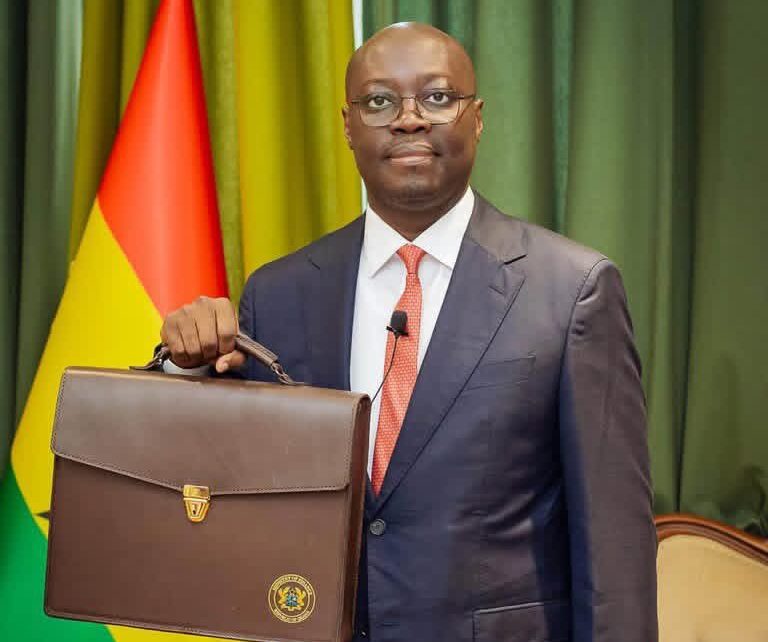
After years of painful economic adjustments, debt restructuring and fiscal restraint, Finance Minister Dr Cassiel Ato Forson faces a tough balancing exercise as he presents the 2027 Budget Statement and Economic Policy to Parliament today, November 12, 2026.
The challenge is not simply how much the government can spend. It is how to finance the country’s development ambitions without returning to the excessive borrowing, mounting debt obligations and fiscal pressures that once pushed the economy into crisis.
With inflation significantly lower, economic growth gaining momentum and international reserves providing stronger external buffers, expectations are rising that the government will begin translating macroeconomic improvements into investments, businesses and jobs.
However, Ghana’s recent experience has demonstrated how quickly economic gains can disappear when public spending outpaces the country’s ability to generate sustainable revenue.
The 2027 Budget must therefore answer one difficult question: Can Ghana pursue ambitious economic transformation without creating another debt crisis?
The $10 Billion Ambition and Its Financing Challenge
At the centre of the government’s economic ambitions is President John Dramani Mahama’s proposed US$10 billion New Economy programme, covering the 2027 to 2030 period.
The initiative is designed to move Ghana away from excessive dependence on raw commodity exports and imported finished products towards domestic production, industrialisation, value addition and export expansion.
Its priority areas include commercial agriculture and agribusiness, energy, critical minerals, textiles and garments, tourism, the creative economy and pharmaceutical manufacturing.
The ambition is significant, particularly at a time when Ghana needs investment to expand productive capacity and create employment for its growing population.
But the financing question remains crucial.
The government has indicated that it does not intend to return to the international capital market for expensive loans to finance the programme. This places considerable responsibility on domestic revenue mobilisation, private-sector participation and the ability to attract long-term investment.
The budget must explain how these different financing sources will work, which projects will receive priority and how the government intends to ensure that the proposed investments generate sufficient economic returns.
Without credible financing arrangements, the US$10 billion ambition could become another expensive development promise.
Ghana Cannot Afford Another Debt Crisis
Ghana’s recent debt experience remains an important warning against pursuing economic growth through unsustainable borrowing.
The country’s 2022 debt crisis exposed the consequences of persistent fiscal deficits, rising interest payments, exchange-rate pressures and limited capacity to meet external obligations.
The subsequent domestic debt exchange programme and external debt restructuring imposed considerable costs on investors, financial institutions and households.
Although the economy has made progress since then, debt sustainability remains central to the country’s economic future.
The International Monetary Fund (IMF), following its first review of Ghana’s three-year Policy Coordination Instrument, has welcomed the progress made in restoring macroeconomic stability.
However, the Fund expects Ghana to maintain a primary fiscal surplus of 0.5 per cent of Gross Domestic Product (GDP) in 2027 on a commitment basis.
That target is particularly important because it requires the government to maintain a surplus before interest payments while creating room for productive investment.
Mr Ruben Atoyan, IMF Mission Chief, explained the thinking behind the fiscal framework.
“The 2027 budget is built on strong foundations. Consistent with the PCI, it targets a primary surplus of 0.5 per cent of GDP (Gross Domestic Product) on a commitment basis, supported by revenue measures already approved by the Parliament in July.”
The IMF has also emphasised the importance of rigorous project appraisal, competitive procurement and strict expenditure controls.
These safeguards matter because Ghana cannot afford to spend billions on projects that fail to generate meaningful economic benefits.
Revenue Mobilisation Will Determine How Far Government Can Go
One of the biggest pressures facing the Finance Minister is the need to raise sufficient domestic revenue to support government expenditure.
Ghana’s dependence on commodity exports exposes public finances to fluctuations in international gold, cocoa and crude oil prices. While these commodities remain important sources of foreign exchange and government revenue, they cannot provide a sufficiently predictable foundation for long-term development spending.
The IMF expects improvements in non-oil revenue collection in 2027, supported by customs and excise reforms, stronger revenue administration and electronic fiscal devices.
The scale of the challenge is evident in the government’s first-half 2026 revenue performance.
According to Bank of Ghana figures cited by the IMF, total revenue and grants reached GH¢144.571 billion at the end of June 2026, equivalent to 9.1 per cent of GDP.
Non-oil revenue accounted for GH¢138.28 billion, representing approximately 95.65 per cent of total revenue.
This provides an important foundation, but sustained improvements in tax compliance, customs administration and the formalisation of economic activity will be necessary.
The government must also avoid placing excessive pressure on businesses already struggling with operating costs, expensive credit and infrastructure constraints.
The Cost of Borrowing Is Not the Only Risk
Even without returning to expensive external borrowing, Ghana faces other fiscal vulnerabilities that could undermine its recovery.
The IMF has warned about debt rollover requirements, financial sector weaknesses and fiscal pressures associated with the energy, cocoa and gold sectors.
These risks are particularly important because they can create unexpected obligations for the government and reduce the resources available for development.
The energy sector remains a major concern, given the financial pressures associated with power generation, fuel supply and payments to independent power producers.
Similarly, weaknesses in state-owned enterprises can create contingent liabilities that eventually become government expenditure.
Ghana must therefore strengthen public financial management and ensure that state institutions operate within sustainable financial limits.
The country also needs stronger reserve buffers and effective debt management to protect itself against external shocks.
Will Economic Growth Finally Create Jobs?
Beyond the fiscal numbers, Ghanaians will be looking for evidence that the economic recovery can improve their everyday lives.
The economy recorded six per cent growth in the second quarter of 2026, while inflation declined to 5.2 per cent in September.
These developments have strengthened confidence in the recovery, but economic growth must translate into productive employment, higher incomes and improved business opportunities.
The New Economy programme could provide an important opportunity to achieve this, particularly through investments in agriculture, manufacturing, pharmaceuticals and critical minerals.
However, the government must demonstrate how these investments will be implemented, how many jobs they are expected to create and when Ghanaians can begin to see tangible results.
A Budget That Must Protect the Future
The 2027 Budget arrives at a moment when Ghana has an opportunity to rebuild its economy on stronger foundations.
But the country cannot afford to confuse the availability of fiscal space with unlimited spending capacity.
The Finance Minister must demonstrate how the government can expand productive investment, improve infrastructure and create jobs while protecting the progress made in debt sustainability and macroeconomic stability.
Ultimately, Ghana’s success will not be determined by the size of its development announcements or the amount of money attached to its flagship programmes.
It will depend on whether those investments increase productivity, expand domestic production, generate sustainable employment and strengthen the country’s ability to finance its own development.
Ghana has already paid a heavy price for years of fiscal mismanagement. The 2027 Budget must ensure that the pursuit of growth does not lead the country back to the same debt trap it has spent years trying to escape.
READ ALSO: BoG Approves 46 International Money Transfer Operators