• About
  • Advertise
  • Privacy Policy
  • Contact
Friday, May 15, 2026
  • Login
The Vaultz News
  • Top Stories
  • News
    • General News
    • Education
    • Health
    • Opinions
  • Economics
    • Economy
    • Finance
      • Banking
      • Insurance
      • Pension
    • Securities/Markets
  • Business
    • Agribusiness
    • Vaultz Business
    • Extractives/Energy
    • Real Estate
  • World
    • Africa
    • America
    • Europe
    • UK
    • USA
    • Asia
    • Around the Globe
  • Innovation
    • Technology
    • Wheels
  • Entertainment
  • 20MOBPL2DNew
  • Jobs & Scholarships
    • Job Vacancies
    • Scholarships
No Result
View All Result
The Vaultz News
  • Top Stories
  • News
    • General News
    • Education
    • Health
    • Opinions
  • Economics
    • Economy
    • Finance
      • Banking
      • Insurance
      • Pension
    • Securities/Markets
  • Business
    • Agribusiness
    • Vaultz Business
    • Extractives/Energy
    • Real Estate
  • World
    • Africa
    • America
    • Europe
    • UK
    • USA
    • Asia
    • Around the Globe
  • Innovation
    • Technology
    • Wheels
  • Entertainment
  • 20MOBPL2DNew
  • Jobs & Scholarships
    • Job Vacancies
    • Scholarships
No Result
View All Result
The Vaultz News
No Result
View All Result
in Around the Globe

US Aid Freeze Could Spark HIV Crisis, Expert Warns

Lawrence Ankutseby Lawrence Ankutse
February 10, 2025
Reading Time: 4 mins read
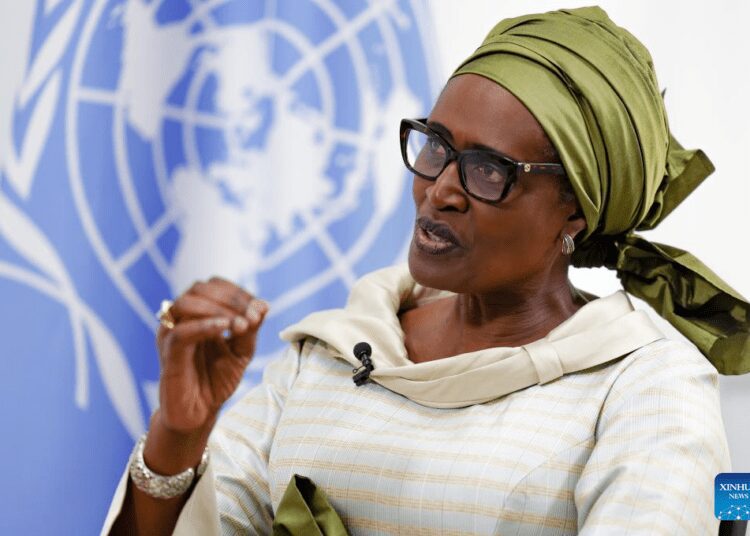
UNAIDS Chief Warns of HIV Crisis Over Funding Cuts

Winnie Byanyima Executive Director-of UNAIDS

The global fight against HIV/AIDS is at risk as the head of the United Nations AIDS agency warns that US Aid freeze could lead to a dramatic increase in infections and deaths. 

UNAIDS Executive Director Winnie Byanyima cautioned that the number of new HIV infections could skyrocket by more than six times by 2029 if the United States pulls its support from the world’s largest AIDS relief program.

Byanyima highlighted that in recent years, HIV infections have been on a steady decline, with 1.3 million new cases recorded in 2023, marking a 60% reduction since the peak in 1995. However, the situation could soon reverse. 

Following former U.S. President Donald Trump’s announcement of a 90-day freeze on all foreign assistance, UNAIDS estimates that by 2029, global HIV cases could rise to 8.7 million, AIDS-related deaths could surge tenfold to 6.3 million, and 3.4 million children could be orphaned.

ADVERTISEMENT

“We will see a surge in this disease,” Byanyima stated from Uganda, emphasizing the gravity of the potential crisis. “This will cost lives if the American government doesn’t change its mind and maintain its leadership,” she added, while refraining from directly criticizing U.S. policy decisions.

Byanyima urged the Trump administration to reconsider the abrupt funding cuts, which she said have already led to “panic, fear and confusion” in African countries hardest hit by HIV/AIDS. 

The loss of U.S. financial backing has resulted in immediate layoffs of HIV workers, severely disrupting healthcare services. In Kenya, 550 HIV workers were dismissed overnight, while in Ethiopia, thousands lost their jobs, leaving authorities unable to monitor or contain the epidemic.

The impact is particularly devastating in nations where HIV programs rely heavily on external aid, with U.S. contributions covering up to 90% of funding. 

Byanyima noted that countries such as Uganda, Mozambique, and Tanzania receive nearly $400 million in American assistance for their HIV programs. “We can work with [the Americans] on how to decrease their contribution if they wish to decrease it,” Byanyima suggested. 

She described the funding freeze as the most significant crisis in the fight against HIV since the early 2000s when lifesaving antiretroviral drugs were unavailable to poor nations.

US Aid Freeze Amid Medical Breakthroughs

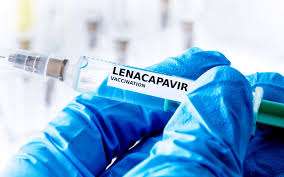
The funding crisis comes at a crucial moment in HIV prevention efforts. Byanyima pointed to the introduction of “a magical prevention tool”—lenacapavir, a twice-yearly injection that offers complete protection against HIV in women and has demonstrated near-equal effectiveness for men.
US Aid Freeze Could Spark HIV Crisis, Expert Warns
Lenacapavir could play a role in ending HIV

If widely distributed, lenacapavir could play a pivotal role in ending HIV as a major public health threat within the next five years. 

However, Byanyima warned that without sustained funding, access to such medical breakthroughs would be jeopardized, particularly in the hardest-hit regions.

ADVERTISEMENT

She also emphasized that lenacapavir, marketed as Sunlenca, was developed by the American pharmaceutical company Gilead. 

She pointed out that international aid enabled the development of such drugs, ultimately benefiting both U.S. companies and global health initiatives. “We appeal to the U.S. government to review this, to understand that this is mutually beneficial,” Byanyima said. 

She highlighted that foreign assistance accounts for less than 1% of the overall U.S. budget, questioning the logic behind such a disruptive move. “Why would you need to be so disruptive for that 1%?” she asked.

As the U.S. withdrawal looms, Byanyima is urging other nations to step up and fill the funding gap. However, she admitted that no major donors have yet committed to replacing American contributions. She plans to visit European capitals to discuss potential solutions with world leaders.

While European nations have expressed concern, they have yet to formally pledge additional support. “I have not yet heard of any European country committing to step in, but I know they are listening and trying to see where they can come in because they care about rights, about humanity.”

With millions of lives hanging in the balance, UNAIDS and global health experts continue to press for a reversal of the funding freeze before irreversible damage is done to HIV/AIDS prevention and treatment programs.

READ ALSO: NYA CEO Unveils Strategic Plan to Combat Youth Unemployment

Sign Up to Our Newsletter

Fresh updates, Straight to your inbox

Tags: Global HealthHIV funding crisisHIV preventionU.S. aid cutsUNAIDS
Share1Tweet1ShareSendSend
Please login to join discussion
Previous Post

Iran Questions US’s Sincerity In Seeking Negotiations

Next Post

Strategic Solutions Requires in Africa’s LNG Potential   

Related Posts

GIG
Around the Globe

Human Rights Watch Calls for Strong Global Treaty to Protect Gig Workers

May 13, 2026
Hantavirus-Stricken Cruise Ship
Around the Globe

Evacuation of Hantavirus-Stricken Cruise Ship Completed

May 12, 2026
Journalists outside the Peace Palace, housing the ICJ in The Hague.
Around the Globe

Rodríguez Defends Venezuela’s Claim To Essequibo

May 11, 2026
United Nations High Commissioner for Human Rights, Volker Türk
Around the Globe

UN Raises Alarm Over Drone Attacks Fueling Sudan Civilian Death

May 11, 2026

Sign Up to Our Newsletter

Fresh updates, Straight to your inbox

Recent News

GettyImages 1855339841

36 Countries, EU Approve Agreement To Establish Special Tribunal For Ukraine

May 15, 2026
Professor Ernest Kofi Davis, Acting Director-General, Ghana Education Service

GES Assures Placement for All Qualified BECE Candidates

May 15, 2026
UK Prime Minister, Keir Starmer

UK Bars Far-Right Agitators as Starmer Vows Zero Tolerance

May 15, 2026
Fidelity Demands Africa Own Its Digital Future At a time when Africa’s digital economy is accelerating at an unprecedented pace, Fidelity Bank Ghana has delivered one of the strongest messages yet on the continent’s technological future. The bank made a bold and urgent case for Africa to stop depending on foreign controlled digital systems and begin building its own infrastructure capable of retaining value, strengthening currencies, and driving long term economic sovereignty. As one of the key sponsors of the 3i Africa summit, Fidelity Bank did not just show up to participate. It arrived with a message that resonated deeply across conference halls and policy discussions. Fidelity Bank emerged as one of the loudest voices championing a future where African nations control the very digital rails that power their economies. Digital Infrastructure Is The New Economic Power One of the defining moments of the summit came during a high level panel discussion on digital public infrastructure, where Adeline Aryee delivered a statement that immediately captured the attention of participants. She declared that if Africa builds its own digital rails, it naturally retains the value created by those systems. Her message was clear and uncompromising. In previous decades, national infrastructure was measured by roads, bridges, ports, and airports. Today, the true engines of economic power are payment platforms, identity systems, financial technology ecosystems, and digital marketplaces. According to Aryee, digital public infrastructure is no longer a luxury. It is now a strategic national asset. Her remarks struck at the heart of one of Africa’s most pressing economic concerns. Despite growing digital adoption, many transactions across the continent still pass through foreign payment systems, resulting in value leakage and continued pressure on local currencies. Ghana’s Success Story Becomes A Continental Blueprint Aryee highlighted Ghana’s progress in financial inclusion, mobile payments, and digital banking, describing the country as an emerging model for other African economies. Over the years, Ghana has invested heavily in domestic payment systems such as GhIPSS and its flagship platform, Gh-link. These systems have significantly expanded access to financial services while promoting digital transactions across urban and rural communities. Yet Aryee argued that inclusion alone is no longer enough. The next chapter for Africa, she insisted, must focus on ownership. She questioned why local transactions continue to depend on foreign rails when domestic infrastructure already exists. According to her, such dependence creates unnecessary external exposure and limits the continent’s ability to fully capture the economic benefits of its growing digital market. Her comments triggered intense debate among summit participants, many of whom acknowledged the urgent need for policy reforms and infrastructure investments. Market Driven Innovation Takes Center Stage Beyond infrastructure, Fidelity Bank also made a strong case for innovation that begins with real market needs. During the Ecosystem Roundtable on platforms, talent, and digital markets, Prince Osei Hyeaman-Addai shared insights from the bank’s years of digital financial innovation. He stressed that successful digital products are not built in boardrooms or based on assumptions. Instead, they are created by listening carefully to the market and understanding customer pain points. According to him, the market itself reveals the problems that need solving, the type of platform required, and the path toward scalable growth. His comments reflected a growing shift in African fintech circles, where customer centered design is becoming essential for product adoption and long term relevance. Trust And Credibility Remain The Real Currency Prince also emphasized that technology alone does not guarantee success. In his view, trust, credibility, and strong operational structures remain the real foundations of successful innovation. He noted that while investor interest in African fintech continues to rise, startups must prove they can deliver sustainable solutions, maintain transparency, and build products that respond to local realities. This perspective reflects Fidelity Bank’s own journey in digital transformation. Over the years, the bank has built strategic collaborations with leading fintech players, including IT Consortium, helping pioneer wallet to bank integrations and mobile financial solutions in Ghana. These partnerships have helped position Fidelity as one of Ghana’s most innovation driven financial institutions. A Defining Moment For Africa’s Digital Future Fidelity Bank’s participation at the 3i Africa Summit 2026 was more than a corporate appearance. It was a strategic declaration. At a time when Africa is racing to build competitive digital economies, the bank’s message was impossible to ignore. Africa cannot simply consume technology created elsewhere. It must own the infrastructure, shape the platforms, and capture the value generated by its digital future. As conversations from the summit continue to ripple across financial and policy circles, one thing is becoming increasingly clear. Africa’s next economic revolution may not be built on oil, gold, or minerals. It may be built on digital rails designed, owned, and powered by Africans. READ ALSO: IMF Ghana Review Ends in Dramatic Cliffhanger Fidelity Demands Africa Own Its Digital Future At a time when Africa’s digital economy is accelerating at an unprecedented pace, Fidelity Bank Ghana has delivered one of the strongest messages yet on the continent’s technological future. The bank made a bold and urgent case for Africa to stop depending on foreign controlled digital systems and begin building its own infrastructure capable of retaining value, strengthening currencies, and driving long term economic sovereignty. As one of the key sponsors of the 3i Africa summit, Fidelity Bank did not just show up to participate. It arrived with a message that resonated deeply across conference halls and policy discussions. Fidelity Bank emerged as one of the loudest voices championing a future where African nations control the very digital rails that power their economies. Digital Infrastructure Is The New Economic Power One of the defining moments of the summit came during a high level panel discussion on digital public infrastructure, where Adeline Aryee delivered a statement that immediately captured the attention of participants. She declared that if Africa builds its own digital rails, it naturally retains the value created by those systems. Her message was clear and uncompromising. In previous decades, national infrastructure was measured by roads, bridges, ports, and airports. Today, the true engines of economic power are payment platforms, identity systems, financial technology ecosystems, and digital marketplaces. According to Aryee, digital public infrastructure is no longer a luxury. It is now a strategic national asset. Her remarks struck at the heart of one of Africa’s most pressing economic concerns. Despite growing digital adoption, many transactions across the continent still pass through foreign payment systems, resulting in value leakage and continued pressure on local currencies. Ghana’s Success Story Becomes A Continental Blueprint Aryee highlighted Ghana’s progress in financial inclusion, mobile payments, and digital banking, describing the country as an emerging model for other African economies. Over the years, Ghana has invested heavily in domestic payment systems such as GhIPSS and its flagship platform, Gh-link. These systems have significantly expanded access to financial services while promoting digital transactions across urban and rural communities. Yet Aryee argued that inclusion alone is no longer enough. The next chapter for Africa, she insisted, must focus on ownership. She questioned why local transactions continue to depend on foreign rails when domestic infrastructure already exists. According to her, such dependence creates unnecessary external exposure and limits the continent’s ability to fully capture the economic benefits of its growing digital market. Her comments triggered intense debate among summit participants, many of whom acknowledged the urgent need for policy reforms and infrastructure investments. Market Driven Innovation Takes Center Stage Beyond infrastructure, Fidelity Bank also made a strong case for innovation that begins with real market needs. During the Ecosystem Roundtable on platforms, talent, and digital markets, Prince Osei Hyeaman-Addai shared insights from the bank’s years of digital financial innovation. He stressed that successful digital products are not built in boardrooms or based on assumptions. Instead, they are created by listening carefully to the market and understanding customer pain points. According to him, the market itself reveals the problems that need solving, the type of platform required, and the path toward scalable growth. His comments reflected a growing shift in African fintech circles, where customer centered design is becoming essential for product adoption and long term relevance. Trust And Credibility Remain The Real Currency Prince also emphasized that technology alone does not guarantee success. In his view, trust, credibility, and strong operational structures remain the real foundations of successful innovation. He noted that while investor interest in African fintech continues to rise, startups must prove they can deliver sustainable solutions, maintain transparency, and build products that respond to local realities. This perspective reflects Fidelity Bank’s own journey in digital transformation. Over the years, the bank has built strategic collaborations with leading fintech players, including IT Consortium, helping pioneer wallet to bank integrations and mobile financial solutions in Ghana. These partnerships have helped position Fidelity as one of Ghana’s most innovation driven financial institutions. A Defining Moment For Africa’s Digital Future Fidelity Bank’s participation at the 3i Africa Summit 2026 was more than a corporate appearance. It was a strategic declaration. At a time when Africa is racing to build competitive digital economies, the bank’s message was impossible to ignore. Africa cannot simply consume technology created elsewhere. It must own the infrastructure, shape the platforms, and capture the value generated by its digital future. As conversations from the summit continue to ripple across financial and policy circles, one thing is becoming increasingly clear. Africa’s next economic revolution may not be built on oil, gold, or minerals. It may be built on digital rails designed, owned, and powered by Africans. READ ALSO: IMF Ghana Review Ends in Dramatic Cliffhanger Fidelity Demands Africa Own Its Digital Future

Fidelity Demands Africa Own Its Digital Future

May 15, 2026
Bruno Fernandes has won Manchester United's Player of the Year award twice in succession

Fernandes Crowned Manchester United Player of the Year Again After Remarkable Season

May 15, 2026
Next Post
liquefied natural gas (LNG) market

Strategic Solutions Requires in Africa’s LNG Potential   

The Vaultz News

Copyright © 2025 The Vaultz News. All rights reserved.

Navigate Site

  • About
  • Advertise
  • Privacy Policy
  • Contact

Follow Us

Welcome Back!

Login to your account below

Forgotten Password?

Retrieve your password

Please enter your username or email address to reset your password.

Log In
No Result
View All Result
  • Top Stories
  • News
    • General News
    • Education
    • Health
    • Opinions
  • Economics
    • Economy
    • Finance
      • Banking
      • Insurance
      • Pension
    • Securities/Markets
  • Business
    • Agribusiness
    • Vaultz Business
    • Extractives/Energy
    • Real Estate
  • World
    • Africa
    • America
    • Europe
    • UK
    • USA
    • Asia
    • Around the Globe
  • Innovation
    • Technology
    • Wheels
  • Entertainment
  • 20MOBPL2D
  • Jobs & Scholarships
    • Job Vacancies
    • Scholarships

Copyright © 2025 The Vaultz News. All rights reserved.

This website uses cookies. By continuing to use this website you are giving consent to cookies being used. Visit our Privacy and Cookie Policy.

Discover the Details behind the story

Get an in-depth analysis of the news from our top editors

Enter your email address