• About
  • Advertise
  • Privacy Policy
  • Contact
Wednesday, December 17, 2025
  • Login
The Vaultz News
  • Top Stories
  • News
    • General News
    • Education
    • Health
    • Opinions
  • Economics
    • Economy
    • Finance
      • Banking
      • Insurance
      • Pension
    • Securities/Markets
  • Business
    • Agribusiness
    • Vaultz Business
    • Extractives/Energy
    • Real Estate
  • World
    • Africa
    • America
    • Europe
    • UK
    • USA
    • Asia
    • Around the Globe
  • Innovation
    • Technology
    • Wheels
  • Entertainment
  • 20MOBPL2DNew
  • Jobs & Scholarships
    • Job Vacancies
    • Scholarships
No Result
View All Result
The Vaultz News
  • Top Stories
  • News
    • General News
    • Education
    • Health
    • Opinions
  • Economics
    • Economy
    • Finance
      • Banking
      • Insurance
      • Pension
    • Securities/Markets
  • Business
    • Agribusiness
    • Vaultz Business
    • Extractives/Energy
    • Real Estate
  • World
    • Africa
    • America
    • Europe
    • UK
    • USA
    • Asia
    • Around the Globe
  • Innovation
    • Technology
    • Wheels
  • Entertainment
  • 20MOBPL2DNew
  • Jobs & Scholarships
    • Job Vacancies
    • Scholarships
No Result
View All Result
The Vaultz News
No Result
View All Result

Inequalities Obstructing Progress Towards Ending AIDS, TB And Malaria – WHO & Global Fund Warn

M.Cby M.C
December 9, 2021
Reading Time: 3 mins read
Inequalities Obstructing Progress Towards Ending AIDS, TB And Malaria - WHO & Global Fund Warn

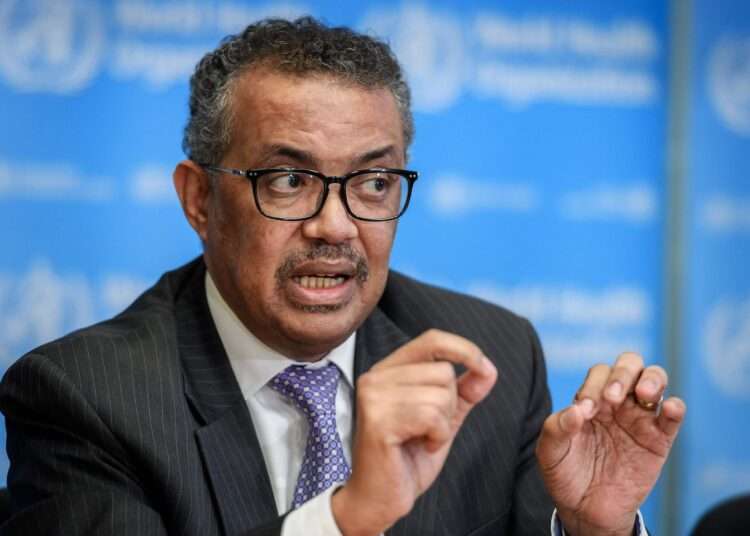
Dr Tedros Adhanom Ghebreyesus, WHO Director-General

A new report from the World Health Organization (WHO) and the Global Fund to Fight AIDS, Tuberculosis (TB) and Malaria, has documented evidence on the hindrances of inequality towards ending AIDS, TB and malaria.

Inequities have been widely acknowledged as barriers to achieving global and national goals and targets in HIV, TB and malaria programs. However, the magnitude and extent of underlying health inequalities have remained poorly documented and understood. 

To this end, WHO indicated that the new report represented an important step forward in understanding how inequalities are hindering the fight against the three diseases. Using the latest available global data for 32 health indicators up to 186 countries, the report shows that while national averages of HIV, TB and malaria indicators have generally improved in the past decade, the poorest, least educated and rural subgroups tend to remain at a disadvantage across most HIV, TB and malaria indicators.

RelatedPosts

IRC Warns Growing Global Disorder To Worsen Humanitarian Crises

Bondi Beach Shooting Deemed “Terrorist Attack Inspired By Islamic State”

Albanese Vows Action On Gun Control In Bondi Beach Shooting Aftermath

“Although great strides have been made to expand health services and prevention efforts, we must focus more on reaching the poor, rural and least educated populations who bear the brunt of these diseases”.

Dr Tedros Adhanom Ghebreyesus, WHO Director-General

Major impact on the poor

The report shows, for example, that available data on HIV testing among men revealed a gap of at least 20 percentage points between the poorest and richest households in 27 out of 48 countries with the gap having increased over time. According to the report, many families affected by tuberculosis spend a substantial amount of their income on expenses related to the disease – especially if the household is poor.

 Data from 21 countries show that 20-92% of households spend at least a fifth of their income on TB-related costs. For malaria, the poorest, the least educated and rural groups reported lower levels of timely care-seeking for children under age 5 running a fever.

ADVERTISEMENT

High sex-related inequalities are also quantified in the report. For HIV, in more than half of the countries, males reported higher condom use than females. HIV testing was substantially higher in women than men in a fifth of countries.

Peter Sands, Executive Director of the Global Fund stated in the report that “pandemics thrive on inequalities and exacerbate inequities: we have learned this with HIV, TB and malaria, and we have seen it again with COVID-19”.

Cases where inequality is low

Despite the challenges, the report shows cases where inequalities are low, or where the gaps are narrowing through faster improvements in intervention coverage among disadvantaged population subgroups. Encouragingly, some countries reported higher insecticide-treated bednet ownership among the poorest households, demonstrating that malaria prevention efforts are targeting and benefiting disadvantaged groups.

The report also illustrates the impact of eliminating inequalities in improving national averages across HIV, TB and malaria. For example, if countries improved the level of HIV testing of all pregnant women to that of the richest subgroup, the overall level of testing would increase from 40% to 64%. The percentage of families facing catastrophic costs due to TB would decrease by at least 50% in half of countries (from a current weighted average of 61% to a potential average of 38%).

In the case of malaria, families seeking care for children under 5 years with fever, eliminating economic-related inequalities would mean a 26% improvement in the weighted average across 28 countries.

The report calls for the compilation of more and better data on inequalities. The WHO 2020 global assessment of country data and health information systems found that only half of the 133 study countries included data disaggregation in their published national health statistical reports.

It also calls for regular and dedicated monitoring of inequalities in the fight against HIV, TB and malaria, which should be complemented by other quantitative and qualitative studies. WHO has developed a package of tools and resources on inequality monitoring and continues to support countries to develop their capacities in this area.

READ ALSO: TotalEnergies AFCON 2021: 30 Days Countdown Begins Today

Tags: COVID-19Dr Tedros Adhanom GhebreyesusGlobal FundHIV/AIDSmalaria
Share2Tweet1ShareSendSend
Please login to join discussion
Previous Post

Eduwatch Asserts Withholding WASSCE Results Proves Cheating Allegations

Next Post

Shatta Wale Launches Shaxi to Reduce Youth Unemployment

Related Posts

AFP 20251125 866D264 v1 HighRes SudanConflictDisplaced 1765863556
Around the Globe

IRC Warns Growing Global Disorder To Worsen Humanitarian Crises

December 16, 2025
afp 693f855e2adc 1765770590
Around the Globe

Bondi Beach Shooting Deemed “Terrorist Attack Inspired By Islamic State”

December 16, 2025
Australian Prime Minister Anthony Albanese.
Around the Globe

Albanese Vows Action On Gun Control In Bondi Beach Shooting Aftermath

December 15, 2025
U.N. High Commissioner for Human Rights, Volker Türk Sounds Alarm Over Shift In US
Around the Globe

UN Human Rights Chief Bemoans $90 Million Funding Shortfall

December 10, 2025
download 7
Around the Globe

Machado Misses Nobel Peace Prize Ceremony

December 10, 2025
Australian Prime Minister Anthony Albanese.
Around the Globe

Albanese Hails Australia’s Social Media Ban For Under-16s

December 10, 2025
Zugraan Asigri Abugrago Azoka II,Bawku Naaba
General News

Zugraan Asigri Abugrago Azoka II Affirmed as Bawku Naaba in Otumfuo’s Final Mediation Report

by Evans Junior OwuDecember 16, 2025
Frank Annoh Dompreh, Endorses, Dr Mahamudu Bawumia, Fight Back
General News

Minority Demands Ministerial Reshuffle Over Legislative Neglect

by Silas Kafui AssemDecember 16, 2025
USA

CAIR Sues DeSantis Over ‘Foreign Terrorist’ Label

by Comfort AmpomaaDecember 16, 2025
TotalEnergies
Extractives/Energy

TotalEnergies, Google Sign 21-Year Renewable Power Deal in Malaysia

by Prince AgyapongDecember 16, 2025
Majority Leader and Member of Parliament for Bawku Central, Hon. Mahama Ayariga
General News

Accra Generates Twice Waste it Can Manage – Majority Leader Champions Property Rate Reforms to Fix it

by Evans Junior OwuDecember 16, 2025
Prof. Fred Mawunyo Dzanku, Economist at ISSER
Economy

Economist Attributes Ghana’s Persistent Debt to Deep-Seated Structural Deficiencies

by Michael Teye-Bio NaduteyDecember 16, 2025
Zugraan Asigri Abugrago Azoka II,Bawku Naaba
Frank Annoh Dompreh, Endorses, Dr Mahamudu Bawumia, Fight Back
TotalEnergies
Majority Leader and Member of Parliament for Bawku Central, Hon. Mahama Ayariga
Prof. Fred Mawunyo Dzanku, Economist at ISSER

Recent News

Zugraan Asigri Abugrago Azoka II,Bawku Naaba

Zugraan Asigri Abugrago Azoka II Affirmed as Bawku Naaba in Otumfuo’s Final Mediation Report

December 16, 2025
Frank Annoh Dompreh, Endorses, Dr Mahamudu Bawumia, Fight Back

Minority Demands Ministerial Reshuffle Over Legislative Neglect

December 16, 2025
download 13

CAIR Sues DeSantis Over ‘Foreign Terrorist’ Label

December 16, 2025
TotalEnergies

TotalEnergies, Google Sign 21-Year Renewable Power Deal in Malaysia

December 16, 2025
Majority Leader and Member of Parliament for Bawku Central, Hon. Mahama Ayariga

Accra Generates Twice Waste it Can Manage – Majority Leader Champions Property Rate Reforms to Fix it

December 16, 2025
The Vaultz News

Copyright © 2025 The Vaultz News. All rights reserved.

Navigate Site

  • About
  • Advertise
  • Privacy Policy
  • Contact

Follow Us

Welcome Back!

Login to your account below

Forgotten Password?

Retrieve your password

Please enter your username or email address to reset your password.

Log In
No Result
View All Result
  • Top Stories
  • News
    • General News
    • Education
    • Health
    • Opinions
  • Economics
    • Economy
    • Finance
      • Banking
      • Insurance
      • Pension
    • Securities/Markets
  • Business
    • Agribusiness
    • Vaultz Business
    • Extractives/Energy
    • Real Estate
  • World
    • Africa
    • America
    • Europe
    • UK
    • USA
    • Asia
    • Around the Globe
  • Innovation
    • Technology
    • Wheels
  • Entertainment
  • 20MOBPL2D
  • Jobs & Scholarships
    • Job Vacancies
    • Scholarships

Copyright © 2025 The Vaultz News. All rights reserved.

Discover the Details behind the story

Get an in-depth analysis of the news from our top editors

Enter your email address