• About
  • Advertise
  • Privacy Policy
  • Contact
Wednesday, May 13, 2026
  • Login
The Vaultz News
  • Top Stories
  • News
    • General News
    • Education
    • Health
    • Opinions
  • Economics
    • Economy
    • Finance
      • Banking
      • Insurance
      • Pension
    • Securities/Markets
  • Business
    • Agribusiness
    • Vaultz Business
    • Extractives/Energy
    • Real Estate
  • World
    • Africa
    • America
    • Europe
    • UK
    • USA
    • Asia
    • Around the Globe
  • Innovation
    • Technology
    • Wheels
  • Entertainment
  • 20MOBPL2DNew
  • Jobs & Scholarships
    • Job Vacancies
    • Scholarships
No Result
View All Result
The Vaultz News
  • Top Stories
  • News
    • General News
    • Education
    • Health
    • Opinions
  • Economics
    • Economy
    • Finance
      • Banking
      • Insurance
      • Pension
    • Securities/Markets
  • Business
    • Agribusiness
    • Vaultz Business
    • Extractives/Energy
    • Real Estate
  • World
    • Africa
    • America
    • Europe
    • UK
    • USA
    • Asia
    • Around the Globe
  • Innovation
    • Technology
    • Wheels
  • Entertainment
  • 20MOBPL2DNew
  • Jobs & Scholarships
    • Job Vacancies
    • Scholarships
No Result
View All Result
The Vaultz News
No Result
View All Result
in Economy

Majority Of Ghanaians Insist Parliament Should Monitor How Taxpayers’ Money Is Spent – Afrobarometer

M.Cby M.C
February 15, 2022
Reading Time: 6 mins read
Majority Of Ghanaians Insist Parliament Should Monitor How Taxpayers’ Money Is Spent – Afrobarometer

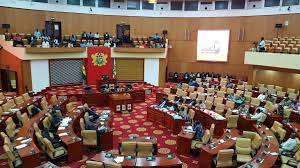
Ghanaian taxpayers are demanding accountability on how the country’s tax revenues are spent by the government and are urging the legislature to exercise its checks and balances in ensuring that the executive puts the taxpayers’ money to good use.

 A recent survey conducted by Afrobarometer that assessed the tax systems in some African countries, found 78% of respondents from Ghana insisting on parliamentary monitoring of how the government spends tax revenues. Meanwhile, 80% of Ghanaians believe government has the right to make people pay taxes but have identified some loopholes in the country’s tax system.

On average, Two-thirds (67%) of Africans believe the executive should be required to explain to Parliament how the government spends taxpayers’ money. The high percentage of Ghanaians demanding parliamentary monitoring of government spending, puts Ghana among the top five countries that are most insistent on parliamentary monitoring of how the government spends tax revenues.  

The top five countries calling for parliamentary monitoring of how the government spends tax revenues include the Gambia (84%), Cabo Verde (82%), Mauritius (78%), Mali (78%), and Ghana (78%).  

ADVERTISEMENT

Taxation is a key fiscal tool for domestic resource mobilization. In many African countries, however, weak tax-administration systems limit the ways in which governments can finance their development agendas and provide essential services such as health care, education, and infrastructure.

Extensive research has shown that people’s willingness to pay taxes may be influenced by how they think their taxes are being used. Across the 34-country sample, only half (51%) of respondents say that their government uses taxes for the well-being of citizens. In Ghana, 55% of the respondents believe that the government uses the taxes collected to ensure the wellbeing of its citizens.

Fairness of the tax system

In terms of fairness of the tax system in Ghana, the survey showed that a large number of Ghanaians believe the ordinary citizens are being overburdened with taxes. Overall, 41% of the respondents from Ghana stated that the ordinary Ghanaian is overburdened with taxes.

On a whole, Africans hold mixed views on the fairness of their tax rates. Across the 34-country sample, almost half (47%) said that ordinary people are required to pay ‘somewhat too much’ or ‘far too much’ in taxes. This is a particular concern in Kenya (66%), Uganda (65%), and Eswatini (63%), while fewer than one in three citizens in Mozambique (32%), Niger (32%), and Liberia (31%) feel this way.

Need for progressive taxes

A whopping 74% of Ghanaians stated that it is fair to tax rich people at a higher rate than ordinary people in order to help pay for government programs to benefit the poor. The call for a progressive tax rate in Ghana is higher than the average of the 34 countries sampled in the survey.

The survey found that seven in 10 Africans (69%) ‘agree’ or ‘strongly agree’ that it is fair to tax rich people at a higher rate than ordinary people in order to fund government programs to benefit the poor, while just 25% disagreed.

This idea won majority support in every surveyed country except Angola, and even there, supporters outnumber opponents, 49% to 30%. More than eight in 10 citizens endorsed higher tax rates for the wealthy in Tunisia (91%) and Gabon (83%).

ADVERTISEMENT

Afrobarometer survey data collected in 34 African countries in 2019/2021 show that a majority of Africans endorse their government’s right to collect taxes. But popular support for taxation has weakened over the past decade while perceptions that people often avoid paying their taxes have increased sharply.

Moreover, many Africans question the fairness of their country’s tax burden, and only half think their governments are using tax revenue for the well-being of their citizens.

While a majority would pay higher taxes to support young people and national development, most say they find it difficult to get information about tax requirements and uses, and many see tax officials as corrupt and untrustworthy. Such perceptions may play a role in how willingly citizens support – and comply with – their government’s tax administration. Taxpayers Taxpayers

READ ALSO: President Akufo-Addo To Speak At T.D. Jakes’ International Leadership Summit

Sign Up to Our Newsletter

Fresh updates, Straight to your inbox

Tags: AfrobarometerGhanaiansParliamenttax systemtaxpayers
Share4Tweet3Share1SendSend
Please login to join discussion
Previous Post

It’s A Wonder The Ghana Bar Association Still Exists In This Country- Francis Xavier Sosu

Next Post

UTAG, NLC Resumes Court Today

Related Posts

Ghana Records Stunning 7.7% Economic Growth Surge
Economy

Ghana Records Stunning 7.7% Economic Growth Surge

May 13, 2026
John Mahama’s Ghana Weighs Critical IMF Shift
Economy

John Mahama’s Ghana Weighs Critical IMF Shift 

May 13, 2026
GH¢19bn Absorbed as Bank of Ghana Battles Liquidity
Economy

GH¢19bn Absorbed as Bank of Ghana Battles Liquidity

May 13, 2026
Ghana Economist Breaks Global Research Ranking Barriers
Economy

Ghana Economist Breaks Global Research Ranking Barriers

May 12, 2026

Sign Up to Our Newsletter

Fresh updates, Straight to your inbox

Recent News

Prof. George Agyei, GSA's Director General

GSA Enforces Mandatory Pattern Approval For Measurement Hardware

May 13, 2026
Mahama 64

No More Blanket Tax Waivers on Medical Imports, President Mahama Declares

May 13, 2026
US Proposal For Temporary Gaza Ceasefire Fails To Hit Hamas’ Mark

Envoy Says Gaza Ceasefire Dependent On Hamas’ Disarmament

May 13, 2026
United Bank for Africa Posts Industry’s Lowest Bad Loan Ratio United Bank for Africa Ghana has delivered one of the most remarkable performances in Ghana’s banking industry, emerging with the lowest non-performing loan ratio in the sector and setting a new benchmark for prudent lending, asset quality, and corporate discipline. At a time when banks across emerging markets continue to battle rising credit risks, economic uncertainty, and pressure on asset quality, UBA Ghana’s latest financial performance has become a standout success story. The bank’s Non-Performing Loan ratio, which stood at 29.40 percent in 2021, has dropped sharply to an impressive 2.11 percent in 2025. This exceptional improvement places the bank well ahead of regulatory expectations and significantly below the target set by the Bank of Ghana, which requires banks to maintain bad loan ratios below 10 percent by June 2026. The numbers tell a powerful story of strategic execution, disciplined lending, and a leadership team committed to sustainable growth. Bad Loans Fall Dramatically The bank’s total non-performing loans have also seen a dramatic reduction over the four-year period. From GH¢334 million recorded in 2021, the figure has now dropped to just GH¢28 million in 2025. Industry analysts say this sharp decline reflects a deliberate and aggressive approach to loan portfolio management, one that prioritizes risk identification, credit discipline, and rapid intervention. For many financial observers, this is not merely a statistical improvement. It is evidence of a bank that has transformed its internal credit systems and strengthened its ability to manage lending risk in a highly competitive market. UBA Ghana’s performance is being viewed as a model for other financial institutions seeking to improve balance sheet quality while still expanding lending activities. Strong Risk Culture Drives Results According to Kenneth Amponsah, the achievement did not happen overnight. He explained that the bank adopted a consistent and structured approach to managing credit risk across every stage of the lending cycle. He noted that the improvement in the bank’s loan quality was the result of stronger lending standards, improved loan screening procedures, tighter monitoring systems, and faster recovery mechanisms. The bank’s risk management strategy focuses on ensuring quality at the point of loan origination while maintaining strict oversight throughout the life of each facility. This includes strategic portfolio planning, efficient approval processes, proper documentation, collateral verification, real-time account monitoring, and proactive loan recovery. Banking experts say such a full-cycle approach is critical in today’s economic environment, where loan defaults can quickly erode capital and investor confidence. Recovery Efforts Yield Strong Returns One of the strongest drivers behind the bank’s improved asset quality has been its recovery operations. UBA Ghana has significantly strengthened its debt recovery framework, resulting in consistent gains over the years. In 2025 alone, loan recoveries reached an impressive GH¢168 million, highlighting the effectiveness of the bank’s recovery teams and internal enforcement systems. This strong recovery performance has helped the bank clean up its balance sheet while improving liquidity and strengthening capital resilience. Analysts believe the recovery figures also demonstrate the bank’s ability to engage customers proactively while maintaining professional relationships and ensuring compliance. Leadership Applauds Team Performance Commenting on the achievement, Bernard Gyebi praised the collective effort of the bank’s staff, management, and board. He said the milestone reflects the dedication and discipline of Relationship Managers, Risk teams, Executive Management, and Board members who have all contributed to building a resilient institution. According to him, UBA Ghana remains focused on balancing business growth with sound risk management practices. He emphasized that the bank is intentional about creating long-term value for shareholders, customers, and regulators while maintaining high standards of governance and accountability. His remarks underline the bank’s broader strategy of building a strong institution capable of supporting businesses and contributing to national economic growth. Setting the Pace for Ghana’s Banking Sector Industry observers believe UBA Ghana’s latest achievement reflects broader improvements within Ghana’s banking sector, which has undergone major reforms in recent years. However, they note that UBA Ghana’s performance stands out because of the speed, consistency, and scale of its transformation. By bringing its bad loan ratio down to just 2.11 percent, the bank has positioned itself as one of the safest and most disciplined lenders in the market. As competition intensifies and regulatory standards become stricter, UBA Ghana’s performance could serve as a benchmark for banks seeking to combine profitability with responsible lending. With strong governance, effective execution, and a clear commitment to excellence, UBA Ghana appears firmly positioned to sustain its leadership in Ghana’s evolving financial sector. READ ALSO: Tema Manhean Facility To Halt Fisheries Value Leakage United Bank for Africa Posts Industry’s Lowest Bad Loan Ratio

United Bank for Africa Posts Industry’s Lowest Bad Loan Ratio

May 13, 2026
Dr. Charles Mensa, Board Chair, IEA

Ghanaian Professionals Have the Technical Expertise to Manage Tarkwa Mine—IEA

May 13, 2026
Next Post
Court Orders Achimota School to Admit Rastafarian Students

UTAG, NLC Resumes Court Today

The Vaultz News

Copyright © 2025 The Vaultz News. All rights reserved.

Navigate Site

  • About
  • Advertise
  • Privacy Policy
  • Contact

Follow Us

Welcome Back!

Login to your account below

Forgotten Password?

Retrieve your password

Please enter your username or email address to reset your password.

Log In
No Result
View All Result
  • Top Stories
  • News
    • General News
    • Education
    • Health
    • Opinions
  • Economics
    • Economy
    • Finance
      • Banking
      • Insurance
      • Pension
    • Securities/Markets
  • Business
    • Agribusiness
    • Vaultz Business
    • Extractives/Energy
    • Real Estate
  • World
    • Africa
    • America
    • Europe
    • UK
    • USA
    • Asia
    • Around the Globe
  • Innovation
    • Technology
    • Wheels
  • Entertainment
  • 20MOBPL2D
  • Jobs & Scholarships
    • Job Vacancies
    • Scholarships

Copyright © 2025 The Vaultz News. All rights reserved.

This website uses cookies. By continuing to use this website you are giving consent to cookies being used. Visit our Privacy and Cookie Policy.

Discover the Details behind the story

Get an in-depth analysis of the news from our top editors

Enter your email address