• About
  • Advertise
  • Privacy Policy
  • Contact
Thursday, August 27, 2026
  • Login
The Vaultz News
  • Top Stories
  • News
    • General News
    • Education
    • Health
    • Opinions
  • Economics
    • Economy
    • Finance
      • Banking
      • Insurance
      • Pension
    • Securities/Markets
  • Business
    • Agribusiness
    • Vaultz Business
    • Extractives/Energy
    • Real Estate
  • World
    • Africa
    • America
    • Europe
    • UK
    • USA
    • Asia
    • Around the Globe
  • Innovation
    • Technology
    • Wheels
  • Entertainment
  • 20MOBPL2DNew
  • Jobs & Scholarships
    • Job Vacancies
    • Scholarships
No Result
View All Result
The Vaultz News
  • Top Stories
  • News
    • General News
    • Education
    • Health
    • Opinions
  • Economics
    • Economy
    • Finance
      • Banking
      • Insurance
      • Pension
    • Securities/Markets
  • Business
    • Agribusiness
    • Vaultz Business
    • Extractives/Energy
    • Real Estate
  • World
    • Africa
    • America
    • Europe
    • UK
    • USA
    • Asia
    • Around the Globe
  • Innovation
    • Technology
    • Wheels
  • Entertainment
  • 20MOBPL2DNew
  • Jobs & Scholarships
    • Job Vacancies
    • Scholarships
No Result
View All Result
The Vaultz News
No Result
View All Result
in Around the Globe

Minimize The Politics of Protein- Substitute Livestock Consumption with Plant-Based Diets

Maynard Championby Maynard Champion
April 21, 2022
Reading Time: 4 mins read
Add as Preferred on Google
Substitute meat with plant-based diets

Substitute meat with plant-based diets

The International Panel of Experts on Sustainable Food Systems (IPES-Food) has advised experts to minimize protein politics by advocating for an increase in the consumption of plant-based diets instead of livestock consumption.

According to IPES-Food, there have been misleading generalizations and silver bullet solutions dominating the public discussion about meat and protein, and it is time to set the record straight. This was captured in its report: “The Politics of protein: Examining Claims About Livestock, Fish, ‘Alternative Proteins’ and Sustainability.”

For decades, the perceived need for more protein has led to distractions and distortions in development programs, flawed marketing, nutritional campaigns, and calls to increase the production and trade of meat, dairy, and protein-enriched foods IPES-Food stated.
Politics of Protein Featured
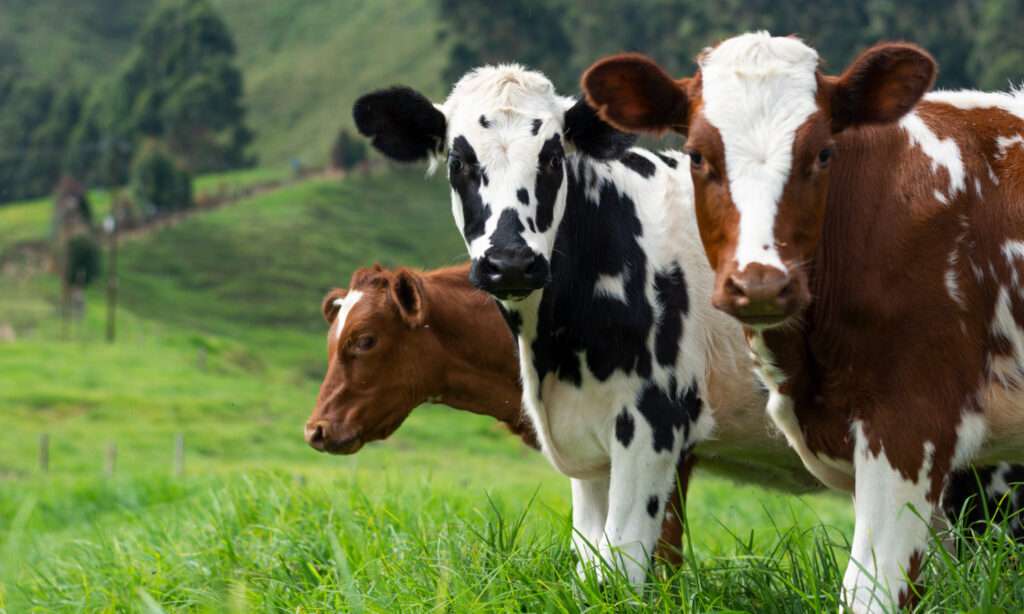
Cattle grazing the field

Protein Gap overemphasized

The IPES-Food report debunked the claims of a global ‘protein gap.’ However, it stated that protein is only one of many nutrients missing in the diets of those suffering from hunger and malnutrition. “The insufficiency of these diets is primarily a result of poverty and access. Yet, debates remain protein-centric, with the focus now on producing enough protein to feed the world in the face of supply constraints and rising demand”, IPES-Food iterated.

ADVERTISEMENT

The report revealed that in the bid to fill the ‘pseudo-protein-gap,’ animals are consistently reduced to meat, and meat is reduced to protein. The ‘protein obsession’ is now shaping the political agenda and setting the parameters for scientific studies, media coverage, and public debate, with farming systems assessed primarily (or solely) in terms of protein production per unit of Green House Gas emissions.

 “The sustainability challenges the world faces keep worsening. At the same time, livestock systems rely on vast quantities of feed crops and continue to occupy as much as 80% of global farmland. There is also broad consensus on what healthy and sustainable diets generally look like, i.e., diets based on a diversity of nutrient-rich foods, such as vegetables, fruits, whole grains, and pulses, including meat, dairy, eggs, and fish in some regional contexts.”

IPES-Food report
FQyPVB1XMAQkoNk
Agroecology

Alternative proteins are win-win for animals, people, and the planet

Through the lens of protein on one side and GHG emissions on the other, sectors and barely comparable activities are set alongside each other, using ill-adapted metrics to capture the complex socio-ecological interactions and impacts of livestock fishery and agricultural systems.

“Questions of how and where food is produced are lost in the hype around silver bullet solutions. And when challenges are formulated in such a reductive way, lab-grown meat and novel plant-based substitutes appear to be the most viable solutions,” the report revealed.

 Insufficient attention is paid to diversified agroecological production systems, territorial food chains and markets, and ‘food environments,’ which increase access to healthy and sustainable diets. These pathways respond holistically to challenges whose breadth and depth have been well-evidenced.

“As new policy frameworks emerge, and meat and protein continue to rise on the agenda, it remains critical to move beyond misleading claims. If not, there is a risk that general inaction is replaced with misguided action, that precious opportunities to reinvest in food systems are wasted on disruptive but not transformative pathways, and that public good is confused with private good.”

IPES-Food Report

According to the report, making a ‘protein transition,’ a global imperative and stand-alone policy goal, penalizes all livestock systems and promotes ‘fake proteins’ irrespective of the risks and uncertainties. “Minimizing livestock consumption and increasing the consumption of plant-based substitutes are a win-win for animals, people, and the planet,” IPES-Food noted.

ADVERTISEMENT

IPES-Food Report critics

Some environmentalists said transitioning from meat-heavy to more plant-based diets is a crucial climate strategy adding that it helps to achieve the Paris climate targets and the UN Sustainable Development Goals. A group of food system experts also praised the report and said plant-based diets are the way to go.

While the report has won the admiration of many, others have debunked the claims in the report that “it used misleading figures and created a polarization that it claims to be against, adding that plant-based sales are not that high compared to meat sales, so it’s a misrepresentation of the facts to present figures like that.”

READ ALSO: COCOBOD to Hand Over Rehabilitated Farms to beneficiaries, Cocoa Farmers Cheer

ADVERTISEMENT

Sign Up to Our Newsletter

Fresh updates, Straight to your inbox

Tags: IPES-Food
Please login to join discussion
Previous Post

Fitch Upgrades Kosmos Credit Ratings to B+

Next Post

Over 1 Million Children In Ghana, Kenya And Malawi Protected By First Malaria Vaccine

Related Posts

A Planet Under Siege
Around the Globe

Climate Change Leaves Devastating Mark on First Eight Months of 2026

August 26, 2026
United Nations
Around the Globe

UN Committee Warns of Racial Discrimination Amid Worsening Lebanon Crisis

August 26, 2026
UNICEF
Around the Globe

UNICEF Warns Afghanistan’s Child Malnutrition Crisis Is Worsening

August 25, 2026
Rohingya Refugees
Around the Globe

Rohingya Refugees Face Deepening Hunger Crisis in Bangladesh

August 25, 2026
ADVERTISEMENT

Sign Up to Our Newsletter

Fresh updates, Straight to your inbox

ADVERTISEMENT

Recent News

MIIF with a delegation from Zijin Golden Ridge Limited

Mining Sector Partnership Drives Environmental Restoration in Western Region Reserve

August 27, 2026
Prof. Alexander Bilson Darku, Director of Research at the Institute of Economic Affairs (IEA)

Reported DGPP Loss, Misconstrued Valuation Entry – Prof Darku Clarifies

August 27, 2026
Kylian Mbappé

Mbappé Hat-trick Against Sociedad Propels Real Madrid to First Home Win

August 26, 2026
AUABC Chairperson Kwami Edem Senanu outlines a five-question framework for judging AU performance, from commitment and capacity to whether citizens actually experience fairer services, at SYPALA 2026

AUABC Chair Proposes Five-Question Test to Measure AU Performance

August 26, 2026
Senanu addresses participants at SYPALA 2026, arguing the African Union should be measured by a chain of results rather than by the number of treaties or meetings held.

Edem Senanu: Weak Implementation Holding Back Africa’s Development

August 26, 2026
ADVERTISEMENT
Next Post
Over 1 Million Children In Ghana, Kenya And Malawi Protected By First Malaria Vaccine

Over 1 Million Children In Ghana, Kenya And Malawi Protected By First Malaria Vaccine

The Vaultz News

Copyright © 2025 The Vaultz News. All rights reserved.

Navigate Site

  • About
  • Advertise
  • Privacy Policy
  • Contact

Follow Us

Welcome Back!

Login to your account below

Forgotten Password?

Retrieve your password

Please enter your username or email address to reset your password.

Log In
No Result
View All Result
  • Top Stories
  • News
    • General News
    • Education
    • Health
    • Opinions
  • Economics
    • Economy
    • Finance
      • Banking
      • Insurance
      • Pension
    • Securities/Markets
  • Business
    • Agribusiness
    • Vaultz Business
    • Extractives/Energy
    • Real Estate
  • World
    • Africa
    • America
    • Europe
    • UK
    • USA
    • Asia
    • Around the Globe
  • Innovation
    • Technology
    • Wheels
  • Entertainment
  • 20MOBPL2D
  • Jobs & Scholarships
    • Job Vacancies
    • Scholarships

Copyright © 2025 The Vaultz News. All rights reserved.

This website uses cookies. By continuing to use this website you are giving consent to cookies being used. Visit our Privacy and Cookie Policy.