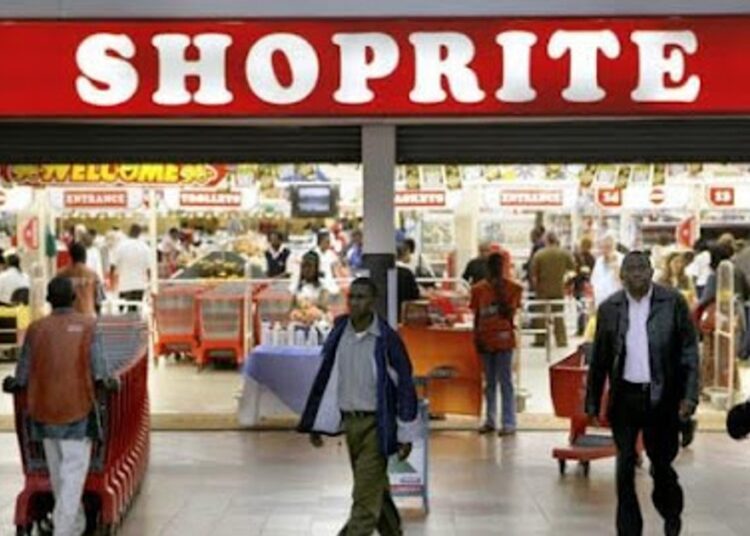
Shoprite Holdings, Africa’s leading supermarket chain, announced on Tuesday that it will divest from its operations in Ghana and Malawi, continuing its recent strategy to focus on its core markets.
The South African retailer, once known for its expansive presence across more than a dozen African countries, said it had signed agreements or received offers to exit from both countries. The move adds to a series of withdrawals from markets such as Nigeria, Uganda, Kenya, Madagascar, and the Democratic Republic of Congo.
Shoprite Malawi signed a deal on June 6 to transfer ownership of five trading stores, although the agreement remains subject to approval from the Reserve Bank of Malawi and the Competition and Fair Trading Commission. Meanwhile, in Ghana, the company confirmed it had received a binding offer for seven outlets and one warehouse. The retailer noted the sale as “highly probable.”
The company said these decisions reflect a recalibration of its pan-African strategy. “We continue to align our capital and operational focus with core markets,” Shoprite noted, referencing earlier remarks that capital allocations outside South Africa have been curbed.
Once a symbol of aggressive regional expansion, Shoprite’s operations beyond South Africa have been repeatedly tested by local market dynamics. Ventures into Nigeria and Angola were particularly hampered by “currency volatility, double-digit inflation, high import duties and dollar-based rentals.”

Shoprite’s Focus Shifts To South African Growth
Despite its retreats elsewhere, Shoprite continues to report solid performance in its home market. For the financial year ending June 29, the company forecasts a 9.4% to 19.4% rise in headline earnings per share from continuing operations, compared to the revised figure of 11.85 rand per share in 2024. Group sales from ongoing operations are also expected to rise by 8.9%, reaching 252.7 billion rand (roughly $14 billion).
The company, which began in 1979 with just eight grocery stores in Cape Town, has grown into the continent’s largest supermarket operator. Originally purchased by Pepkor for R1 million, Shoprite was designed to serve the lower- and middle-income demographic with affordable food access. It was listed on the Johannesburg Stock Exchange in 1986 and rapidly expanded within South Africa.
In the 1990s, Shoprite pushed beyond its borders, opening stores in Namibia and acquiring the national Checkers chain. It entered Zambia in 1995 and later expanded through acquisitions, including OK Bazaars and Sentra. This strategic growth extended into Zimbabwe, Tanzania, Mauritius, and other African countries throughout the early 2000s.
Beyond food retail, Shoprite diversified its offerings by acquiring pharmacy brands like Medirite and Transpharm, launching its ticketing platform Computicket, and entering the furniture sector through its House & Home stores.
The group once operated stores in nearly every major region across sub-Saharan Africa and grew its workforce to over 160,000 employees. However, sustained challenges in certain territories have led the retailer to scale back.
Even with these retreats, Shoprite remains a formidable force. As of 2025, the group operates more than 3,400 outlets in ten African countries, continuing to evolve its model through localization, brand variation, and steady investment in resilient markets.
Its decision to shed underperforming assets reflects a pragmatic approach to long-term sustainability in a volatile business landscape. With consumer behavior shifting and macroeconomic factors evolving, Shoprite’s pivot could serve as a blueprint for future African retail ventures.
READ ALSO: 91-Day T-Bill Yield Falls to 10.29%